




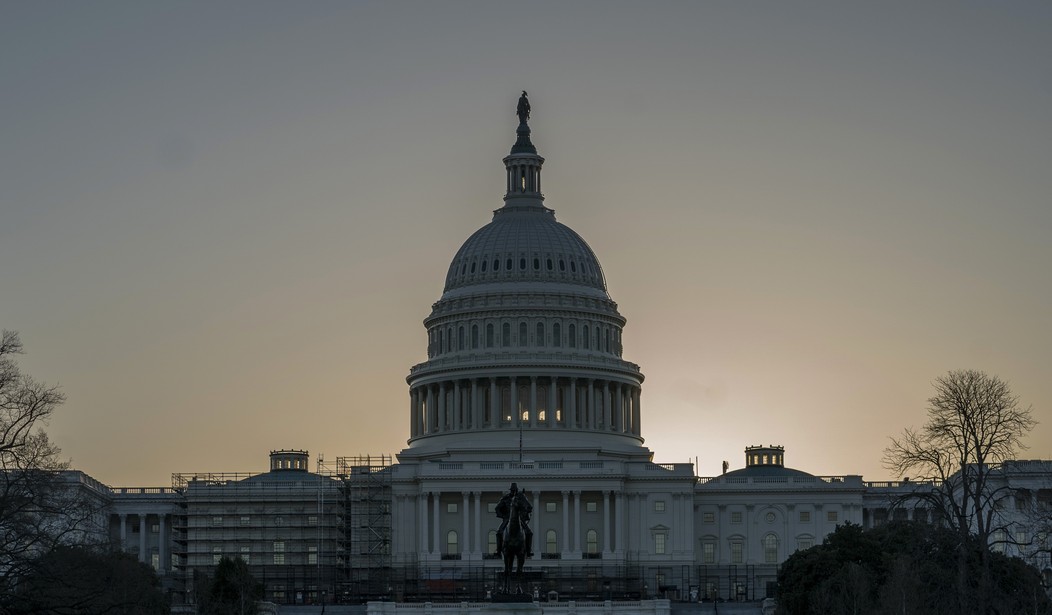
The opening salvo in the current round of negotiations to raise the debt ceiling has landed with the passage of the Limit, Save, Grow Act of 2023.
The bill, introduced by Speaker Kevin McCarthy and House Republican leadership, is the first real meaningful step taken by leaders of either party to raise the debt ceiling since Treasury began taking extraordinary measures to avoid a default on the debt of the United States. Such efforts show how Republicans have so far been the “grownups in the room” during this round of debt ceiling negotiations.
The momentum is behind Republicans, and they should continue to press for meaningful reforms as part of these debt ceiling negotiations. Even the rank and file of the Democratic party has now expressed concerns regarding the lack of engagement from Democratic leadership on the debt ceiling and have called on the President to engage with Republicans on finding a workable solution. This is an encouraging step as it is critical that the United States does not default on its debt.
Some scholars have argued that default would be unconstitutional. They point to Article I of the Constitution, which expressly forbids the states to default on their debts. These experts have argued that it is unlikely that Congress would be provided with such an authority if the states are not. Meanwhile, the Fifth Amendment is also frequently pointed to as a reason why default would be unconstitutional, as failure to meet America’s debt obligations would essentially be a taking of property from the holders of federal bonds.
But the most convincing argument of all is stated in the 14th Amendment, which clearly states that “the validity of the public debt, authorized by law…shall not be questioned.” It seems fairly clear then that the Constitution denies anyone — including Congress — the power to default on the debt or harm the credit of the United States.
Beyond the constitutional questions surrounding default, failing to honor the debts of the United States in a timely fashion could lead to a whole host of other unpleasant realities. For starters, the U.S. credit rating would likely be downgraded. This could cause interest rates, which have increased at one of the fastest rates ever over the past year, to spike even further. This would make loan and mortgage costs even more expensive for American families.
Recommended
Furthermore, Chinese efforts to replace the dollar as the global reserve currency could also be bolstered, diminishing American power and global influence. Meanwhile, the American economy, which is already struggling under the weight of runaway inflation and high energy prices, could be pushed over the edge into recession and lose 7 million jobs, according to one economic analysis.
The recent announcement from Treasury Secretary Janet Yellen that the United States may not be able to satisfy all of its obligations by early June unless the debt limit is increased, appears to be waking Democrats up to the gravity of the situation. The president finally relented in his refusal to meet with Republicans and convened Congressional leaders at the White House on May 9th. But since the meeting did not yield any meaningful Democratic solutions to resolving this debt ceiling impasse and they appear unable or unwilling to craft a plan of their own, there should be a renewed focus on finding ways to work within the Republican framework that has been put forward.
Both parties must come to some sort of mutual agreement on how the debt ceiling can be raised and spending can be pared back, as we must start bringing into line the $31 trillion debt currently facing the United States. Given the fact that America already crossed the critical 100% debt to GDP threshold a decade ago, and that debt as a share of GDP now stands at a staggering 123%, time is running short to implement meaningful reforms.
A pathway exists to raise the debt ceiling but Democrats must now come to the table and hold productive conversations in good faith with Republicans. The alternative is unthinkable and try as they might to convince the public otherwise, failing to honor the financial obligations of the United States and uphold its full faith and credit would lay solely at the feet of Democratic leadership and the Biden White House.
Richard Schulze served in Congress from 1975-1993 and is a former Chairman of the Republican Study Committee







Join the conversation as a VIP Member