







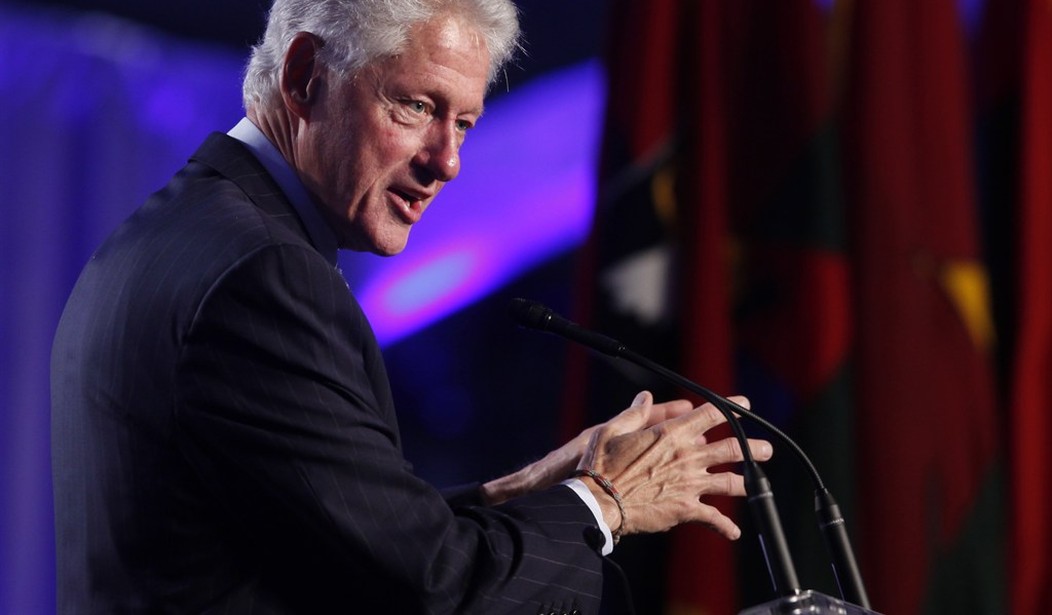
After signing the Defense of Marriage Act into law in 1996, then President Bill Clinton released a statement saying, “I have long opposed governmental recognition of same-gender marriages, and this legislation is consistent with that position.” In May 2011, Clinton reversed himself on the subject, publicly supporting marriage redefinition in New York.
Then, in a March 7 Washington Post editorial entitled “It’s time to overturn DOMA,” Clinton wrote,“Although . . . [the enactment of DOMA] was only 17 years ago, it was a very different time. . . As the president who signed the act into law, I have come to believe that DOMA is . . . incompatible with our Constitution. . . It should be overturned.”
If Clinton were arguing that Congress should repeal DOMA not because it is unconstitutional but because he no longer agrees with its policy, it would be a coherent position for him to take. But that is not at all what President Clinton is saying. What he is saying is that the Supreme Court should find that DOMA now violates the Constitution.
To state it plainly, Clinton’s position is that, when he was in favor of protecting marriage between a man and a woman, a federal law that did so was constitutional. But now, because he has changed his mind, that same law has suddenly become unconstitutional.
All members of Congress swear an oath to support and defend the Constitution of the United States. All U.S. presidents swear an oath to preserve, protect, and defend the Constitution. Therefore, Congress never consciously enacts and presidents never in good faith sign legislation they believe is unconstitutional. Indeed, a long-recognized legal presumption exists about these things.
Therefore, we can confidently state that, when enacted, both Congress and the president believed DOMA was constitutional. And yet Clinton is currently declaring that he now believes DOMA is unconstitutional and is encouraging the Supreme Court to strike it down.
Since neither the language of DOMA nor the language of the Constitution has changed, one must ask what has changed that would lead President Clinton to declare DOMA unconstitutional now, some 17 years since he signed it into law?
The answer, of course, is as obvious as it is disturbing—the only thing that has changed is President Clinton’s personal opinion about marriage. That does not make a law unconstitutional.
Clinton’s about-face on what the Constitution means clearly illustrates the treacherous nature of the “living Constitution” theory of constitutional interpretation. If the meaning of the Constitution can change, not because it has been amended by the People but simply because one’s opinion on an issue in the Constitution has changed, then the Constitution can mean one thing one day and the exact opposite the next.
In fact, it can mean anything one wants it to mean. And a constitution that can mean anything is a constitution that means nothing—a mere 17 years after it supposedly meant something.


Join the Conversation
VIP members get the ability to comment on articles.