







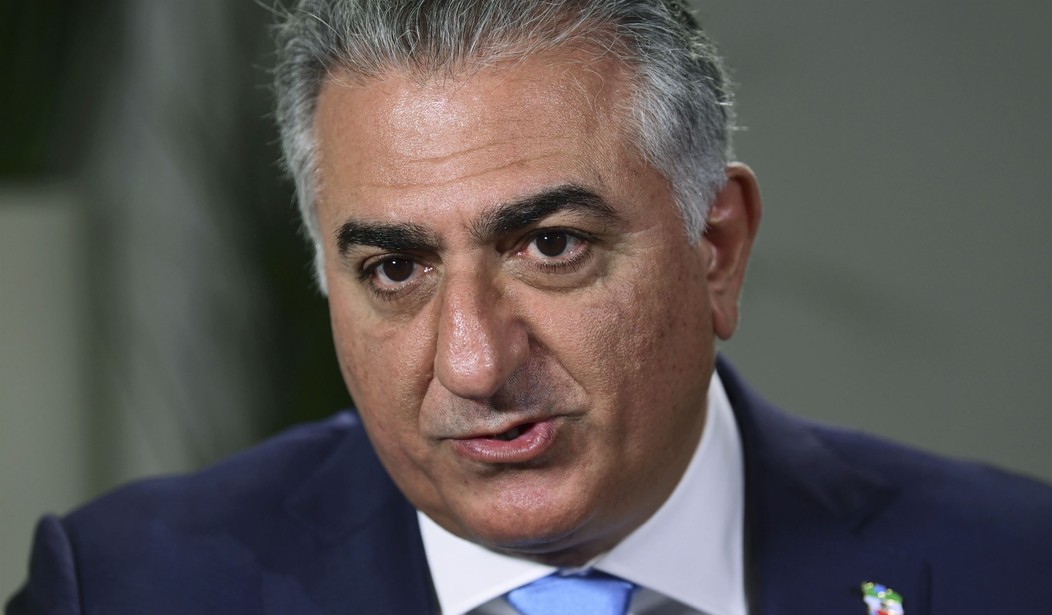
Iranian Crown Prince Reza Pahlavi spoke out against the country’s Islamic regime amid widespread protests in the streets.
Pahlavi is the eldest son of Mohammad Reza Shah Pahlavi, the last monarch of Iran’s Pahlavi dynasty who was overthrown during the 1979 Islamic Revolution.
During a Tuesday interview with Fox News’ Sean Hannity, Pahlavi commented on the protests and suggested he is ready to step in as the country’s new leader if the current regime falls.
“At the call of my compatriots, I've stepped forward to lead this transition from this tyranny to a future democracy,” Pahlavi said. “My role is to help my compatriot achieve that goal, to bring about a peaceful end by means of a national referendum and a constitutional assembly.”
The crown prince suggested he is “impartial as to what the ultimate result will be, so long as it’s a secular democracy” and that he has “trained all my life to serve my nation.”
Pahlavi discussed how Iranians have grown increasingly fed up with their government and suggested change could be on the horizon.
Look, in all these years, I've never seen an opportunity as we see today in Iran. The Iranian people are more than ever committed to bringing an end to this regime. As the world has witnessed in the last few days, the level of demonstrations unprecedented in Iran. Over 100 cities and millions of people on the street chanting, death to the dictator. An end to this regime. And by God, it is about time that that Iran gets its opportunity to free itself from a tyrannical regime.
Crown Prince Reza Pahlavi:
— Visegrád 24 (@visegrad24) January 7, 2026
“I’m more than ever ready to step in Iran”pic.twitter.com/Tlcta8kuqw
Iran is experiencing its most significant domestic upheaval since 2022. Nationwide protests have persisted for over a week amid rising concerns about the nation’s economy and heightened military tensions with the United States and Israel.
The demonstrations started as a way to express Iranians’ frustrations with inflation and the devaluing of its currency. But it quickly transformed into a movement calling for the overthrow of the Islamic regime.
The protests have stretched to at least 110 cities in 27 of the country’s 31 provinces. Researchers have tracked at least 179 separate protests since the beginning of January. Participants include merchants, university students, industrial workers, and others from diverse backgrounds.
The Iranian regime’s response has been violent, with soldiers shooting many protesters, according to the BBC.
At least 36 people have been killed during the last 10 days of protests across Iran, a human rights group has said.
The foreign-based Human Rights Activists News Agency (HRANA) reported that 34 of those confirmed killed were protesters and two were affiliated with security forces.
Iranian authorities have not published an official death toll but said three security personnel have been killed. BBC Persian has so far confirmed the deaths and identities of 20 people.
HRANA also said that more than 60 protesters had been injured and 2,076 arrested during the unrest, which was sparked by an economic crisis and has spread to 27 of 31 provinces.
On Tuesday evening, Iranian semi-official media reported that a policeman was shot dead by what they called "rioters" in Malekshahi in the western province of Ilam, where there have been widespread protests and a violent crackdown by security forces in recent days.
Earlier, security forces were filmed firing tear gas during clashes with protesters who chanted slogans against Iran's clerical rulers at Tehran's Grand Bazaar.
The protests began on 28 December, when shopkeepers took to the streets of the capital to express their anger at another sharp fall in the value of the Iranian currency against the US dollar on the open market.
The rial has sunk to a record low over the past year and inflation has soared to 40% as sanctions over Iran's nuclear programme squeeze an economy also weakened by mismanagement and corruption.
University students soon joined the protests and they began spreading to other cities.
Supreme Leader Ayatollah Khamenei, 86, made his first public comments on the protests on January 4. He tried to draw a distinction between protesters with “legitimate grievances” about the economy and what he portrayed as foreign-backed “rioters.”
"We engage with protesters, and officials must communicate with them. However, there is no advantage in conversing with rioters,” he said in a speech. “They must be dealt with decisively.”
Editor’s Note: Do you enjoy Townhall’s conservative reporting that takes on the radical left and woke media? Support our work so that we can continue to bring you the truth.
Join Townhall VIP and use promo code FIGHT to receive 60% off your membership.

Join the Conversation
VIP members get the ability to comment on articles.