





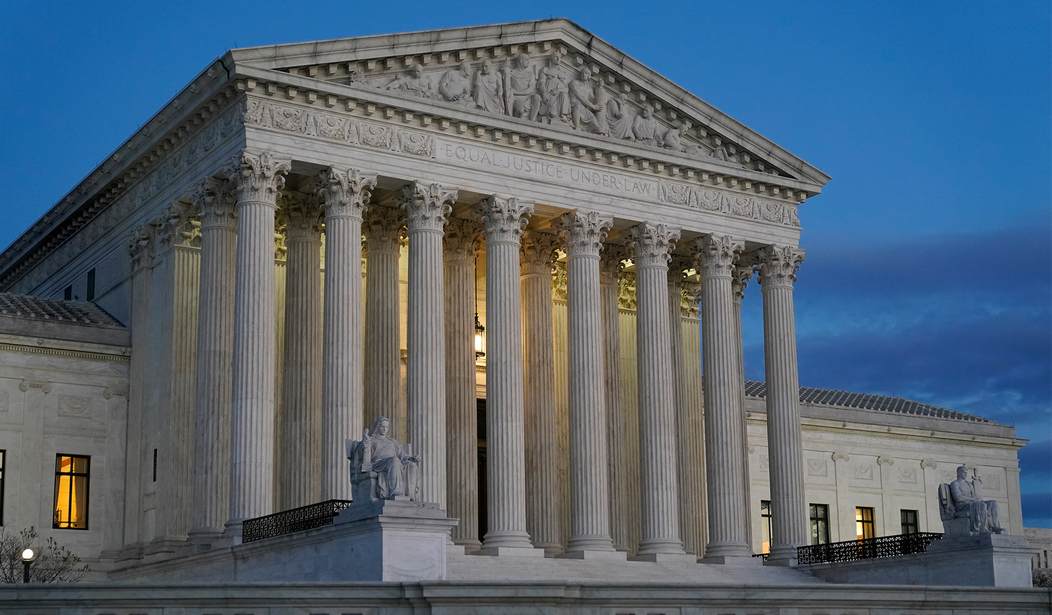
The Supreme Court ruled on Monday mandating that law enforcement conduct a Fourth Amendment search when they obtain a person’s cell phone location data through a geofence warrant directed at Google.
The Justices held in Chatrie v. United States that Americans have a reasonable expectation of privacy in their detailed Location History records, meaning police must follow the Constitution’s rules when seeking that information to identify suspects.
The ruling came out of a case that took place in May 2020 when a robber targeted a credit union in Midlothian, Virginia. Video footage captured the suspect using a cell phone near the scene of the crime.
Police did not have sold leads on the suspect and applied for a geofence warrant from a Virginia magistrate. The warrant instructed Google to hand over anonymized Location History data for all phones inside a 150-meter radius of the credit union from 30 minutes before to 30 minutes after the crime.
#BREAKING The Supreme Court ruled that police conduct a Fourth Amendment search when they obtain data through a geofence warrant, holding that people have a reasonable expectation of privacy in their cell phone location data. pic.twitter.com/C1BVzZS2G1
— MCBN (@MCBNNEWSS) June 29, 2026
Officers can then narrow the list with Google providing more data on movements inside and outside the area for a two-hour window. The process eventually led the officers to Okello Chatrie. His data showed him entering the geofence area about 10 minutes before the robbery and leaving right after.
After a federal grand jury indicted Chatrie on robbery and firearms charges, his attorneys moved to suppress the Google data, insisting that the warrant violated the Fourth Amendment. A lower court agreed that it “plainly violates the rights enshrined in [the Fourth] Amendment” but denied the motion under the good-faith exception.
The Fourth Circuit Court of Appeals took the case and agreed with the lower court’s ruling. The Supreme Court then granted review on the narrow issue of whether obtaining Chatrie’s location data through the geofence warrant violated the Fourth Amendment.
In an opinion written by Justice Elena Kagan, who was joined by Chief Justice Roberts and Justices Sonia Sotomayor, Brett Kavanaugh, and Ketanji Brown-Jackson, noted that “Police officers conducted a Fourth Amendment search when they acquired Chatrie’s location data from Google because an individual has a reasonable expectation of privacy in his cell-phone location information.”
The opinion references Carpenter v. United States which recognized that this type of data clashes with privacy rights by creating “an intimate window into a person’s life.”
The court noted that Location History data can be even more intrusive because it pinpoints an individual’s location within 20 meters. It records it every two minutes and can even reveal elevation inside buildings.
The Court rejected the government’s argument that the officers used only a short time period of data and that the third-party doctrine removed expectation of privacy. “[E]ven short-term monitoring can provide a wealth of detail about [a person’s] familial, political, professional, religious, and sexual associations,” the Court noted.
The justices also noted that the third-party doctrine does not apply because users turn it on for personal use to document their movements. They do not expect for the information to be given to the government.
This ruling means law enforcement will face tighter limits on how they can use geofence warrants to sweep up location data from tech companies to identify suspects. Officers will need to obtain warrants that describe in detail what data will be sought at each step of the investigation.
Editor's Note: Do you enjoy Townhall's conservative reporting that takes on the radical left and woke media? Support our work so that we can continue to bring you the truth.
Join Townhall VIP and use promo code FIGHT to receive 60% off your membership.

Join the Conversation
VIP members get the ability to comment on articles.