





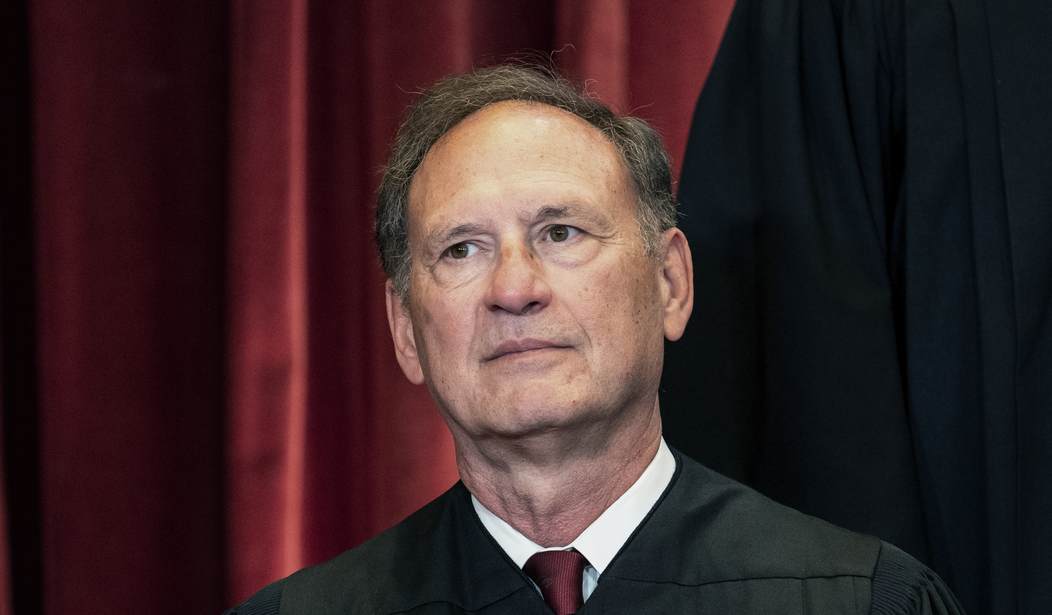
Justice Samuel Alito wrote a scathing dissent in Watson v. Republican National Committee, a case addressing whether mail-in ballots may be counted after Election Day. The decision was 5-4, as announced Monday, with Justice Amy Coney Barrett and Chief Justice John Roberts joining the Court’s liberal minority in allowing ballots to be counted after Election Day.
Alito argued that the whole idea runs contrary to the nation’s long history of Election Day and raises serious concerns about undermining trust in American elections. He also criticized the Court for failing to maintain systemic barriers that provide an added check against election fraud.
🚨 JUST IN: Supreme Court Justice Sam Alito GOES OFF on the court’s decision to uphold late-mail in ballot counting
— Eric Daugherty (@EricLDaugh) June 29, 2026
“[This] creates a serious risk of further undermining public confidence in our elections and our system of self-government!”
HE IS RIGHT.
SCOTUS DID THE WRONG… https://t.co/oJoJ6aWEd6 pic.twitter.com/BaBPTiTJtU
Justice Samuel Alito responds to this ruling:
— Townhall.com (@townhallcom) June 29, 2026
"I cannot support this irresponsible escapade." https://t.co/Uq7p4F6UjG pic.twitter.com/ArnC6Ox4OL
“From this Nation’s founding until the last few decades of the 20th century—a period that spans the enactment of all three election-day statutes—having an ‘election’ on a particular day meant completing ballot collection on that day," Justice Alito wrote.
Alito argued that Election Day has always been November 3, making it the firm cutoff for voting. Counting ballots days later, he said, effectively extends the election beyond that date and conflicts with the rules set by Congress. He went on to argue that failing to ensure mail-in ballots are counted by Election Day removes yet another safeguard against election fraud and only further undermines the integrity and trust of American elections.
"Not only is today’s decision inconsistent with statutory text, legal context, historical practice, and precedent; it also threatens to produce lamentable consequences," Justice Alito wrote. "The majority’s holding spawns a slurry of troubling election-law questions and risks further undermining Americans’ confidence in election integrity."
"By allowing States to continue receiving new ballots during these drawn-out processes, today’s decision will only exacerbate voters’ distrust," he wrote.
It is undeniable that a prohibition on counting late-arriving ballots would provide an additional hurdle for bad actors seeking to stuff ballot boxes when early election results suggest a tight race. The majority incorrectly removes this safeguard from federal law.
The majority opinion, authored by Justice Amy Coney Barrett, even as it departs from the Trump administration’s position falls short of the “betrayal” label some have attached to it. It did not endorse counting mail-in ballots after Election Day; rather, it held that any change to the law must come from Congress or state legislatures, not the Supreme Court exercising judicial review. In short, altering election rules is a legislative responsibility, not a judicial one.
Still, the conservative dissent saw it differently, questioning the ruling’s impact on election integrity.
"Today’s decision is inconsistent with the terms of the election-day statutes, contemporary election-law principles, two centuries of historical practice, and the case law on the question presented," Justice Alito concluded. "It opens up and fails to resolve a host of questions for state election officials and courts. And it creates a serious risk of further undermining public confidence in our elections and our system of self-government. I therefore respectfully dissent."
Editor's Note: The Democrats are doing everything in their power to undermine the integrity of our elections.
Help us tell the truth about the SAVE America Act and how it will prevent voter fraud. Join Townhall VIP and use promo code FIGHT to get 60% off your VIP membership.


Join the Conversation
VIP members get the ability to comment on articles.