





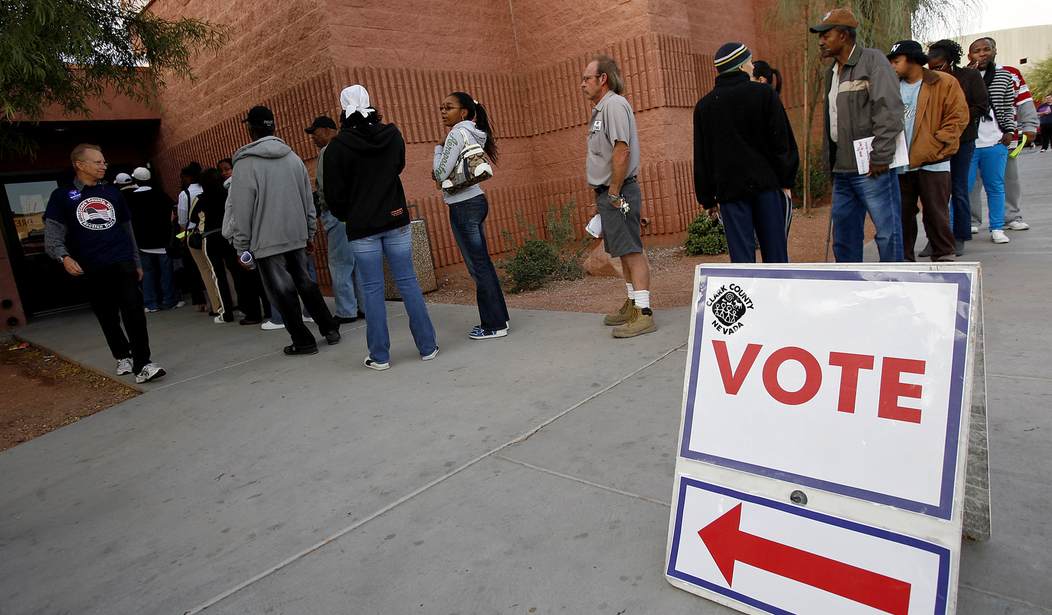
I cast my first ballot in 1986, standing in line at a Stamford, Connecticut polling place on a raw November morning, feeling like I had just joined something larger than myself. Nearly four decades of watching elections — from neighborhood school boards to presidential campaigns — have taught me one iron rule: the integrity of the count begins with the integrity of the rolls. What Assistant Attorney General Harmeet Dhillon revealed on Fox News’s Sunday Morning Futures this past weekend should erase any remaining doubt that we have a serious, structural problem.
After reviewing approximately 60 million voter records from cooperating states, the Department of Justice found at least 350,000 dead people still listed as active voters. Officials also flagged roughly 25,000 individuals with no citizenship records and referred those names to the Department of Homeland Security for further scrutiny. In a nation that can track a FedEx package from Shanghai to Scottsdale in real time, we cannot reliably tell the living from the dead on our own voter rolls. That is not a partisan talking point. It is a documented administrative failure.
The Constitution places election administration in the hands of the states. That design makes sense on its face; it resists centralized manipulation. It also creates exactly the patchwork of compliance and obstruction we now see. Dhillon confirmed the DOJ has sued 29 states and the District of Columbia for refusing to hand over full voter registration databases, complete with Social Security and driver’s license numbers. Federal authority on this is not in question. The Civil Rights Act of 1960, the National Voter Registration Act of 1993, and the Help America Vote Act of 2002 collectively give the attorney general clear authority to demand these records. The law has been in the books for decades. What’s new is a DOJ willing to use it.
Only Oklahoma settled after being sued, reaching an agreement on March 24, 2026, to produce its data under specific privacy protections. Every other defendant is litigating. Judges in California, Michigan, Oregon, and Georgia have dismissed the federal cases so far, and the DOJ is now pursuing appeals in both the Ninth and Sixth Circuits. Every day of delay means more outdated entries remain on active rolls. The question that resisting states cannot seem to answer is simple: if your rolls are clean, what exactly are you protecting?
Skeptics dismiss the problem as theoretical. It is not. Congressional seats have flipped on margins measured in the hundreds of votes. In 2024, a California congressional race was decided by fewer than 200 ballots. Duplicate registrations across state lines, ballots that trickle in days after Election Day, and phantom names on active rolls all compound each other. In Minnesota, a non-citizen was recently indicted for voting without citizenship — a state that allows residents to vouch for each other’s eligibility, a loophole that belongs in a museum exhibit on bad governance, not a functioning democratic republic.
The mail-in ballot extension problem is now before the Supreme Court. In Watson v. Republican National Committee, the justices heard oral arguments on March 23, 2026, on whether states can legally count ballots received after Election Day. More than a dozen states allow ballots postmarked by Election Day to be counted for up to five business days after. A majority of the Court appeared ready to end that practice. That’s a good start. Election Day has a name for a reason. Everyone should want a firm deadline. The Court should simultaneously carve out an explicit, ironclad exemption for military and overseas ballots — servicemembers operating downrange cannot be penalized for APO mail delays. They have already given enough.
Privacy advocates argue that handing voter data to the DOJ is dangerous. Set aside, for a moment, that these same states routinely share driver’s license and Social Security data with tax agencies, DMV contractors, and commercial data brokers without a second thought. The real concern is not privacy, it’s accountability. No one wants their rolls audited when they know the audit will surface a mess.
The American public is not confused about any of this. Gallup finds 84 percent of Americans support requiring proof of citizenship for voter registration. That is the core of the SAVE America Act, which the House passed on February 11, 2026, by a vote of 218-213. The Senate faces a 60-vote filibuster threshold and has not yet scheduled a final vote. This is a bill backed by roughly eight in 10 Americans and opposed by nearly every Democrat in Congress. That gap says less about election integrity than it does about whose interests resistance serves.
Every state must comply with lawful DOJ requests or face real enforcement, not just appellate posturing that buys two more election cycles of delay. Congress must push the SAVE America Act through the Senate. The Supreme Court should lock in a hard Election Day deadline while giving military and overseas voters the statutory protections their service demands. States should run automatic cross-checks against Social Security death records — tools that already exist, cost nearly nothing, and would have flagged a significant share of those 350,000 phantom registrations years ago.
When I was at Officer Candidate School in Quantico in 1988, our instructors spent considerable time on accountability — the principle that you own your results, no excuses, no hedging. American election administration needs a similar reckoning. The DOJ has done its job: it ran the records, published the numbers, filed the suits, and made the case. Now it falls to Congress, the courts, and the states to act. Dead men don’t vote. But right now, hundreds of thousands of them are registered to. Every official who claims to believe in fair elections has a choice: clean the rolls, pass the Act, and enforce the law. The republic does not ask for perfection. It asks for honesty.
Jay Rogers is President of Alpha Strategies and a financial professional with more than 30 years of experience in private equity, private credit, hedge funds, and wealth management. He has a BS from Northeastern University and has completed postgraduate studies at UCLA, UPENN, and Harvard. He writes about issues in finance, constitutional law, national security, human nature, and public policy.
Editor’s Note: Republicans are fighting for election integrity by requiring proper identification to vote.
Help us continue to report why Democrats oppose such obvious measures by joining Townhall VIP and using promo code FIGHT to receive 60% off your membership.
Join the Conversation
VIP members get the ability to comment on articles.