





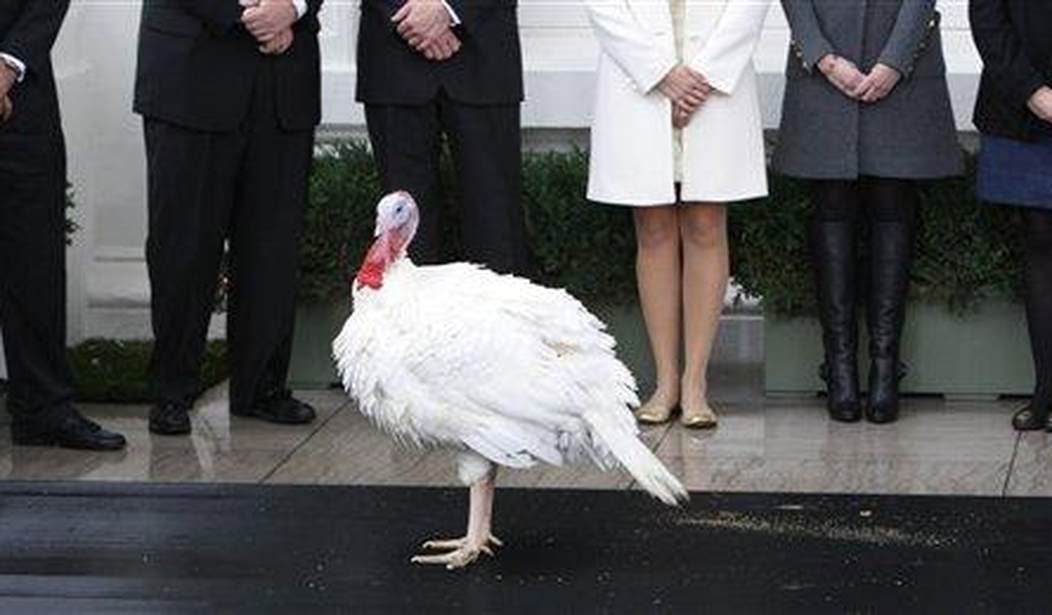
Thanksgiving is a time for celebration, but the centerpiece of the feast is under attack.
Everywhere you turn, it seems there’s a message that meat is bad. News stories claim meat is bad for the environment. Documentaries try to convince us that meat is bad for our health. Animal rights activists try to guilt-trip us for enjoying turkey (or beef, chicken, pork, eggs, or dairy). Meat has become “politically incorrect.”
It’s time to take back the table conversation from the meat-haters. Unlike a golden, juicy, 20-pound bird, none of the criticisms of enjoying animal-based foods has much meat on the bones.
First, let’s tackle the idea that meat is bad for your personal health. It’s not just wrong, it’s backwards.
Humans are omnivores. Anthropological evidence has shown that eating meat is what allowed us to evolve and grow bigger brains, becoming the intelligent species we are today.
There’s a more specific reason, too: Protein. Our bodies need amino acids provided by protein. But not all protein is the same.
While many foods have protein, not all of it is usable by the body. Health professionals created a system called the Digestible Indispensable Amino Acid Score to evaluate how well different foods provide protein to our bodies. Chicken, beef, and pork all score highly, while plants don’t score as well. The fact that vegans need to supplement vitamin B12 is even more evidence that our bodies thrive on animal protein.
How about meat and the environment?
Environmental critics claim producing meat produces too many greenhouse gasses. But if you dig into the data, it turns out that raising livestock isn’t as impactful as you might think. According to the EPA, which publishes an annual report of greenhouse gas emissions, all of agriculture, covering everything from bacon to rice plantations, is merely 9 percent of all emissions in the United States.
And meat production? That’s even less: Only about 5 percent. That’s a small slice of our overall emissions, particularly considering America eats 1 billion meals a day.
Over 1,100 scientists recently signed a public statement that “well-managed livestock systems applying agro-ecological principles can generate many other benefits, including carbon sequestration, improved soil health, biodiversity, watershed protection and the provision of important ecosystem services.” Quite simply, livestock farming is sustainable.
What about that final, lingering question: Is it moral to eat animals? It’s a fair question, and it has an easy answer: Yes.
The idea that any diet is “pure”–meaning no animals died–is pure fantasy. Growing and harvesting vegetables kills animals, too.
Farmers use all kinds of pesticides to kill birds, rodents, insects, and other animals that might infest or ruin crops. Harvesting is typically done by huge combines that run over burrows and kill rabbits and other wild animals.
Even PETA, the leading anti-meat group, admits: “Does farming plants kill animals? In short, yes.”
But that’s not all. A professor calculated that vegetarian diets kill more animals than a diet of grass-fed beef. One cow grazing on pasture can provide months of food for a person. But if you base your diet around veggies, you’re indirectly killing far more animals for your diet.
Many of us have gone out of our way to reformulate a dish to be more inclusive for a vegetarian or vegan relative: Providing a meat imitation, keeping butter on the side, or something else. We do this even as we’d never expect a vegan to go out of their way to make us an omnivorous dish.
And that’s all in the spirit of the holiday. We should all be thankful to be together, whatever our differences.
But if that vegan relative starts giving an unwanted serving of anti-meat claims, now you have a few facts to politely tell them to stuff it. There’s simply nothing wrong with eating a natural diet.
Will Coggin is Vice President of Research at The Center for Consumer Freedom



Join the Conversation
VIP members get the ability to comment on articles.