





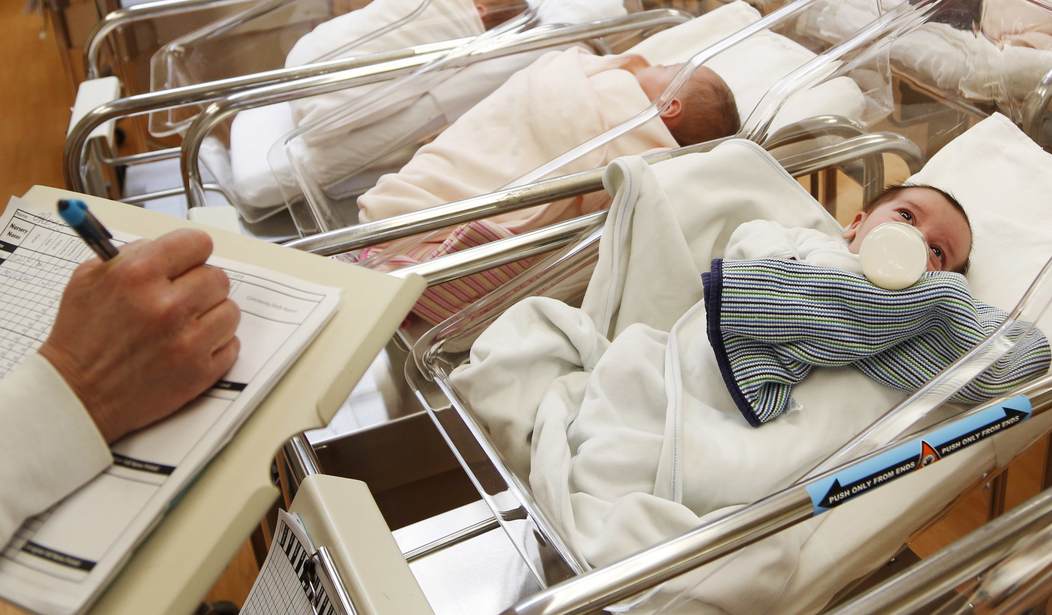
Paul Ehrlich died last week. His prophecy of a population doomsday never came to pass. It probably never will since the big issue at the moment are declining birth rates in the Western world.
But Ehrlich convinced a lot of people that what he saw coming was inevitable. Tons of people bought into it and accepted Ehrlich as an expert who should be taken seriously.
He was wrong about pretty much everything, though, as we now know.
Meanwhile, let's consider that other people are considered experts in other fields and are often just as wrong as Ehrlich was about human population increases and global catastrophe. Paul Krugman, for example, famously predicted the internet would have no more impact on the economy than the fax machine had. He's still being mocked for that one, as he should be.
Despite that, there are those out there, such as New York City Mayor Zohran Mamdani, who think that the government is better equipped to run things than the free market. From Bernie Sanders to AOC, the number of people who share this idea is staggering.
For the government to actually run things effectively, they need smart people who are capable of predicting what will happen in advance and adjusting course as needed. The failure of any government to do that now is politically dangerous, but when they have power over every aspect of our economy, it's especially problematic.
Yet imagine what would have happened if we'd listened to Ehrlich. In "The Population Bomb," Ehrlich suggested the United States put temporary sterilizing agents into the food and water supply, a move that would likely prevent any births and could cause massive problems in future years when there would be a gap in the number of people of working or military age.
He also supported increased taxes for having children and a luxury tax on childcare goods, which would have disproportionately impacted poor, rural Americans of the time who were more likely to consume water and food from outside of the existing supply, and thus bypass the sterilization drugs Ehrlich wanted forced into everyone in the country.
In short, he blew it, but he was still considered the expert at the time. Had we allowed the expert to centrally plan, as the left tends to think we should, then not only would Ehrlich's predictions not come to pass, but the entire world would have entered a dystopian hellscape out of fears of a future that was never going to be.
Krugman, a Nobel Prize-winning economist, blew it on the internet. He's blown it on so many other things over the years as well, yet he's got the credentials that many would accept as the kind of guy who should be planning our economy.
The problem isn't that a free society might get some things wrong. It's that central planners will never get enough right to warrant the risk.
As many of us lament things like Wi-Fi-enabled refrigerators that simply don't last, or furniture that falls apart in a few years, the truth is that while the buying public probably blew it themselves, they're the ones having to deal with the ramifications of their previous decisions. They can pivot and change it if they want, simply by changing their buying habits.
Central planners would have to admit they're wrong in order to do that, and they won't. They can't. Doing so would likely cost them their jobs, after all, and so they have a perverse incentive to double down. Lysenkoism didn't vanish the moment it was clear that the idea was a failure, because no one in the Soviet Union could afford to admit that it was pseudoscience.
The free market may not always get it right, but the ramifications of getting it wrong are far less than when "experts" are the ones making the call.
Ehrlich would have doomed the human race if he'd gotten the chance, and he died without ever admitting he was wrong. Do you really think any other central planner would be all that different?


Join the Conversation
VIP members get the ability to comment on articles.