





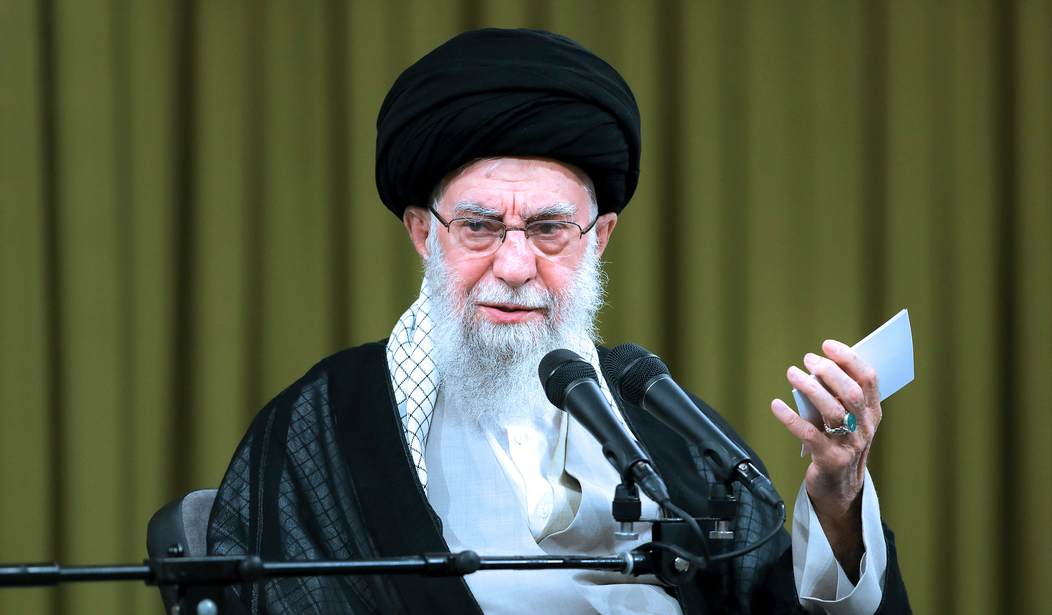
For six days, the clerical regime in Tehran intends to wrap former Supreme Leader Ayatollah Ali Khamenei in the mantle of martyrdom. State-orchestrated crowds, rivers of black-clad mourners, military pageantry, and carefully choreographed displays of devotion will seek to elevate Iran's Supreme Leader into an icon of Islamic resistance. History demands a very different verdict. Ali Khamenei leaves behind neither a legacy of greatness nor one of statesmanship. He leaves a blood-soaked record of repression, terror, and cruelty that stretches across almost four decades. Behind every carefully rehearsed eulogy stand thousands of shattered families, countless political prisoners, silenced journalists, persecuted women, and innocent civilians whose lives became expendable in pursuit of ideological fanaticism.
The architects of this grotesque spectacle hope the world will remember Khamenei as a defender of Iran. Future generations should remember him as the chief custodian of one of the world's most brutal theocratic dictatorships. Few episodes illustrate that brutality more starkly than the 1988 massacre of political prisoners. More than 30,000 men and women, many already serving prison sentences, faced summary proceedings in front of infamous "death commissions," before execution and burial in secret mass graves, simply for swearing allegiance to the main democratic opposition movement—the Peoples Mojahedinof Iran/Mujahedin-e Khalq (PMOI/MEK). Human rights experts, United Nations officials, and survivors have spent decades demanding accountability for what constituted crimes against humanity and genocide. Throughout those years, Khamenei defended the system that carried out those atrocities and presided over a regime determined to erase both the evidence and the memory of its victims.
His rule rested upon fear. Freedom of speech became a criminal offence. Independent newspapers disappeared. Trade union leaders entered prison. Human rights lawyers endured persecution. Students, academics, artists, ethnic minorities, and religious communities all discovered that dissent carried a devastating price. Iranian women bore a particularly heavy burden. Khamenei transformed compulsory veiling into a symbol of absolute state control. Generations of courageous women faced harassment, imprisonment, violence, and intimidation simply for demanding the most basic freedoms. Every young woman who removed her hijab in defiance of oppression exposed the profound insecurity of a regime terrified by liberty. The nationwide protests that erupted after the death of Mahsa Amini revealed the true character of Khamenei's Islamic Republic. Young Iranians marched for dignity, justice, and freedom. The regime answered with bullets, arbitrary detention, torture, and executions. International investigators documented grave human rights violations, while countless families continue searching for justice for loved ones who never returned home.
Yet Khamenei's malign influence reached far beyond Iran's borders. Under his direction, the Islamic Revolutionary Guard Corps (IRGC) evolved into the principal engine for exporting the regime's revolutionary extremism. Tehran armed, financed, and trained an extensive network of proxy militias whose activities destabilized an entire region. Hezbollah became Iran's most powerful foreign legion. Hamas received decades of financial, military, and political support. The Houthis transformed into a formidable regional threat. Powerful Iraqi militias expanded Tehran's influence through intimidation and violence.
Rather than investing Iran's immense oil wealth in schools, hospitals, jobs, and prosperity, billions disappeared into proxy wars that brought devastation to Lebanon, Syria, Iraq, Yemen, Gaza, and beyond. The barbarity of October 7, 2023, shocked the conscience of the civilized world. Hamas carried out murder, torture, hostage-taking, and atrocities against Israeli civilians on a horrifying scale. Debate continues regarding the precise operational role played by Tehran, yet the long-standing sponsorship, financing, training, and arming of Hamas under Khamenei's leadership remain beyond serious dispute. His regime helped build the infrastructure that sustained one of the Middle East's most dangerous terrorist organizations.
Nor did Iranian terror remain confined to the region. For decades, Iranian intelligence services and the Revolutionary Guards faced accusations and criminal investigations linked to assassination plots, bomb attacks, and terrorist operations across Europe, Latin America, the Middle East, and elsewhere. Diplomats frequently served alongside intelligence operatives. Embassies too often became instruments of intimidation rather than peaceful engagement.
Inside Iran, ordinary citizens watched their country descend into economic misery. Inflation soared. Corruption flourished. Youth unemployment remained stubbornly high. Vast national wealth enriched the Revolutionary Guards and a privileged clerical elite while millions struggled simply to make ends meet. Khamenei endlessly blamed foreign enemies for Iran's failures, yet the greatest enemy of Iran's prosperity sat at the apex of its own political system.
Perhaps the greatest tragedy lies in the way Khamenei distorted Islam itself. His doctrine bore little resemblance to the compassion, justice, and mercy embraced by millions of Muslims across the globe. Instead, religion became an instrument of coercion, censorship, persecution, and fear. Faith served political absolutism. Dissent became apostasy. Loyalty to the Supreme Leader eclipsed every principle of accountability. That corruption of religion inflicted profound damage upon Islam's standing throughout the world while betraying the values of countless devout Muslims.
Now the regime asks the Iranian people to celebrate the life of a man whose rule extinguished so many lives and dreams. No quantity of banners can conceal mass graves. No military parade can erase decades of torture. No funeral procession can wash away crimes against humanity. No carefully choreographed mourning can transform a dictator into a martyr. The Iranian people deserve a future founded upon democracy, the rule of law, equality between women and men, freedom of religion, and genuine respect for human rights. They deserve leaders who build bridges rather than militias, schools rather than prisons, prosperity rather than perpetual confrontation. Ali Khamenei represented the very opposite of that vision. His funeral may last six days.
The suffering he inflicted has scarred generations.
History eventually strips away propaganda, exposing every tyrant for what he truly became. When that final judgment arrives, Ali Khamenei will stand remembered alongside those rulers whose names evoke repression, fanaticism, and fear rather than honor. The world should resist every attempt to sanctify his memory. His monument belongs neither in marble nor in myth. His true memorial lives in the testimony of his victims.
Struan Stevenson was a member of the European Parliament representing Scotland (1999-2014), president of the Parliament's Delegation for Relations with Iraq (2009-2014), and chairman of the Friends of a Free Iran Intergroup (2004-2014). He is an author and international lecturer on the Middle East.
Editor's Note: For decades, former presidents have been all talk and no action. Now, Donald Trump is eliminating the threat from Iran once and for all.
Help us report the truth about the Trump administration's decisive actions to keep Americans safe and bring peace to the world. Join Townhall VIP and use promo code FIGHT to get 60% off your VIP membership.

Join the Conversation
VIP members get the ability to comment on articles.