





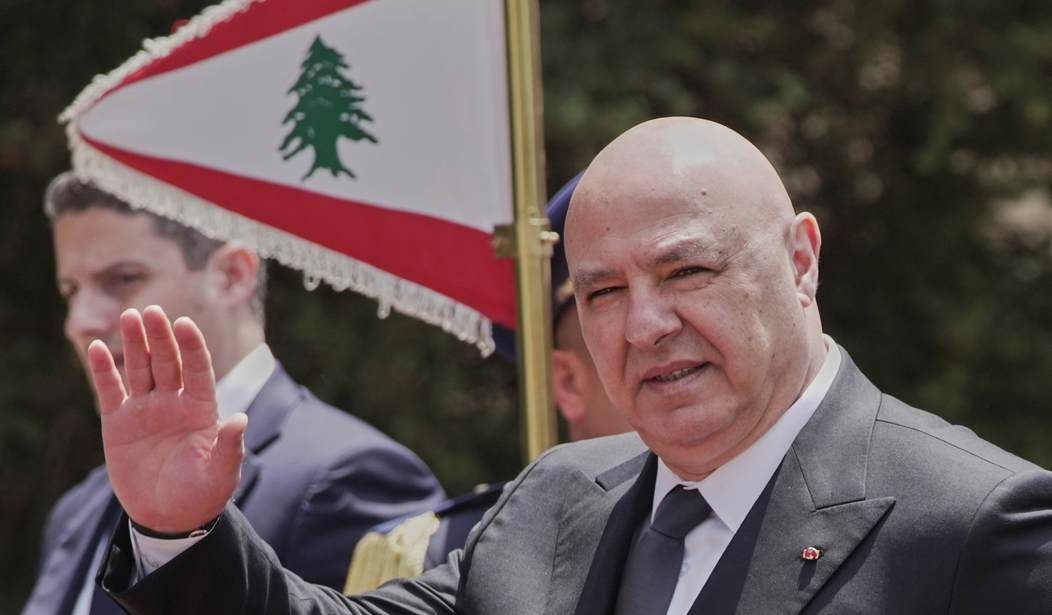
For more than four decades, Lebanon has endured the crushing burden of foreign manipulation, sectarian militancy, and endless conflict. At the heart of that tragedy lies the Iranian regime’s vast investment in Hezbollah, a proxy army armed, financed, and directed from Tehran. What once masqueraded as “resistance” evolved into a parallel state, stronger than the Lebanese Army, richer than the ministries of government, and more loyal to Iran’s Supreme Leader than to the people of Lebanon.
Today, a rare opportunity has emerged to break that stranglehold. The recent direct talks between Lebanese and Israeli representatives in Washington, brokered by the United States, signal a profound strategic shift across the Middle East. Tehran clearly understands the danger. That explains the barrage of threats, intimidation, and propaganda unleashed by Iranian officials and Hezbollah allies in recent days.
Ahead of the U.S.-Iran negotiations in Islamabad, Iranian negotiators attempted to impose a Lebanon ceasefire as a condition for dialogue with Washington. Their demand failed. The talks proceeded anyway, exposing the limits of Tehran’s leverage. Yet the regime immediately intensified pressure on Beirut, desperate to preserve its fading influence over Lebanese affairs.
Iran’s parliament speaker, Mohammad Bagher Ghalibaf, repeatedly insisted that any ceasefire depended upon Hezbollah and the so-called “Axis of Resistance.” At the same time, Hezbollah-aligned media outlets in Beirut openly called for the overthrow of Lebanon’s government after Beirut moved against Hezbollah’s military apparatus and expelled Iran’s ambassador. The ambassador himself refused to leave. Such contempt for Lebanese sovereignty reveals everything about Tehran’s attitude toward Lebanon. Iran treats the country as a client territory rather than an independent state.
For years, Lebanese governments lacked either the courage or the capacity to confront Hezbollah. Political assassinations, intimidation campaigns, and armed coercion silenced critics. Vast areas of southern Lebanon became military staging grounds for Iranian missiles aimed at Israel. Ordinary Lebanese families paid the price through economic collapse, destruction, and isolation from the wider Arab world. The consequences proved catastrophic. Lebanon’s banking system imploded. Foreign investment evaporated. Tourism collapsed. Young professionals fled abroad in huge numbers. Meanwhile, Hezbollah commanders prospered through smuggling networks, illicit finance, and Iranian cash pipelines. Tehran poured billions into weapons and militias while Lebanese hospitals, schools, and infrastructure crumbled. Every conflict involving Hezbollah pushed Lebanon deeper into misery. The current crisis, therefore, marks far more than another diplomatic dispute. It represents a struggle over Lebanon’s identity and future direction. Will Lebanon emerge as a sovereign democratic state accountable to its citizens? Or will it remain trapped as the forward operating base of the Iranian Revolutionary Guard Corps?
Washington appears increasingly determined to answer that question decisively. Senior American officials have drawn a firm line separating Lebanon-Israel negotiations from broader talks with Tehran. That distinction matters enormously. For decades, Iran inserted itself into every Lebanese decision, presenting Hezbollah as the indispensable gatekeeper of regional stability. The new U.S. approach rejects that entire framework.
American officials now speak openly about ending Hezbollah’s dominance and restoring full Lebanese sovereignty. Secretary of State Marco Rubio described the process as part of a long-term effort to end decades of Hezbollah influence across the region. Such language would have seemed unimaginable only a few years ago.
Equally significant is the emerging recognition inside Lebanon itself that Hezbollah serves Iranian interests far more than Lebanese ones. During recent talks, Lebanese officials reportedly acknowledged that Hezbollah represents a shared problem for both Lebanon and Israel. That admission marks a dramatic political turning point. Tehran responded exactly as expected. Ali Akbar Velayati, senior adviser to Iran’s leadership, warned Lebanon’s prime minister about “irreparable security risks” should Beirut ignore the role of the “resistance.” Such statements resemble mafia threats rather than diplomatic engagement. Iran’s message remains brutally simple – obey Tehran or face chaos.
Yet fear alone can no longer sustain Hezbollah’s dominance. The organization suffered enormous military and political damage during recent confrontations. Many Lebanese citizens increasingly view Hezbollah as the chief obstacle to recovery and national stability. Across the Arab world, patience with Iranian interference has also evaporated. The Lebanese government, therefore, faces a historic choice. Half-measures and compromises merely prolong national decline. Genuine sovereignty demands decisive action. Hezbollah’s military wing must be fully dismantled. All heavy weapons should come under state control. Iranian military advisers require expulsion. Diplomatic immunity can never serve as cover for subversion, espionage, or militia coordination. Some observers warn that such steps risk internal instability. Yet Lebanon already lives amid permanent instability precisely because armed militias operate beyond state authority. No democratic society can function while a foreign-backed armed movement dictates questions of war and peace.
The Lebanese Armed Forces deserve international backing, financial assistance, and advanced training so they can secure the country’s borders and maintain internal stability. Arab states and Western allies should help rebuild Lebanon’s economy once meaningful reforms begin and Hezbollah’s shadow recedes.
President Donald Trump appears eager to accelerate that process through direct diplomacy involving both Lebanese President Joseph Aoun and Israeli Prime Minister Benjamin Netanyahu. Should such talks advance, they would shatter one of Tehran’s central ideological myths, that Lebanon exists eternally within the orbit of the so-called resistance axis. Peace between Lebanon and Israel would transform the region. Trade routes could reopen. Energy cooperation could flourish. Investment could return. Most importantly, Lebanese citizens might finally reclaim the normality denied to them for generations. Iran understands those stakes perfectly. That explains its escalating threats and frantic maneuvering. The world should also understand them.
Lebanon stands at the crossroads between sovereignty and subjugation. The era in which Tehran dictated Lebanon’s destiny through Hezbollah approaches its end. Courageous leadership in Beirut, backed by firm international support, could finally free Lebanon from the grip of a regime that brought only ruin, division, and bloodshed. The Lebanese people deserve far better than permanent servitude to Iran’s revolutionary ambitions.
Struan Stevenson was a member of the European Parliament representing Scotland (1999-2014), president of the Parliament's Delegation for Relations with Iraq (2009-14), and chairman of the Friends of a Free Iran Intergroup (2004-14). He is an author and international lecturer on the Middle East.
Editor’s Note: Thanks to President Trump and his administration’s bold leadership, we are respected on the world stage, and our enemies are being put on notice.
Help us continue to report on the administration’s peace through strength foreign policy and its successes. Join Townhall VIP and use promo code FIGHT to receive 60% off your membership.


Join the Conversation
VIP members get the ability to comment on articles.