





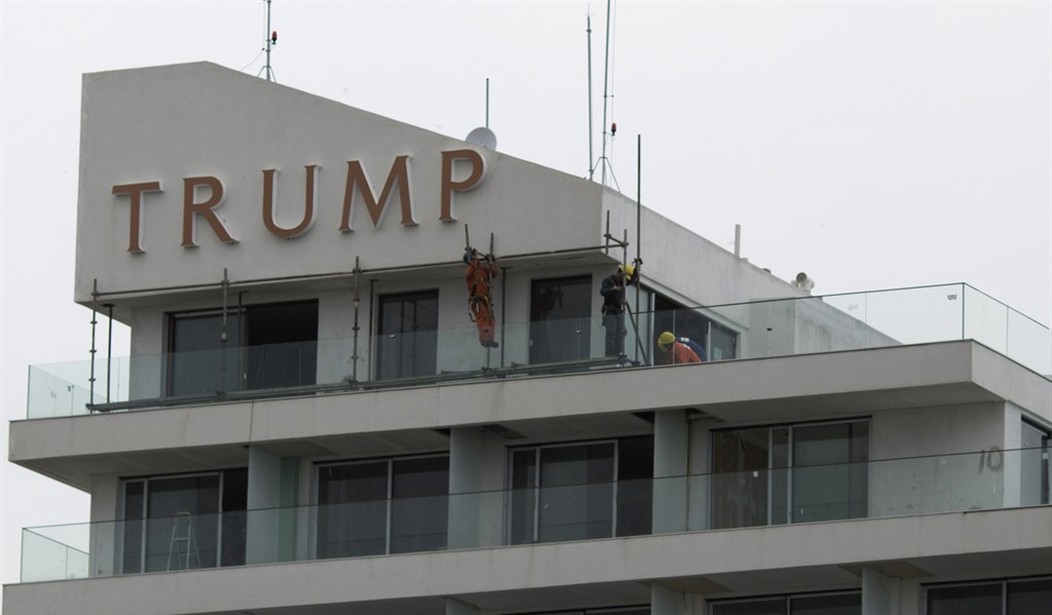
To anyone weary of 15 years of inconclusive war, Donald Trump's recent foreign policy speech offered heartening words. He thinks the United States should stop pursuing regime change abroad and start fixing its own problems.
"We will stop racing to topple" foreign governments "that we know nothing about," he recently told a crowd in Fayetteville, North Carolina. "We're guided by the lessons of history and a desire to promote stability -- stability all over -- and strength in our land. This destructive cycle of intervention and chaos must finally, folks, come to an end."
This promise is particularly relevant to Syrian ruler Bashar Assad, whom President Barack Obama once called on to leave. It also will reassure Egyptian strongman Abdel-Fattah el-Sissi, who restored an autocracy that Obama's pressure had helped bring down. Trump has no interest in toppling dictators. His goal is maintaining order.
So he says. But Trump's attention to the lessons of history goes only so far. In other places, he has heedlessly put stability at risk already. His blithe disdain for long-standing commitments and understandings invites a different destructive cycle that could make the previous chaos seem like ripples on a pond.
The first danger involves China, whose government Trump offended by taking a call from the president of Taiwan and indicating he may scrap our "one China" policy. The implication was that he may be willing to recognize Taiwan, which Beijing regards as a renegade province.
It may not sound like a big deal to him, because the Republic of China, as Taiwan calls itself, has enjoyed de facto independence since 1949. But that's where respect for the lessons of history comes in.
For a long time, the three governments have operated according to a compromise: China leaves Taiwan alone to govern itself; Taiwan doesn't declare its independence; and the United States acknowledges China's claim on the island while selling arms to Taiwan. No one loves the arrangement, but it's kept the peace.
By calling it into question, Trump challenges the Chinese government on turf that it can't give up. Were he to restore diplomatic relations with Taipei, Beijing would doubtless break ties with Washington and look for new ways to subvert our interests. Any overt move by Taiwan toward independence would provoke forceful military action by China. Are Americans ready to fight for Taiwan?
Upsetting the status quo would violate a couple of basic axioms of geopolitics. One is not to push an adversary into a corner where his only option is war. Another is not to pick a fight where the enemy's stake is much greater than yours. By ignoring these rules, the president-elect runs the risk of unleashing the very turbulence he abhors.
If his policy toward China is dangerously aggressive, his policy toward Russia is dangerously accommodating. Trump is famously enamored of President Vladimir Putin, and he has complained that our European allies are not paying enough for their own defense.
Asked in July whether he would use military force in the case of a Russian invasion of Estonia, Latvia or Lithuania -- all NATO members -- he hedged. "I don't want to tell you what I'd do, because I don't want Putin to know what I'd do," he said, suggesting it would depend on whether the invaded country had "fulfilled their obligations to us."
The implication was that the U.S. might stand by and let Russia seize one of its former states. Now, the original decision to include these countries in our defense alliance may have been a mistake. (I think it was.) But it's not a decision to be revisited when someone like Putin looms.
To suggest we might tolerate such aggression is to invite it. To tolerate a Russian attack on a NATO ally would expose all the others to intimidation. It would badly endanger an arrangement that, whatever its flaws, has deterred major war in Europe for more than 70 years.
To respond to a Russian invasion, though, would mean going to war with a nuclear state -- with potential consequences that range from "catastrophic" to "major extinction event."
The best thing Trump could do is make clear to Putin that when it comes to our NATO commitments, nothing has changed. Stability does not thrive on uncertainty.
Our policies toward China and Russia are not beyond improvement. But at the moment, the value of preserving the status quo greatly exceeds the rewards of smashing it.


Join the Conversation
VIP members get the ability to comment on articles.