





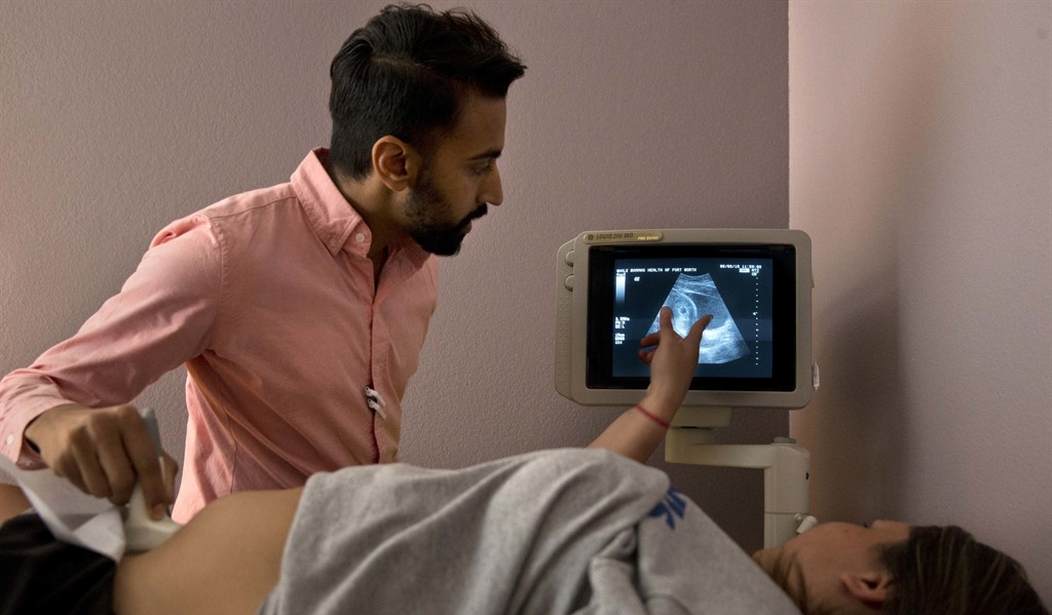
Collective trauma refers to the psychological effects of an event or events that affect a group of people and appropriately describes an experience I had as a nurse in a suburb of New Orleans, Louisiana. In 2000, I was working alongside a practicing OBGYN physician and his staff unknowingly received a patient who was suffering from sepsis following an incomplete or “botched” abortion. The woman we were treating was 16-years-old.
The young girl came to us with a high fever, and following an ultrasound, we learned that it was not because of pneumonia, an infection in her digestive system or other underlying reasons that can cause sepsis in children. It was instead due to "products of conception" left in her uterus. In plain English this meant the physician who performed the abortion failed to remove all the pieces of her unborn child's body during the procedure.
We then had to swiftly make the difficult decision to perform a complete hysterectomy, that is the removal of her uterus and both ovaries. We knew that our choice, while life-saving, would cause her to go into premature menopause and permanently remove her ability to ever have biological children at only 16-years-old.
This experience traumatized me as a person as I entered my profession with the desire to help women on their journeys as mothers rather than participating in taking motherhood away. To this day both myself and the physician look back with grief knowing that while we were not responsible for the events that took place we were part of this girl’s sudden, irreversible barrenness.
I’ve learned since that we are not the only health professionals that have experienced trauma after caring for patients suffering from abortion complications. This reality highlights the importance of the upcoming decision by the United States Supreme Court in June Medical Services v. Russo.
The Louisiana law in question, the 2014 Unsafe Abortion Protection Act (Act 620), requires physicians that perform abortions to have admitting privileges at a local hospital. This ensures that in an emergent situation the abortion physician would be the medical professional handling the crisis rather than someone unfamiliar with the patient's medical history.
Act 620 could also eliminate tragedies like the one I witnessed and took part in if the complications were addressed immediately, prior to becoming critical. Often times the facts about laws like this are buried beneath rhetoric about the legality of abortion when the information that should be front and center is when patients receive inadequate healthcare, women suffer and everyone involved faces consequences.
I believe as a medical professional, with over twenty years of experience, the U.S. Supreme Court should uphold Act 620 to protect women, medical professionals like myself and all of society from at least some of the trauma abortion can precipitate.
Sherri Alker is a nurse from Metairie, Louisiana and received her nursing degree in 1996 and a master’s in nursing science in 2016.



Join the Conversation
VIP members get the ability to comment on articles.