





Advocates of government action frequently bolster their case by contending that a “scientific consensus” or the “overwhelming majority of experts” agree with them.
Individuals and lawmakers may consult experts when making their own decisions. But some courts rely on “expert opinions” to overrule the decisions of democratically elected legislatures. This is hard to justify when the purported experts are in court and can be cross-examined. It is impossible to justify when courts rely on the pronouncements of professional associations and other groups that cannot be cross-examined.
Last year, for example, the Montana Supreme Court struck down a state law requiring that a child seeking an abortion obtain parental consent. The court relied partly on the ground that “The American Medical Association and the American Academy of Pediatrics, and other medical organizations, are opposed to parental consent laws.” Then on June 9 of this year, the same tribunal voided a state law designed to protect against fetal pain. The court cited positions taken by the National Academies of Sciences, Engineering, and Medicine and by the American College of Obstetricians and Gynecologists.
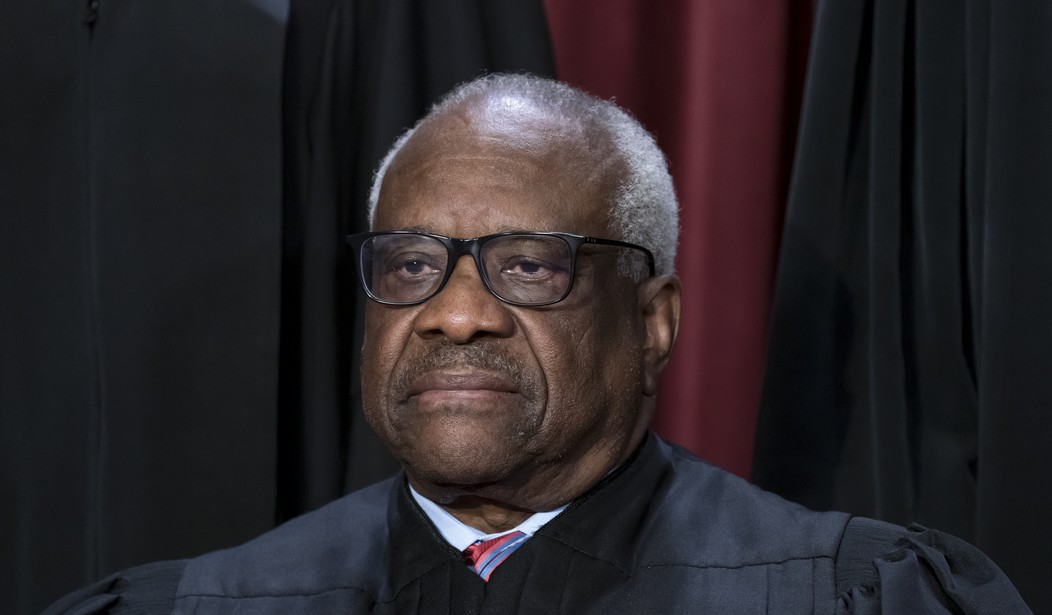
A few days later, Justice Clarence Thomas explained why this is not acceptable judicial procedure.
Justice Thomas’s comments came on June 18 in his concurring opinion in United States v. Skrmetti. In that case, the U.S. Supreme Court upheld a Tennessee law banning gender transition treatment for minors. The Biden administration had urged the court to overturn the law, alleging an “overwhelming medical consensus” in favor of transitioning children. The administration’s lawyers asserted that child transitioning had been endorsed by “numerous major medical organizations.”
Justice Thomas listed four reasons for disregarding such claims when deciding whether to uphold a state law. I’ll lay them out, and then elaborate.
Justice Thomas’s Four Points
First, Justice Thomas observed that “so-called experts have no license to countermand the ‘wisdom, fairness, or logic of legislative choices.’”
Second, he noted that “contrary to the representations of the [Biden administration] . . . there is no medical consensus on how best to treat gender dysphoria in children.” Third, he emphasized that the extent to which children’s decisions should control is a question of medical ethics. Medical ethics is an area in which state legislatures are necessarily concerned.
Finally, Justice Thomas pointed out that pronouncements by experts and their associations aren’t always accurate. They can be skewed by poor evidence, litigation strategy, and political calculations.
Experts are Not Elected
Justice Thomas’s first point is based on this fundamental truth: Ours is a democratic republic and state lawmakers are elected by the people while experts are not. Legislatures may consult experts if they wish, and it is often advisable to do so. But that choice is up to the legislature. When a court allows the views of unelected experts to overrule the decisions of elected lawmakers, it converts representative democracy into an oligarchy of the elite.
Justice Thomas’s second point was that the claim of an “overwhelming medical consensus” simply was not true. He reported that opinions on childhood gender transitions are changing rapidly, and that policymakers and experts in countries that initially favored them had turned against them.
Of course, this would not be the first time “expert opinion” has changed. A few centuries ago, there was an overwhelming expert consensus that the sun rotated around the Earth. More recently, we have seen that continuing assertions of “consensus” on climate change also are false.” Rather, there is a range of opinions on the subject. During the COVID-19 epidemic, we were told to “follow the science”—only to learn that experts differed on where “the science” led. There were various opinions on the origins of the disease, the effectiveness of the vaccines in preventing it and “stopping the spread,” and on how dangerous COVID and the vaccines really were. Even now, expert opinion on those subjects remains in flux.
Justice Thomas’s third point rested on the fact that children have poor decision-making abilities. The extent to which their decisions should be legally binding is a question of medical ethics—that is, a moral question. And, generally speaking, most of us have as much capacity to resolve moral issues as the experts do. Maybe more.
Thomas Jefferson thought so: “State a moral case to a plowman and a professor,” he observed. “The former will decide it as well, and often better than the latter, because he has not been led astray by artificial rules.” Skeptical? Witness the poor moral judgments that regularly afflict America’s prestigious universities—most recently, anti-Semitism.
Justice Thomas’s fourth point is that the pronouncements of experts and professional organizations can be skewed because of poor evidence, strategy, or politics. He noted that the leading transexual health organization had avowed that “[g]ender affirming interventions are based on decades of clinical experience and research” and are “safe and effective”—even though its internal processes showed no such thing. The same organization said children could provide informed consent, despite internal evidence to the contrary.
Moreover, the transsexual health organization had altered its guidance to “strengthen [its] position in court.”
Politics Can Distort “Expert Opinion”
And then, in response to pressure from the Biden administration, the transgender health organization altered its guidance again.
Experts and professional associations always have been influenced by economic considerations. Today, few are immune from political pressure as well. America is no longer, as it once was, a country in which people can make major decisions without taking into account potential actions by politicians and bureaucrats. Government, particularly the federal government, has become intertwined with nearly all aspects of American life to an extent previously associated with fascist systems.
Independent research organizations often live on government money. Members of many professional associations—such as the American Medical Association—depend heavily on government payments and are subject to extensive government regulation. Universities live largely on government research dollars and federal student loans and grants.
In this environment, politicians and bureaucrats may be able to fashion almost any “expert consensus” they wish.
Thus, Justice Thomas’s words are both timely and wise. Courts should recognize that legislatures are elected to make the laws. Experts are not.
Robert G. Natelson, a former constitutional law professor who is senior fellow in constitutional jurisprudence at the Independence Institute in Denver, authored “The Original Constitution: What It Actually Said and Meant” (4th ed., 2025). He is a contributor to the Heritage Foundation’s “Heritage Guide to the Constitution.”


Join the Conversation
VIP members get the ability to comment on articles.