





PARIS -- One of the U.S. military-industrial complex's longest-running foreign-war charades may soon come to an end despite objections from the White House. What's puzzling is why President Donald Trump isn't standing up for the values on which he campaigned: withdrawal from useless foreign conflicts, and "America First."
The country at issue is Yemen. Why on earth would American taxpayers want their country to be involved in war there? Spoiler alert: There are no American interests in Yemen beyond the military-industrial complex selling hardware and "support" to Middle Eastern regimes that realize large purchases of U.S. weapons also include control over American foreign policy.
The belief that U.S. foreign policy can be bought off by foreign countries and special interests is precisely what Trump was elected to change.
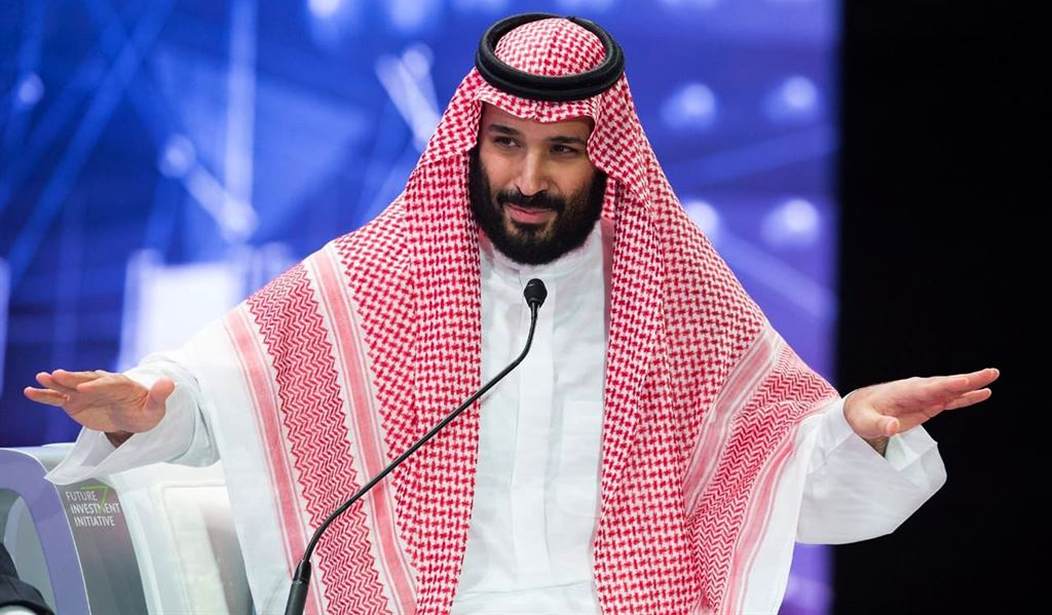
What about the fight against terrorism? No, terrorism -- or the premise of terrorists finding safe harbor -- isn't a good enough reason to commit endless American resources to dropping bombs overseas. Otherwise, the U.S. would have recently bombed France and Britain. And definitely Saudi Arabia. But alas, the U.S.-sponsored war in Yemen is being led by Saudi Crown Prince Mohammed bin Salman, who was recently implicated by the CIA for ordering the murder of U.S. resident and Washington Post columnist Jamal Khashoggi inside the Saudi consulate in Istanbul.
The Yemen issue could be dragged kicking and screaming into broad daylight this week, as the U.S. Senate is expected to vote on a resolution to end American support to Saudi Arabia in its war. The move is seen as punishment for the gruesome murder of Khashoggi, which allegedly involved dismemberment with a bone saw.
The vote comes at a time when additional fuel has been added to the fire -- literally. An internal Pentagon document revealed that the U.S. hasn't been properly charging Saudi Arabia and the United Arab Emirates for the midair refueling of Saudi-led coalition aircraft being used in the war in Yemen, according to a report by The Atlantic.
Contrary to the prospect of bipartisan sanity in Congress, U.S. Secretary of State Mike Pompeo, has been pushing back against the effort to distance American interests from those of Saudi Arabia.
"The Trump Administration's effort to rebuild the U.S.-Saudi partnership isn't popular in the salons of Washington, but the kingdom is a force for stability in the Mideast," Pompeo tweeted. "Degrading our ties would be a mistake for U.S. national security."
That "force for stability" just flagrantly hacked up a member of a prominent American media outlet. THAT is what's not playing well in the "salons of Washington," despite the truckloads of cash that Middle Eastern allies have tossed at Washington special-interest groups in an effort to bend American policy to their will.
The Trump administration is saturated with people who have longstanding obsessions with Iran, and it is Iran's Houthi proxies who are fighting against the Saudis in Yemen. These anti-Iran hawks are apparently willing to spend American blood and treasure to prop up any entity that wants to have a go at the Iranians. Support for Saudi Arabia in this proxy war is clearly not hindered by the Saudis' willingness to employ power tools to slice and dice critics.
Advocates of extreme realpolitik pragmatism might applaud any measure that results in weapons sales benefitting the U.S. economy. That's certainly one way of looking at the world.
"After my heavily negotiated trip to Saudi Arabia last year, the Kingdom agreed to spend and invest $450 billion in the United States," Trump said in a statement last month. "This is a record amount of money. It will create hundreds of thousands of jobs, tremendous economic development, and much additional wealth for the United States. Of the $450 billion, $110 billion will be spent on the purchase of military equipment from Boeing, Lockheed Martin, Raytheon and many other great U.S. defense contractors."
If Trump wants to go that route, why not go all the way and sell weapons to Iran, too? Why deprive America of potential sales anywhere in the world? Oh, that's right -- Iran probably won't buy U.S. weapons because Russia has already cornered that market. The Iranian bogeyman is just an excuse to toss a wrench into another country's business dealings, and so it becomes imperative to convince everyone that the Iranians are worse than the Bone Saw Boys.
If any of this was actually about national security, this administration wouldn't be aiding and abetting the most destabilizing and headache-inducing enfant terrible in the Middle East.


Join the Conversation
VIP members get the ability to comment on articles.