





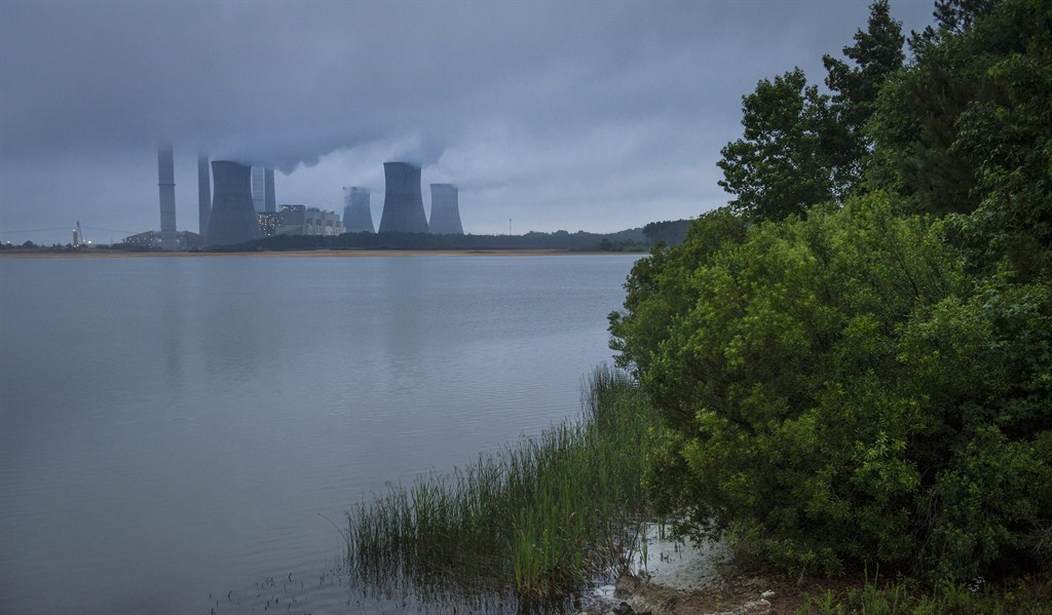
You wouldn't know it from all the perpetual doom and gloom in our media and culture, but we have nearly eradicated pollution in the United States. So much so that most Americans are blissfully unaware of how severely polluted the world was for all of human history up to the time of our grandparents.
The great Julian Simon reminded us in his classic The Ultimate Resource that the greatest pollution killers have been all but forgotten:
"A century ago, most people in the U.S. died of environmental pollution - that is, from infectious diseases such as pneumonia, tuberculosis, and gastroenteritis... Humanity's success in reducing these pollutions has been so great that young people today do not even know the names of the great killer pollutions of history - such as typhoid fever, bubonic plague, and cholera."
The automobile helped clean up streets previously covered by horse excrement and indoor plumbing and modern sewers helped eliminate human waste. As recently as 1960 only 22 percent of the U.S. population was served by municipal wastewater systems. Electricity did away with dirty old-fashioned home heating-as recently as 1940 about 55 percent of U.S. homes were heated with coal.
So as life expectancies increased dramatically and we became much wealthier, we had the luxury to turn our attention to toxic chemicals that had important - though far smaller than the old pollution threats - implications for our health.
Now we've moved beyond even that to witness the official embrace of the word stretched past any sensible limits with the release of the Obama's administration new national energy tax officially styled a rule to regulate "Carbon Pollution."
In the endangerment finding that was the predicate for the new rule, the EPA admitted:
"To be clear, ambient concentrations of carbon dioxide and the other greenhouse gases, whether at current levels or at projected ambient levels under scenarios of high emissions growth over time, do not cause direct adverse health effects such as respiratory or toxic effects."
Yet they went on to characterize carbon dioxide - a colorless, odorless gas that is essential for life on planet Earth - as "pollution," on the basis of computer models projecting global warming impacts literally hundreds of years from now. (And they prefer to leave out the "dioxide," because "carbon" by itself sounds dirtier.)
On this most speculative basis, the administration intends to impose thousands of dollars of higher energy prices on every American household and cause millions to lose their jobs. Despite the fact that even the New York Times concedes: "the president's plan will barely nudge the global emissions."
So is it really "pollution" reduction if the policy has no impact on global greenhouse gas concentrations and there are no direct health effects? Or is the term being used to facilitate deceptive marketing - pictures of dirty smokestacks and videos of coughing children - intended to mislead Americans into supporting what is really an unrelated economic policy?
In 1983 Marine biologist Michael A. Champ wrote a short essay exploring the increasing ubiquity of the word "pollution" and the lack of a consistent definition. He concluded:
"'pollution' has become another 'dinner table' or 'news media' term and should be viewed as a social or political concept and not a scientific one."
Never more so than today.
In 1946 George Orwell wrote:
"But if thought corrupts language, language can also corrupt thought. A bad usage can spread by tradition and imitation even among people who should and do know better."
Let's not fall into that trap. President Obama's national energy tax simply has nothing to do with pollution.



Join the Conversation
VIP members get the ability to comment on articles.