





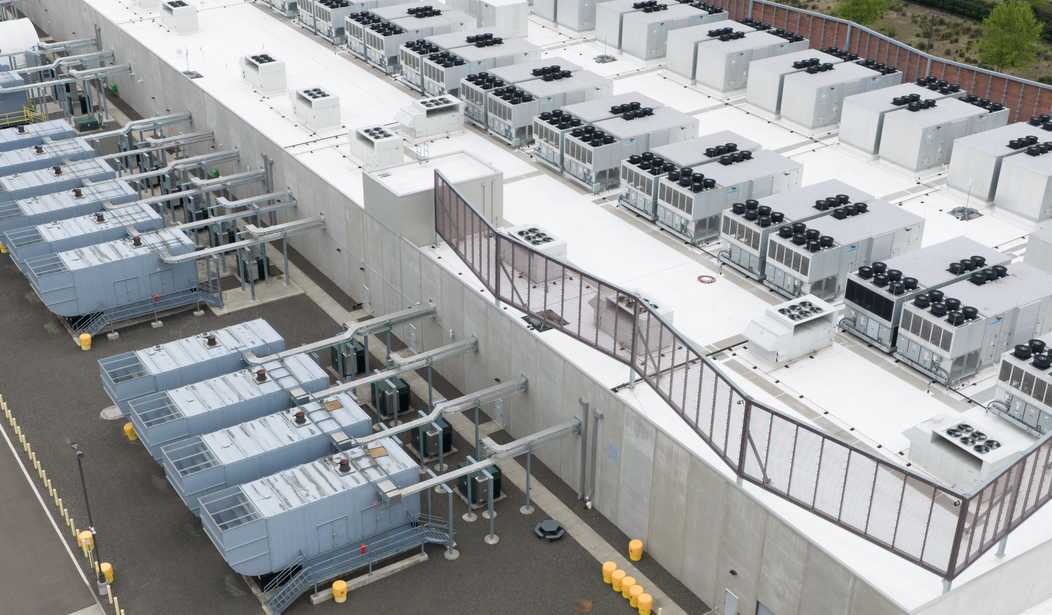
The war against AI data centers continues, driven by fears that they will drain communities of water, raise utility bills, and bring little more than disruption. Quincy, Washington, tells a very different story.
This small but growing community of roughly 8,000 people, with a median age of just 29.3, hosts a multitude of data-center facilities. Unlike Ellendale, North Dakota, where a massive 400-megawatt facility is only now under construction, Quincy has lived with data centers for nearly two decades. It has not run out of water, suffered job losses, or watched utility costs spiral out of control. Instead, the facilities have delivered substantial and enduring benefits to the local community.
Data centers pay ~57% of property taxes in Quincy, Washington. They funded a $15 million aquatic center—with a pool, waterslides & lazy river—and a 143,000-square-foot sports complex. They’ve created almost 1,000 jobs. The city admin called it a “miracle.” https://t.co/MQCZtswBAT
— Billy Binion (@billybinion) August 13, 2026
THEY CALL IT THE "QUINCY MIRACLE"
— Innovation Council (@innovationcncl) August 12, 2026
"Quincy was a farming and ag town. That was your career path if you were going to stay... [Data centers] opened up what could have been a low-opportunity town into this place with brand-new everything.”
Here's how data centers have transformed…
Quincy now hosts roughly 30 data centers, which account for 57 percent of the city’s property-tax revenue. That revenue has also given the town the means to invest in itself. A new $15 million aquatic center, with a six-lane pool, water slides, and a lazy river, is expected to open next year. Quincy has also been able to build a $120 million state-of-the-art high school, construct new and improve existing hospitals, library, police, and fire facilities, and upgrade other essential infrastructure, including sidewalks, sewer systems, and its wastewater-treatment plant.
The data centers have also brought roughly 900 construction jobs to Quincy, including positions for engineers, pipe fitters, and electricians. Those projects did not merely draw in outside workers; they expanded the capacity of local firms, which grew their services and responsibilities to meet the increasing demand. As for permanent positions, the number is expected to reach several hundred.
Perhaps the most remarkable figure is Quincy’s poverty rate. In 2012, when the town had only about six data-center projects, its poverty rate stood at 29.4 percent. By 2024, with roughly 30 data centers, it had fallen to 6.2 percent.
Turning to the concerns most often raised by anti–data center voters, water and electricity use: because Quincy continues to offer another useful case study.
Fascinating. Some data centers came to a struggling town in Washington state. Did it run out of water? Was the community destroyed?
— Billy Binion (@billybinion) August 13, 2026
Let’s see. The town…built a new high school, hospital, library, sewage systems, and police & fire stations. Poverty fell from 29% to 6%.
Oh. pic.twitter.com/BDyDWqUUWt
Its 30 data centers pay for their own grid use rather than shifting those costs onto local residents. Over the past year, while electricity costs rose by 5 percent nationwide, rates in Grant County, where Quincy is located, increased by only 3.5 percent. Washington State as a whole saw rates rise by 10.2 percent over the same period. Meanwhile, industrial electricity rates in Grant County rose by 9.1 percent, as local officials prioritized residents over data centers, a decision the facilities have not publicly opposed.
As for water, a city official said the roughly 30 data centers use less than eight percent of Quincy’s water supply, while food processors use well over 50 percent.
Home prices have also doubled, far outpacing income growth as the city has experienced a surge in demand. But that problem falls more on local government and restrictive housing policy than on data centers themselves. Local officials have already responded by changing zoning codes to incentivize new housing construction.
The data, and history, are on the side of technological advancement. They are on the side of building, expanding, and embracing the future rather than regulating it into stagnation.
Quincy shows what that choice can mean in practice: stronger public services, upgraded infrastructure, new jobs, and a community with more resources to invest in its own future. Data centers are not without tradeoffs, and communities should confront those tradeoffs.
But fear-driven moratoria and blanket opposition are not solutions. They are an invitation to turn away investment, opportunity, and the next generation of American prosperity.
Editor's Note: Do you enjoy Townhall's conservative reporting that takes on the radical Left and woke media? Support our work so that we can continue to bring you the truth.
Join Townhall VIP and use promo code FIGHT to receive 60% off your membership.



Join the Conversation
VIP members get the ability to comment on articles.