





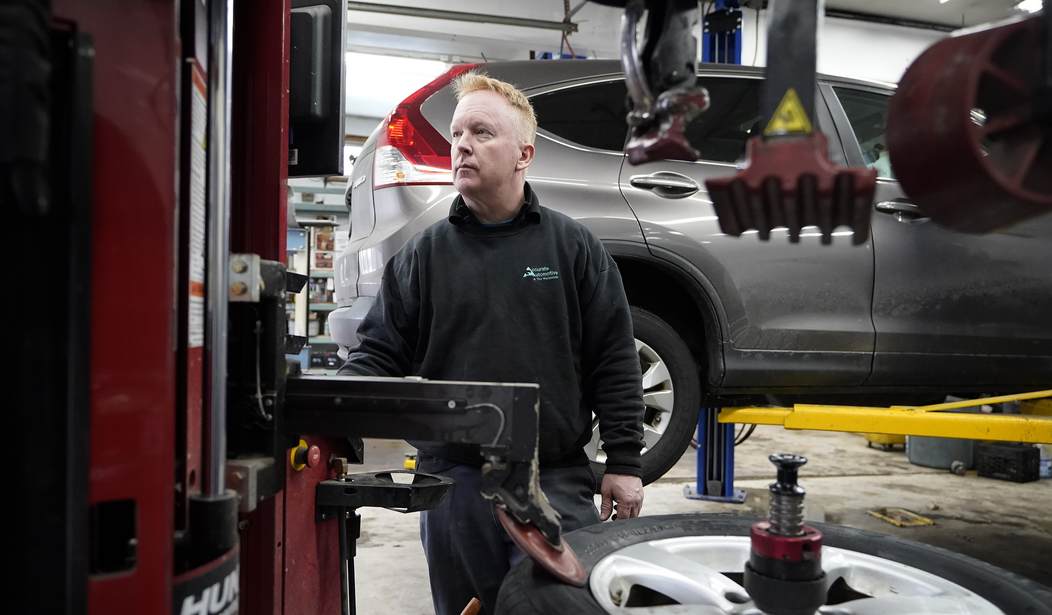
Americans are feeling the squeeze. Despite President Trump and congressional Republicans easing inflation, the cost of auto repairs continues to climb. From 2020 through mid-2025, auto repair costs rose 53 percent – far outpacing general inflation of 20.6 percent. Families, small business owners, and independent repair shops are paying the price. And much of it is unnecessary.
For too long, automakers have withheld access to the data and tools required to repair and maintain modern vehicles. Proprietary software, telematics, and advanced driver-assistance systems (ADAS) are increasingly necessary for routine repairs. But manufacturers have monopolized access to this information, forcing consumers and independent repair shops to pay dealership prices or wait longer for service.
My legislation, the bipartisan REPAIR Act (H.R. 1566), provides a commonsense solution. It ensures that vehicle owners, independent repair shops, and aftermarket manufacturers have secure access to the information, tools, and parts needed to perform safe and reliable repairs. Right-to-repair is about fairness for both the vehicle owner and repair shops.
More than 83 percent of Americans support a national vehicle right-to-repair law, including 84 percent of Republicans and 82 percent of Democrats. Nearly all vehicle owners — 98 percent — say it’s important to choose where their cars are repaired, and 89 percent want access to their own vehicle data. This isn’t a partisan issue; it’s a demand from everyday Americans.
Independent repair shops are vital to the economy and to American consumers. Over 70 percent of out-of-warranty vehicle repairs are already performed in the aftermarket, often at costs 36 percent lower than dealerships. These shops employ millions of Americans and generate hundreds of billions in economic activity nationwide. Restricting access to vehicle repair data threatens jobs, reduces competition, and raises costs for consumers.
Consider the numbers: an independent survey found that 63 percent of repair shops report difficulty performing routine repairs due to lack of data access, and 51 percent send up to five cars per month to dealerships because of these restrictions, costing consumers an estimated $3.1 billion annually. These barriers hit working families, small businesses, and anyone who needs reliable transportation.
Right-to-repair principles also intersect with national security and defense. Members of the Trump administration, including NHTSA Administrator Jonathan Morrison, FTC Commissioner Mark Meador, Secretary of War Pete Hegseth, and U.S. Army Secretary Dan Driscoll, have affirmed that Americans, from civilians to servicemembers, deserve the right to repair their vehicles.
From an economic perspective, right-to-repair legislation benefits everyone. Consumers save money. Independent shops thrive and create local jobs. Competition drives innovation and accountability. Automakers remain free to develop and earn profit, but they are prevented from monopolizing repair markets. In other words, right-to-repair is about protecting Americans’ freedom and hard-earned dollars.
The stakes are high. The U.S. vehicle fleet is older than ever – the average age is 12.6 years – and vehicles are only becoming more technologically complex. Without the REPAIR Act, consumers will face higher costs, longer repair times, and limited options. Independent shops, which make up the backbone of the aftermarket repair industry, will continue to be constrained until they are put out of business, stifling competition and innovation.
Congress has a choice. Lawmakers can either empower Americans to maintain their property, lower repair costs, and support small businesses, or they can allow monopolistic practices to continue, forcing consumers to pay more for repairs and limiting economic opportunity. With strong bipartisan support and backing from both consumer advocates and industry leaders, it is time for action.
The message from Americans is clear: if you own it, you should be able to fix it. The REPAIR Act delivers on that promise, giving consumers and independent repairers the freedom, tools, and information they need. It’s a straightforward, commonsense policy that promotes affordability, competition, and economic growth. Congress must act swiftly to pass it to prevent Americans from paying even more for repairs they should be able to handle themselves.
Dr. Neal Dunn represents the 2nd District of Florida, which includes all or part of 19 counties in North Florida. He serves on the House Energy and Commerce Committee.
Editor’s Note: Do you enjoy Townhall’s conservative reporting and opinion? Support our work by joining Townhall VIP! Use the promo code FIGHT to get 60% off your VIP membership!



Join the Conversation
VIP members get the ability to comment on articles.