





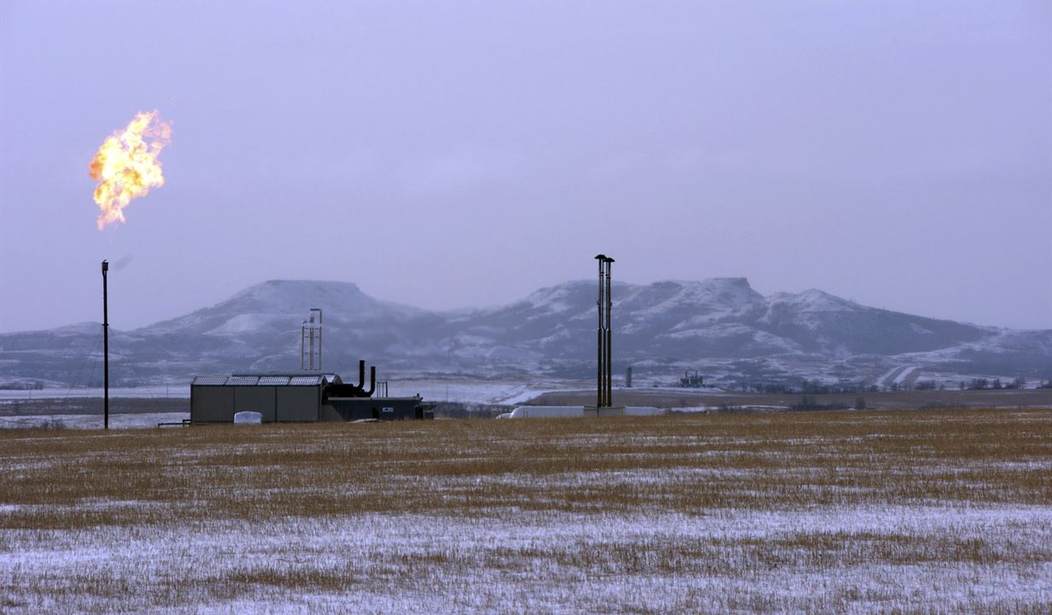
The energy industry is waging war against climate change - and winning.
Last week, the Environmental Partnership, a group of oil and gas firms dedicated to cutting greenhouse gas emissions, released its first annual progress report. The results are impressive -- and showcase what happens when an industry unites to further the public good.
The Environmental Partnership launched in late 2017 with 26 members. Within 12 months, it more than doubled in size to 58 members -- including 32 of America's top 40 oil and gas producers. Today, its members account for nearly half of America's oil and natural gas production.
The group focuses on cutting emissions of methane and other greenhouse gases known as "volatile organic compounds." Without proper monitoring and maintenance, these gases can escape from drilling rigs and pipelines and contribute to global warming.
Even before the partnership formed, firms were spending millions to reduce their carbon footprints. Methane emissions have plummeted in America's largest energy-rich basins, even as oil and gas production has spiked.
Production at the Appalachia Basin, which spans from Alabama to Maine, rose more than 380 percent from 2011 to 2017 -- yet methane emissions dropped 70 percent. Texas's Eagle Ford Basin, meanwhile, produced 130 percent more oil and gas, but released 65 percent less methane. And the Permian Basin, split between Texas and New Mexico, doubled production while decreasing emissions by almost 40 percent.
But firms in the Environmental Partnership weren't satisfied with that progress. They sought to slash emissions even further.
First, the partnership focused on updating outdated technology like high-bleed pneumatic controllers. Pneumatic controllers regulate temperature, pressure, and liquid levels at natural gas sites by opening or closing valves. To operate these valves, the controllers rely on pressurized natural gas. As their name suggests, high-bleed pneumatic controllers can release relatively large amounts of natural gas, along with methane and VOC byproducts, into the air.
The Environmental Partnership plans to replace all high-bleed pneumatic controllers in five years. And it's well on its way to doing so. It replaced, retrofitted, or removed more than 28,000 prior to 2018 and an additional 3,000 last year. As a result, nearly 40 participating firms don't use high-bleed controllers at all.
Second, the partnership set out to curb methane leaks - which can sometimes happen as firms extract, store, and burn natural gas. Methane is both a potent greenhouse gas and the main ingredient in natural gas. Participating companies conducted more than 156,000 surveys across 78,000 production sites, inspecting more than 56 million individual parts.
After its thorough inspections and repairs, the Environmental Partnership found that just 0.16 percent of industry parts contained leaks -- and member firms repaired 99 percent of those in 60 days or less.
Participating firms also worked to better monitor liquid removal from natural gas wells. When too much liquid, mostly consisting of water, builds up within gas wells, firms manually direct the liquid to vents that bring it to surface. During that process, methane or volatile organic compounds can potentially escape into the atmosphere.
Over the course of 2018, the Environmental Partnership oversaw more than 130,000 manual removals to ensure environmentally safe execution.
In addition to these three initiatives, the Environmental Partnership held numerous conferences and workshops across the country to share best practices and new technologies. These conferences featured energy experts, regulators, and academics.
These meetings amount to more than feel-good powwows. The Environmental Partnership has spurred America's largest energy producers to take a good, hard look at their operations, pinpoint the need for critical changes, and execute those reforms.
Methane emissions from natural gas systems fell over 14 percent between 1990 and 2017. The Environmental Partnership's initiatives will undoubtedly cut these emissions even further. According to the EPA's own estimates, reducing methane leaks and replacing high-bleed controllers can slash emissions by 40 and 60 percent, respectively.
Energy firms are weaponizing their data and tools for the common good. Let's hope they keep up the fight in the war against climate change.
Paul E. Vallely is a retired U.S. Army major general who serves as a senior military analyst for Fox News. Gen. Vallely is the founder and chairman of Stand Up America, a public policy research organization committed to national security and energy independence.



Join the Conversation
VIP members get the ability to comment on articles.