


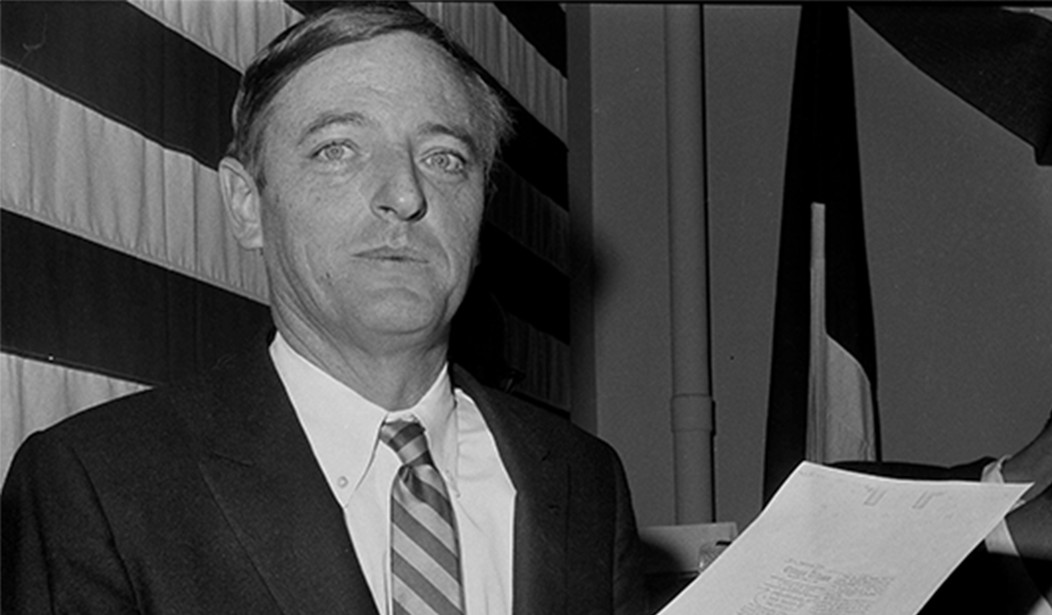
Good history is hard to write, while blueprints for a positive future may be even more difficult to pen. Yet in both history and a blueprint for the future, Stephanie Slade’s Fusionism: Liberty, Virtue, and the Future of the American Right is destined to become a consequential work on par with God and Man at Yale.
Fusionism is written at a seminal moment in American conservatism. The murder of Charlie Kirk has more fully exposed the already existing and different facets of conservatism, including the relationship between liberty and virtue, liberty vs. virtue, as well as a host of other issues. This is not a new development. American Conservatism has been wrestling with these tensions over the past 80 years.
The role of government in enforcing virtue, liberty vs. government, and indeed virtue as a check on personal and professional behavior within the Conservative Movement are among these tensions, and certain periods have evoked the strongest unity in post-World War II American conservatism.
This was seen in the days of Frank Meyer, who coined the term Fusionism, as well as William F. Buckley, and culminated in the Presidency of Ronald Reagan. Meyer, more than anyone else, represents the journey of someone into conservatism; starting in Communism and then coining the term Fusionism and finally reconciling himself to God before his death. It is those two “streams of thought” that not only made up Meyer’s philosophy, but that of the history of the United States; a political nation yet with rugged individualistic people who, for most of their lives, operated outside of politics.
Fusionism is a timely book in the age of Populist Trumpism. Successful Conservatism calls upon the better angels of our nature; not the quick and easy path of socialism or even populism, but rather the path that manifests the greatest economic, political, and spiritual prosperity; not simply for the current generation but the millions yet to be born.
Fusionism reminds us of the best in Conservatism. Part history and part analysis of that history, as well as a call to action, Fusionism provides a way forward for conservatives to not be bogged down by the temptations of extreme libertarianism while also not giving into the temptation of government authoritarianism as an equal response to abuses by and from the American left.
Slade’s affinity for Catholicism does make itself known but is not to be discounted as merely letting her personal beliefs come into play. Many of the greatest conservative minds of the 20th century, such as William F. Buckley, Brent Bozell, Russell Kirk, and Frank Meyer (on his deathbed) were Catholic and their viewpoints of “permanent things” remains as paramount today as it was when they were alive. (It is of note that Reagan, though a strong evangelical Protestant, was sometimes described as culturally Catholic).
Meyer, Buckley and other Fusionists dealt with many of the same issues that conservatives deal with today, from the power of the state and its related regulation, foreign policy, as well as virtue enforcement.
Fusionism is not simply a retelling of the better parts of Conservatism, nor a tribute to heroes of the past. It is a brave call to action by one of the youngest members of the Movement to embrace permanent things and to recognize that even freedom without virtue becomes tyranny.
Fusionism reminds us that, as long as freedom and virtue are tied together, there will always be, for America, as Reagan said, “…always be a bright dawn ahead.” Fusionism is classical conservatism; drawing from the past to give us a roadmap to a more fully free future. Guided by this light, Fusionism itself is classical and permanent.
*Views expressed are those of the author and not any government agency.
Editor’s Note: Do you enjoy Townhall’s conservative reporting that takes on the radical Left and woke media? Support our work so that we can continue to bring you the truth.
Join Townhall VIP and use promo code FIGHT to receive 60% off your membership.


Join the Conversation
VIP members get the ability to comment on articles.