





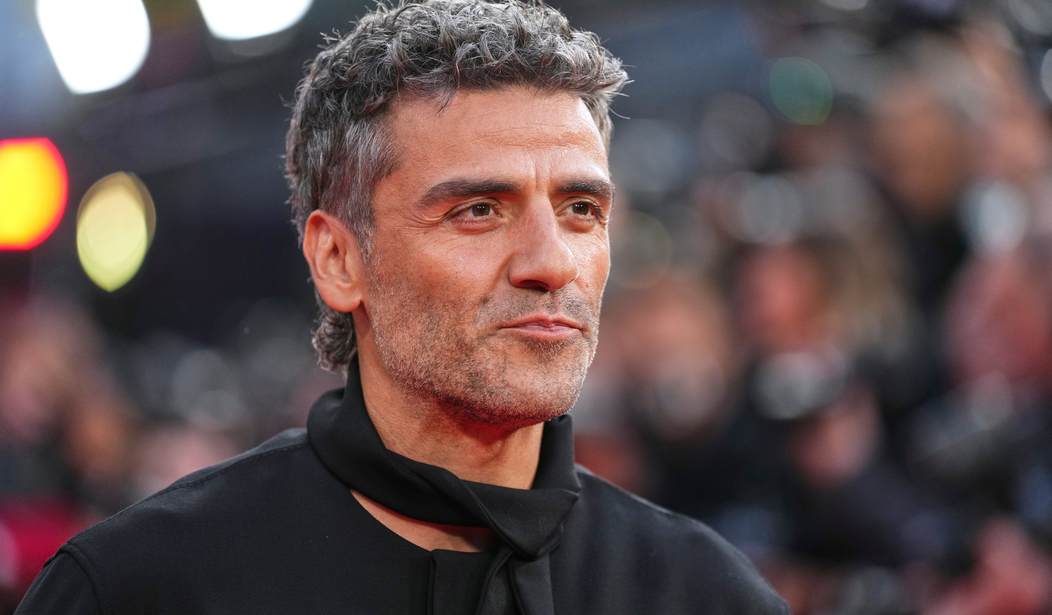
Celebrity entitlement is rarely more stunning than when an actor publicly lectures a corporation on “fascism” while omitting any basic human decency in the same breath.
So when Star Wars actor Oscar Isaac declared he’d only work with The Walt Disney Company again if they could “figure it out and, you know, not succumb to fascism,” it raised a question worth asking: Are celebrities this dense, or this indecent?
Let’s pause. Disney is a publicly traded corporation with a legal obligation to its shareholders. Its executives must maximize value, which means developing programming that attracts broad audiences, protects advertisers, and safeguards the company’s market position. That’s not ideology—that’s economics.
When leftist actors in their insulated Hollywood bubbles sneer “fascism” at a business that simply responds to supply-and-demand, it exposes how little they understand about capitalism—or even basic civics.
Isaac’s swipe came in the wake of Disney’s decision to suspend late-night host Jimmy Kimmel following his repugnant “joke” about conservative leader Charlie Kirk’s murder. The public backlash was swift and justified. Viewers were horrified that Kimmel, during a moment of national grief, chose cruelty over compassion.
Disney acted in self-defense—to protect the brand, the stock, and the trust of its audience. That isn’t fascism. That’s the free market exercising accountability.
But Isaac—like so many of his Hollywood peers—saw the episode not as a moral failure of one performer but as proof that corporate America is goose-stepping toward authoritarianism. The irony is almost Shakespearean.
Because in truth, Disney was practicing the opposite of fascism. It wasn’t suppressing speech by government decree; it was reacting to market forces, advertisers, and shareholders. If anything, the audience was the authority.
Let’s also note what Isaac didn’t say. Not a single syllable of sympathy for the man who was murdered. No mention of the widow, the children, the community in shock. No acknowledgment of loss, no human decency.
That silence screams louder than his lazy “fascism” soundbite.
Hollywood’s activist class has perfected this pattern: posture first, think later, empathize never. They wield moral outrage like a prop while ignoring the very real pain at the heart of the story.
And when they do speak, it’s through a fog of economic ignorance. Disney’s decision wasn’t ideological—it was fiduciary. A corporation can’t ignore plunging ratings, fleeing advertisers, or stockholder lawsuits. That’s not tyranny. That’s responsibility.
The same people who lecture about “corporate greed” never seem to grasp how the system works. Disney answers to investors—pension funds, mutual funds, retirees—not to Oscar Isaac’s X feed. When earnings drop, people lose jobs. When controversy drives advertisers away, stock values crash.
If Kimmel’s ratings are any indication—still down from pre-pandemic levels despite years of network promotion—Disney would be right to keep him benched indefinitely. He hasn’t learned, and his act isn’t selling. Free markets, not fascism, will decide his fate.
But it’s easier for a pampered celebrity to throw the word “fascist” around than to learn a balance sheet.
And that’s the heart of it: Leftist celebrities live inside a self-constructed echo chamber where everyone agrees with them, every project affirms them, and every corporation that enforces accountability must be evil. They’re not evil themselves—just breathtakingly dense.
They mistake consequences for persecution, business decisions for censorship, and audience fatigue for oppression. They can’t imagine that regular Americans might just be tired of their sneering contempt.
Because it would require humility—and humility is kryptonite to Hollywood.
Meanwhile, Disney’s duty is simple: serve its audience, protect its investors, and deliver returns. You can dislike its creative choices, but those choices are driven by market math, not Mussolini.
The truth is, the loudest moralizers in entertainment are often the most detached from the moral core of humanity—compassion. Had Isaac said, “I grieve with those who grieve,” he might have found empathy and credibility. Instead, he found a microphone and made himself the victim.
So, yes, Mr. Isaac, it does roll off the tongue easily to call something “fascist.” It makes you sound edgy and enlightened for about five seconds. But the reality is, you’re neither.
Disney didn’t “succumb to fascism.” It succumbed to capitalism—and in a free society, that’s exactly how it’s supposed to work.
So are celebrities this dense, or this indecent?
Maybe both.
Because when you live in a fantasy galaxy far, far away, reality isn’t the first thing to return from hyperspace.


Join the Conversation
VIP members get the ability to comment on articles.