





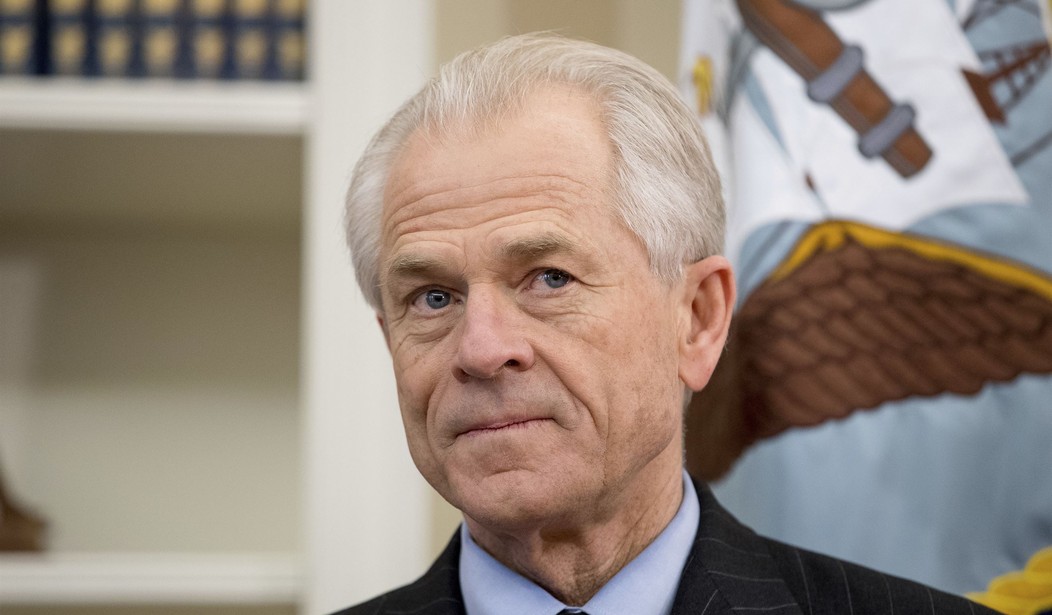
There are certain people in Washington who become famous because they chase the spotlight. Peter Navarro built his reputation doing something far less glamorous: arguing that America should make things again.
For years, that argument was treated as quaint at best and dangerous at worst. Free trade was presented as an unquestionable good. Manufacturing was something advanced economies supposedly outgrew. If factories closed in Ohio or Pennsylvania, that was simply the cost of progress. Americans would design products, someone else would build them, and everyone would somehow come out ahead.
That was the theory. Reality had other plans.
When global supply chains buckled during the pandemic, Americans got an uncomfortable reminder of what had been lost. Essential medical equipment became scarce. Critical components for everything from automobiles to semiconductors were suddenly difficult to obtain. A country that once prided itself on making almost everything discovered just how dependent it had become on foreign production.
Long before that lesson became painfully obvious, Peter Navarro was warning that America was hollowing out its industrial base.
He argued that trade policy wasn't simply about cheaper imports. It was about national resilience, economic security, and preserving the productive capacity that had long underpinned American prosperity. Critics dismissed those concerns as protectionist nostalgia. Today, many of those same critics speak comfortably about supply-chain resilience, strategic industries, reshoring, and reducing dependence on geopolitical rivals. The terminology has evolved, but the concern is strikingly familiar.
Donald Trump recognized that long before it became fashionable.
When Trump entered the White House, he didn't simply bring Navarro into the administration. He created an entirely new White House entity, the Office of Trade and Manufacturing Policy, to give those ideas a permanent seat at the highest levels of government. That decision reflected more than confidence in one adviser. It signaled that rebuilding American manufacturing would be a defining priority of the administration. Navarro wasn't just another economist in the room; he became one of the principal architects of an economic philosophy built around restoring American industry.
Years later, it is difficult to argue that Trump's confidence was misplaced.
Manufacturing has returned to the center of America's economic conversation. Businesses are reconsidering where they build. Policymakers across the political spectrum now discuss strategic industries, domestic production, and reducing dependence on fragile global supply chains. The debate has shifted toward many of the very issues Navarro spent decades raising.
That matters because elections are rarely decided by academic debates over comparative advantage or tariff schedules. They are decided around kitchen tables.
Voters care about jobs. They care about wages. They care about whether factories are opening instead of closing and whether their children will inherit an economy that produces more than it consumes.
James Carville famously put it in the bluntest possible terms: "It's the economy, stupid."
Three decades later, that observation remains just as true.
Supporters of President Trump's economic agenda point to renewed manufacturing activity as evidence that policies encouraging domestic investment are beginning to bear fruit. Recent manufacturing data showing continued expansion has reinforced the argument that rebuilding American industry is more than a campaign slogan. No serious observer would claim tariffs alone determine the health of an economy. Economic growth has many drivers. But changing the incentives that influence where companies invest, manufacture, and hire has become one of the defining features of modern American economic policy.
Navarro was among the earliest and most persistent advocates of that approach.
He has also consistently argued that economic strength and national security are inseparable. A nation that cannot produce steel, maintain shipyards, manufacture critical technologies, or secure vital supply chains eventually finds itself relying on competitors or even adversaries for the essentials of modern life. That is not merely an economic vulnerability. It is a strategic one.
The ongoing debate over the Jones Act illustrates that philosophy. Critics often portray the law as an unnecessary burden, while supporters see it as a safeguard for America's maritime workforce, shipbuilding industry, and national readiness. Reports that Navarro has opposed broader Jones Act waivers are entirely consistent with the principles he has championed throughout his career: once a nation's industrial capacity disappears, rebuilding it becomes far more difficult than preserving it.
Just as notable has been Navarro's loyalty. Washington is filled with advisers who quietly disappear when political winds change. Navarro did not.
Through investigations, legal battles, electoral defeat, and ultimately a return to public service, he remained committed to President Trump and the economic vision they helped shape together. Whether one agrees with every policy or not, consistency has become a rare commodity in modern politics.
His legal battle became part of that story. Navarro served prison time after being convicted of contempt of Congress for refusing to comply with a congressional subpoena, maintaining that constitutional principles surrounding executive privilege were at stake. His supporters view that decision as evidence that he accepted personal consequences rather than compromise what he believed were important constitutional questions.
Despite all of that, Navarro's influence is still often understated.
Cabinet secretaries receive the headlines. Presidents receive the credit or the blame. The policy thinkers who help shape an administration's governing philosophy often remain in the background.
That has largely been Peter Navarro's role.
Ironically, many of the positions that once made him an outlier have become increasingly mainstream. Governments throughout Europe are investing in domestic manufacturing, reassessing strategic dependencies, and seeking greater economic resilience in an uncertain world. The labels may differ, but the direction has become remarkably familiar.
History has a habit of revisiting ideas once dismissed as unfashionable.
Whether history ultimately remembers Peter Navarro as controversial or visionary, one fact has become increasingly difficult to ignore: many of the economic questions he raised years ago are now the questions governments around the world are trying to answer.
Sometimes the people who seem ahead of their time simply have to wait for everyone else to catch up.
Julio Rivera is a business and political strategist, cybersecurity researcher, founder of ItFunk.org and ReactionaryTimes.com, and a political commentator and columnist. His writing, focused on cybersecurity and politics, has appeared in major publications around the world.
Editor's Note: Do you enjoy Townhall's conservative reporting that takes on the radical left and woke media? Support our work so that we can continue to bring you the truth.
Join Townhall VIP and use promo code FIGHT to receive 60% off your membership.

Join the Conversation
VIP members get the ability to comment on articles.