





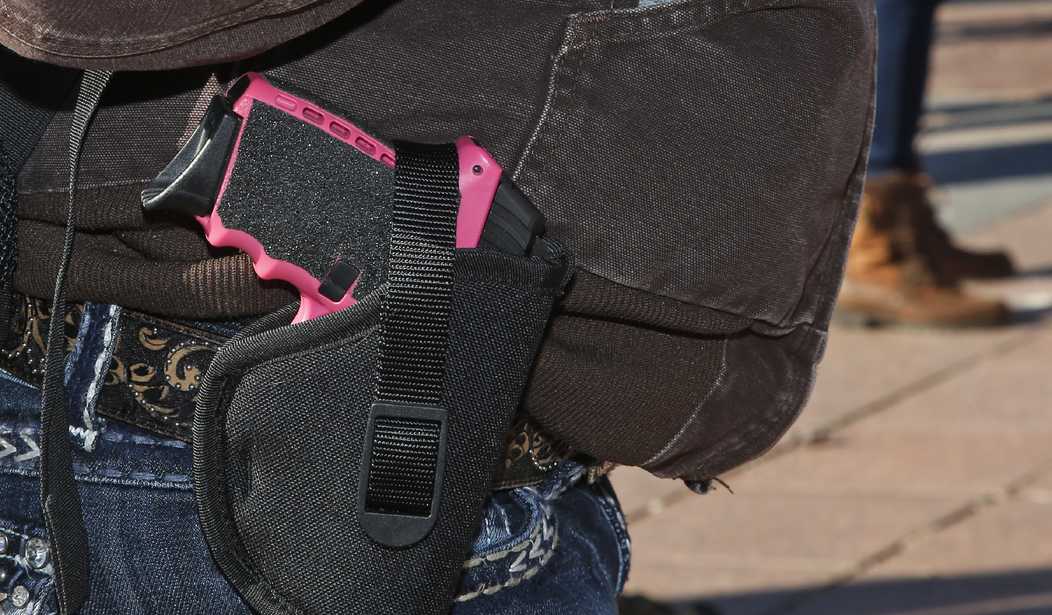
In a 2021 survey, 15% of American adults admitted using illegal drugs (mostly marijuana) in the previous month. Other surveys suggest that something like 12 million of those drug users owned guns, making them guilty of a federal felony that is currently punishable by up to 15 years in prison. Yet fewer than 150 Americans are prosecuted for that crime each year.
Those odds make Patrick Darnell Daniels Jr., a Mississippi man who had two guns and the remains of a few joints in his car when he was stopped for a traffic violation last year, extremely unlucky. But Daniels caught a break last week, when the U.S. Court of Appeals for the 5th Circuit ruled that his prosecution violated the Second Amendment, a decision that highlights the injustice of a policy that arbitrarily strips peaceful Americans of the constitutional right to armed self-defense.
Daniels committed the same gun crime as Hunter Biden: receipt or possession of a firearm by an "unlawful user" of a controlled substance. But while the president's son would have escaped prosecution for that offense under a plea deal that a federal judge nixed last month, Daniels was sentenced to nearly four years in prison.
That stark contrast reinforces Republican complaints that Biden benefited from favoritism. But it only scratches the surface of the unequal treatment that results from combining a constitutionally dubious, widely flouted law with broad prosecutorial and judicial discretion.
From FY 2008 through FY 2017, the Justice Department prosecuted more than 73,000 gun cases. Nearly three-quarters of those cases involved illegal gun possession by people with felony records, while less than 2% involved defendants like Daniels and Biden, whose consumption of politically disfavored intoxicants barred them from owning firearms.
That breakdown can be partly explained by prosecutorial priorities: Although the criminal records that disqualify people from legally owning guns cover a wide range, including many nonviolent offenses, prosecutors probably tend to view them as a better indicator of dangerousness than, say, the periodic pot smoking that Daniels admitted. Another important factor: Criminal records show up in background checks for gun buyers, while illegal drug use typically does not.
Once a transaction is completed, a gun-owning drug user won't be identified as such unless his drug use is publicly known (as Biden's was) or he happens to be caught with drugs and guns (as Daniels was). But once that happens, the consequences can be severe.
In addition to the charge that Biden and Daniels faced, someone who falsely denies drug use on the form required for purchases from federally licensed gun dealers can be charged with two additional felonies. A bill that Biden's father signed into law last year added yet another felony: "trafficking in firearms," which Congress defined broadly enough to cover drug users who buy guns.
The upshot is that the penalty for drug users who obtain firearms can range from none at all (which is almost always the case) to, theoretically, a combined maximum sentence of 45 years. Those potential defendants include millions of cannabis consumers, regardless of whether they live in states that have legalized marijuana and regardless of whether they handle guns while intoxicated.
President Joe Biden says marijuana use should not be treated as a crime, a position reflected in his mass pardon for people convicted of simple possession under federal law. Yet his administration simultaneously insists that marijuana users are so dangerous that they cannot be trusted with guns -- so dangerous, in fact, that the government is justified in sending them to prison for years if they dare to exercise their Second Amendment rights.
In Daniels' case, the 5th Circuit rejected that argument, deeming it inconsistent with "this Nation's historical tradition of firearm regulation" -- the constitutional test that the Supreme Court established last year. If the justices ultimately agree with that assessment, it could mark the end of an irrational, haphazardly enforced restriction that Congress should have reconsidered long ago.


Join the Conversation
VIP members get the ability to comment on articles.