







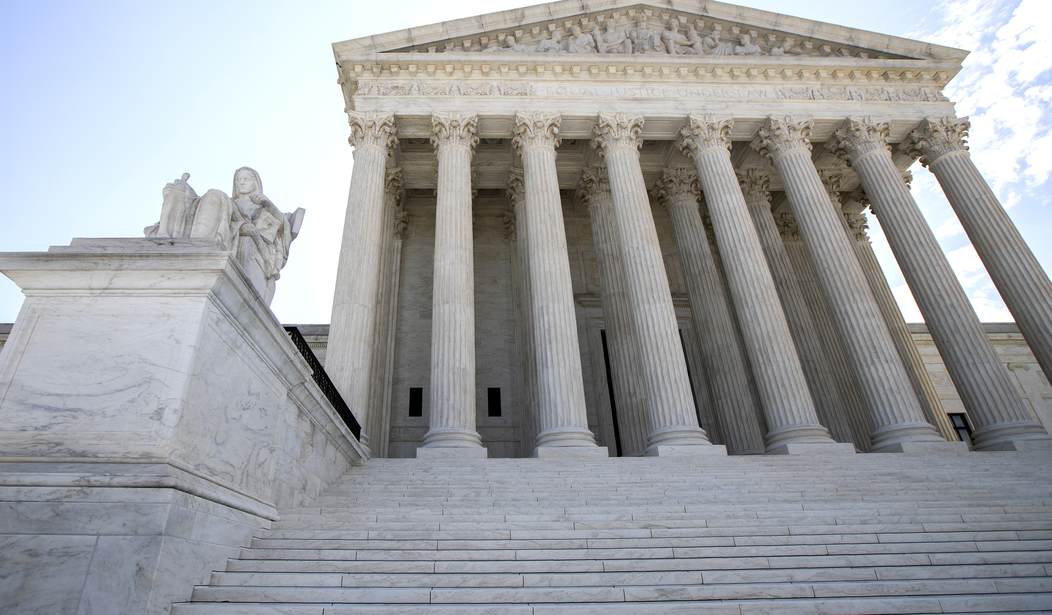
Two years ago, while fighting the confirmation of Donald Trump's second Supreme Court nominee, Senate Minority Leader Chuck Schumer, D-N.Y., suggested that Brett Kavanaugh would help the president escape accountability for grave misconduct. "If Kavanaugh would've let Nixon off the hook," Schumer asked, "what is he willing to do for President Trump?"
Schumer was mischaracterizing Kavanaugh's view of United States v. Nixon, the 1974 case in which the Supreme Court unanimously upheld a federal subpoena seeking White House tapes and documents as part of the Watergate investigation. Schumer's prediction was also wrong, as Kavanaugh showed last week in Trump v. Vance, another resounding victory for the rule of law.
Like Schumer, Trump seems to assume that justices will carry water for the presidents who appoint them. He reportedly was furious that Kavanaugh and his other nominee, Neil Gorsuch, had betrayed him by failing to oppose a New York grand jury subpoena seeking tax returns and other financial records from Trump's accounting firm.
Given their attitude toward judges, it is not surprising that Trump and Schumer both have earned public rebukes from Chief Justice John Roberts for politicizing the judicial branch. Trump got his in 2018 for slamming a decision against his administration as the work of an "Obama judge"; Schumer got his last March for warning Kavanaugh and Gorsuch that they would "pay the price" if they did not reach the conclusion he favored in an abortion case.
"All Members of the Court will continue to do their job, without fear or favor, from whatever quarter," Roberts said on the latter occasion. Last week's decision, which involved an investigation by Manhattan District Attorney Cyrus Vance Jr., is a striking example of such independence.
Vance, a Democratic politician in a solidly anti-Trump part of the country, is looking into hush payments received by two women who claimed to have had sexual relationships with Trump before the 2016 election. He thinks those payments may have involved violations of state law, perhaps by Trump himself.
If this case is allowed to proceed, Trump's lawyers warned, it could set off an avalanche of politically motivated investigations that would bury his presidency. The justices, while by no means dismissing that concern, rejected Trump's solution: giving the president a free pass from any sort of state criminal process until he leaves office.
"In our system of government, as this Court has often stated, no one is above the law," Kavanaugh wrote in a concurring opinion joined by Gorsuch. "That principle applies, of course, to a President."
At the same time, all of the justices conceded that courts need to make some allowance for the president's uniquely demanding duties, although they disagreed about exactly how much. Courts have been striking that balance since 1807, when Chief Justice John Marshall, while overseeing the treason trial of former Vice President Aaron Burr, upheld a subpoena seeking documents from President Thomas Jefferson for use by the defense.
The Supreme Court reinforced the principle that the president is subject to subpoena in 1974, when it required Richard Nixon to produce evidence for a criminal investigation that ultimately led to his resignation, and in 1997, when it said Bill Clinton had to answer questions in a civil lawsuit involving his behavior when he was governor of Arkansas. Both were unanimous decisions that united the president's appointees with the rest of the Court in concluding that he did not deserve the immunity he wanted.
Last week, it was Trump's turn. The Court, including his two nominees, added state criminal subpoenas to the types of judicial process the president may not categorically ignore.
Citing "a person familiar with his reaction," The New York Times reported that Trump "expressed deep anger at Justices Gorsuch and Kavanaugh, seeing their votes as a betrayal." But the justices have a duty to uphold the law, not to placate Trump, and the loyalty he demands requires a betrayal we would all have cause to regret.
Jacob Sullum is a senior editor at Reason magazine. Follow him on Twitter: @JacobSullum. To find out more about Jacob Sullum and read features by other Creators Syndicate writers and cartoonists, visit the Creators Syndicate webpage at www.creators.com.

Join the Conversation
VIP members get the ability to comment on articles.