





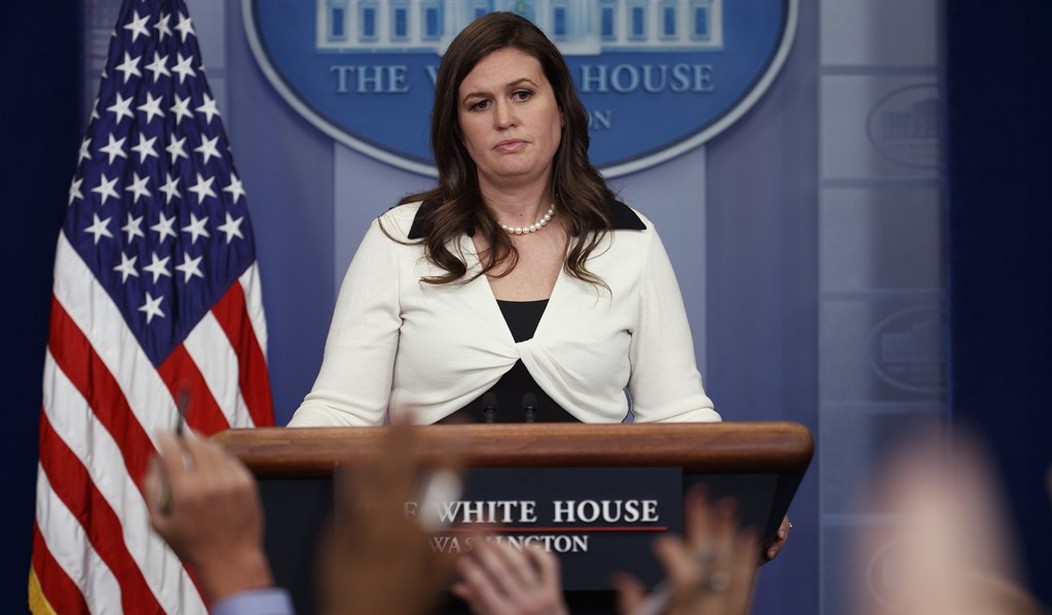
Watching today's constant battle between the White House and the press is tiresome for spectators and probably even more exhausting for those who are involved in the day to day back and forth. While it might drive ratings, it might not be of much use to anyone other than the advertisers and the networks.
During the 2012 Republican presidential primary, I served as a Senior Advisor and media surrogate for Newt Gingrich (my father). During that time, I talked often to James Farwell, author of "Persuasion and Power: The Art of Strategic Communication" for his advice regarding press relations. Farwell, and expert in communication strategy and cyber war, has advised the U.S. Special Operations Command and the Department of Defense.
I first met Farwell in 1992, when, in response to an untrue attack ad against my father, I appeared in a television commercial shot with me talking directly to the camera, noting that the attacks "just weren't true."
The district had retained the same number, but was in a different geographical location than his original district. The original district included the Atlanta Airport, South Fulton, west to Alabama and down to Griffin. In an attempt to get rid of Gingrich, the Democratic-controlled Georgia legislature had cut his district into little pieces and moved the district number to a new district on the north side of Atlanta.
Faced with a new geographic area and untrue attacks, my father won the primary by 980 votes, which ensured his election in the fall.
During the 2012 campaign, Farwell's advice and guidance were incredibly helpful to me, and could be useful today to President Trump's administration.
This Wednesday, Gallup published a poll regarding the U.S. confidence in media. The results? "More Americans this year (27 percent) say they have a 'great deal' or 'quite a lot' of confidence in newspapers than did so last year (20 percent). Although confidence in newspapers is up from last year's record low, it remains lower than it typically was in the 1980s and 1990s."
What's driving this increase from last year? Democrats. "In 2016, 28 percent of Democrats had a 'great deal' or 'quite a lot' of confidence in printed media, but that percentage rose 46 percent this year." In contrast, "16 percent of Republicans last year had confidence but, in contrast to Democrats, that has edged down to 13 percent this year."
There is a 33 percent gap between Republicans and Democrats, but less than half on both sides have confidence in newspapers. Why might Democrats have more confidence than last year and Republicans less? Possibly partisan coverage?
During this administration, the White House press briefings have become more confrontational and more of a spectacle compared to last year's relatively cozy and warm press briefings. This week, there was a heated exchange between Sarah Huckabee Sanders and White House reporter Brian Karem, who interrupted Sanders' answer, claiming Sanders was "inflaming everyone right here and right now with those words."
Watching this exchange led me to again consider Farwell's counsel regarding press and news sources. Farwell often referred to the rights of the newspaper and the rights of reporters.
The reporters have rights to "reasonable access to news sources and news scenes ... to a direct, truthful and timely answer to a relevant question ... to seek reaction and opinion on statements from other parties ... to evaluate and report the story."
The newsmakers -- in this case, the White House -- have the right to "keep the interview process orderly" in addition to other rights. This is an area that the White House could improve upon. While they cannot control the behavior of the press, they can control their own.
Imagine if the White House created a list of rules for press conferences and briefings, posted them online and in the briefing room and had a junior person read them out loud before each conference. These would be basic guidelines that any press conference should follow. For instance, providing an opening statement, reporters being called on and not shouting out, one question per reporter. Additionally, the White House should exercise its right to not answer questions for which there is not sufficient knowledge (no speculation) -- but would provide follow-up and post the answers online for all to see in a timely manner.
The current process is more infotainment than news and needs to be revised for information rather than infotainment.

Join the Conversation
VIP members get the ability to comment on articles.