



One picture, they say, is worth a thousand words. Sometimes you need only one number.
Consider the latest monthly job report, which shows an uptick in unemployment, from 8.8 percent to 9.0 percent. Yet it’s another number I’d like to highlight.
It comes from a different government report, one on gross domestic product -- our nation’s economic output. It shows that business investment fell from an 8.6 percent growth rate in the last quarter of 2010 to 2.8 percent in the first quarter of this year.
That’s troubling, to put it mildly. Without robust investment from private businesses -- and the healthy economic activity that flows from it -- we won’t create enough new jobs to sustain our fragile recovery.
So what is the Obama administration’s response? It’s not doing nearly enough to encourage such investment. Indeed, one government agency is taking steps that could poison the environment for business investment.
The situation concerns Boeing (a long-time Heritage Foundation donor), which employs more than 150,000 people. There is great demand for its 787 Dreamliner aircraft, and it’s been expanding to build more of them. Boeing considered building another plant in Washington state, where it was founded and where most of its workforce resides. But it didn’t. It went clear across the country, to South Carolina, to build it.
Why? For one, South Carolina offered a better tax environment. Plus, thanks to tort reform, it’s a state where Boeing knew the risk of frivolous lawsuits is lower.
And another reason: “Boeing’s Washington State operations are unionized, and the International Association of Machinists (IAM) regularly goes on strike during contract negotiations,” Heritage analysts James Sherk and Rea Hederman write in a recent paper. “These strikes cause Boeing to miss orders and cost it billions in lost business.”

That led Boeing to South Carolina, where the company’s new plant employs 1,000 workers. Good news for everyone, right? South Carolina -- and the economy as a whole -- got a boost. No one in Washington state lost a job (although the IAM’s misguided behavior caused the state to miss out on even more jobs). And Boeing won’t miss any more orders.
But the National Labor Relations Board sees it differently. The NLRB says the South Carolina plant is illegal “retaliation” for past strikes. It filed a complaint that sets a hearing before an administrative law judge in Seattle next month.
It’s an absurd charge. Boeing hasn’t shut down one unionized job -- it’s simply declined to create additional ones. Given the way the IAM acts, who can blame them?
The NLRB, though, would be more than happy to see Boeing forced to move its production line back to Seattle. It “wants to force companies to invest in highly unionized states, even when they have hostile business climates,” Sherk and Hederman point out.
This may play well with union bosses, but it would be bad news for the economy. If government prevents businesses from making good investments, they will invest less. Studies show that unionized employers create fewer jobs than non-union employers. We can see in Boeing’s case why.
If the NLRB succeeds, don’t expect the business investment figure cited above to improve. It’ll go from bad to worse -- and the whole economy will suffer.
But it doesn’t have to be this way. Some states, yes, responded poorly to the recession. They raised taxes, hiked spending and assumed more debt. And their job growth has been anemic. Other states, though, took a smarter path. The American Legislative Exchange Council’s report “Rich States, Poor States” notes that low-tax, low-spending states such as Utah, Colorado and Arizona are creating jobs and wealth in much greater numbers.
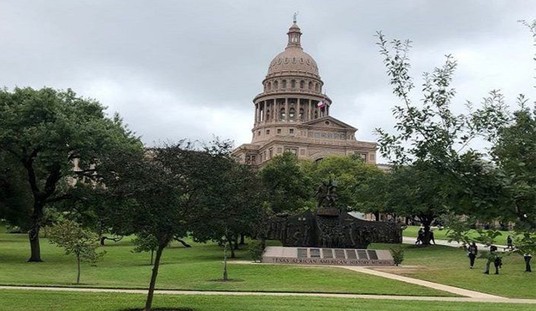
Texas has taken this approach -- and has been a phenomenal job-creator: Over the last five years, according to the Texas Public Policy Foundation, employment growth there has surpassed that of all other states combined.
Want the business investment figure to climb? Follow Texas, not the NLRB.







Join the conversation as a VIP Member