





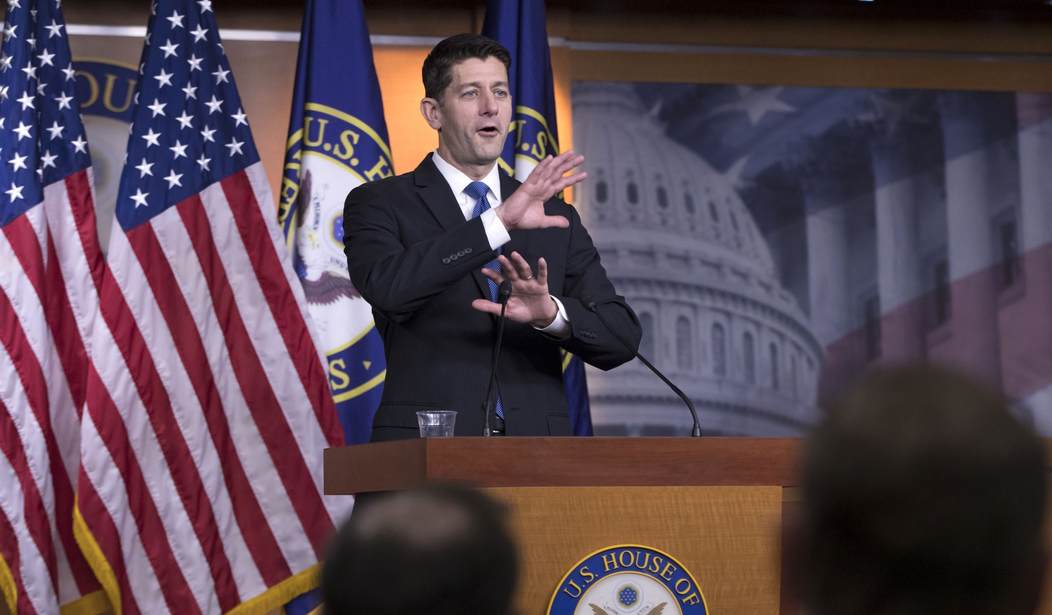
WASHINGTON -- White House press secretary Sarah Huckabee Sanders found a clever way to combine two passions -- tweaking reporters and supporting big tax cuts -- during a recent press briefing.
She laid out a scenario in which 10 reporters had a beer together every day and paid the $100 tab under a mechanism akin to the federal income tax system. Four reporters paid nothing, while the highest-paid journalist kicked in $59. When the bar proprietor decided to cut prices and the scribes calculated how to spread the savings, the highest-paid reporter enjoyed a $10 windfall, the other five journos enjoyed smaller savings, and the four who drank free gained nothing.
"Why should he get $10 back?" nine reporters complained, because they saved far less, or nothing at all.
Sanders' cautionary tale had laid out how any tax cut should be expected to benefit the wealthy the most because affluent people pay the most taxes. The night after the rest of the pack complained, the top-paid journalist didn't show, and the remaining nine could not afford their brews.
In 2014, the right-leaning Tax Foundation calculated, the top 1 percent of earners paid 39.5 percent of personal federal income taxes.
According to the left-leaning Tax Policy Center, 45 percent of tax filers pay no federal income tax.
The Senate released its Tax Cuts and Jobs Act late Thursday, which analysts are busy comparing to the companion House bill. But the crux of the opposition essentially is the same for both bills, and it mirrors the nine journalists' lament in Sanders' allegory: People who pay more taxes will get a bigger break than those who pay less or nothing.
Thus Senate Democratic Leader Chuck Schumer described the Senate measure as a vehicle "grounded in tax cuts for big corporations and the very rich." Schumer said, "They actually hurt middle-class people because they need to give those big breaks for the wealthiest."
Both the House and Senate bills would reduce the U.S. corporate tax rate from 35 percent to 20 percent to take away the tax disadvantage of doing business in the United States. The average corporate tax rate in the Organization for Economic Co-operation and Development is 24.1 percent.
The House bill would cut corporate taxes starting next year. The Senate bill would delay the corporate tax cut until 2019 in an effort to limit the measure's contribution to the national debt to $1.5 trillion over 10 years.
Tom Campbell, a former GOP congressman who teaches law and economics at Chapman University, chided Schumer for talking about wealthy corporations "as a pejorative." Those companies, said Campbell, hire American workers and pay U.S. taxes.
Tax Foundation senior policy analyst Jared Walczak acknowledged that both the Senate and House tax bills would present a boon for wealthy families, as they invest their assets in the U.S. marketplace. Then again, he said, those cuts are likely to improve economic growth in the United States, and thus boost wages.
When it comes to treatment of personal income taxes, however, Walczak said the GOP plans truly "are focused on middle-class tax relief."
Campbell agreed. He credited one big-ticket item -- doubling the standard personal deduction to $24,000 for a household.
Credit President Donald Trump for signaling to Capitol Hill that he wanted a bill that focused on creating jobs and cutting taxes for the middle class.
(The House plan would bump up the bottom tax rate from 10 percent to 12 percent, but the raised standard deduction and child tax credits should spare most families. When Senate Democrats claimed that most families earning less than $86,000 would see their taxes go up under the House plan, The Washington Post fact checker gave that claim four Pinocchios -- a rating reserved for "whoppers.")
On personal income taxes, neither the House measure nor the Senate measure is written to favor the highest earners. The House version doesn't lower the 39.6 percent rate on top earners -- and even proposes a "bubble rate" for top earners. That would be a tax hike on people who already pay the highest tax rate.
The Senate plan reduces the top rate by a little over 1 point, to 38.5 percent, but its elimination of key deductions is expected to erode or overtake those savings.
Campbell criticized the cuts (in the House bill) or elimination (Senate bill) of state and local tax deductions, as well as the House proposal to limit interest deductions to $500,000 principal. Those proposals would hurt people who work in or own moderately priced homes in states such as California, New York and New Jersey. Wealthy residents also would get dinged.
The Tax Foundation estimated that if the Senate bill were to pass, it would create 8,316 jobs in Nevada and increase average after-tax household income by $2,439 over 10 years.
Both plans propose to reduce estate-tax revenue by doubling the amount exempt from taxation to $10 million. Campbell argued that this is wrong because too few households would benefit from that change. The House bill goes even further -- by pledging to eliminate the tax in six years. But on income taxes, the focus is on the middle class.
On Fox Business News, anchors are grousing about a tax hike for top earners. "Looks like Republicans wrote the business side, but it sure seems like Democrats wrote the new rules for individuals," anchor Stuart Varney argued.
That doesn't mean that some top earners won't net more dollars than middle-class households, and Sanders explained why.



Join the Conversation
VIP members get the ability to comment on articles.