





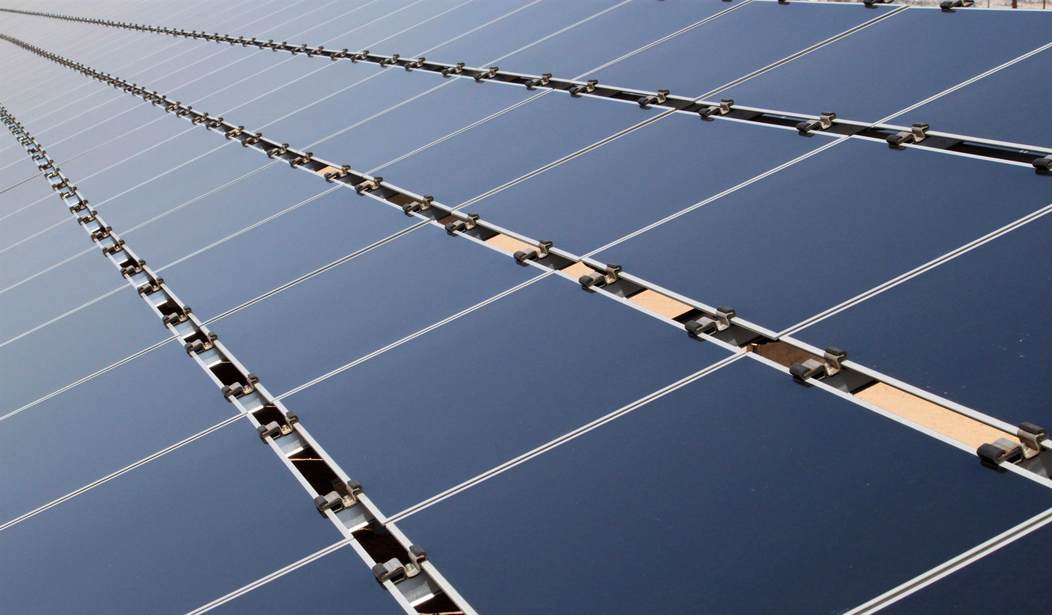
For many years, we’ve been told that we are on the cusp of an energy transition in which so-called green energy via windmills and solar panels will be able to provide cheap, reliable, and abundant energy while saving the planet from fossil fuels.
Even way back in the mid-1990s, in the computer game SimCity, where users create a virtual city from scratch, the utility options depicted coal as dirty and nuclear as unstable, whereas solar and wind were a little more expensive but much healthier, safer, and better for the environment.
To date, this dream has not come to fruition because solar and wind power are still too expensive and undependable. Despite this reality, we still see calls for the immediate abolition of fossil fuels by climate alarmists who just so happen to meet annually at a posh resort town in Davos, Switzerland, which they arrive at in fleets of private jets. Go figure.
In their own backyard, the energy transition that these elites demand the entire world adopt, except for China and India, has already demonstrated the societal dangers that are unavoidable as the transition occurs.
Several weeks ago, Europe experienced its largest and most disruptive power outage in history due to a sudden and steep drop in solar power. It mostly impacted grids in Spain and Portugal, which rely heavily upon solar energy.
The truth is that despite decades of government subsidies and crony capitalist ventures, wind and solar simply cannot deliver consistent and affordable energy. And the notion that they are unequivocally good for the environment is not totally accurate.
This is not mere opinion; this is based on taking the whole picture into view.
When it comes to the full cost of competing energy sources, the Levelized Full System Costs of Electricity (LFCOE) is far superior to the often-cited Levelized Cost of Electricity (LCOE) from the U.S. Energy Information Administration.
The LFCOE considers hidden costs, like the fact that solar and wind power plants require thousands of miles of new transmission lines so they can deliver electricity to distant customers, which substantially increases the total cost.
According to a recent policy study by The Heartland Institute, the LFCOE “using the relatively wind-friendly and solar-friendly geography of Texas as a baseline … in dollars per megawatt-hour: natural gas $40, coal $90, biomass $117, nuclear $122, wind $291, solar $413.”
On a cost-basis alone, it is obvious that natural gas is the clear winner.
A national energy grid must be reliable. It is bad if energy is expensive; it is intolerable and economically catastrophic if energy is unreliable.
As we recently witnessed in Spain and Portugal, a grid powered primarily by wind and solar is inherently unreliable because these intermittent sources depend on local weather conditions that fluctuate.
In the United States, some states and grid operators have been early adopters of the green transition, and they are already suffering reliability issues. As the American Energy Alliance notes, “power outages have increased by 93 percent across the United States over the last 5 years—a time when solar and wind power have increased by 60 percent. Texas, who leads the nation in wind generation, and California, who leads the nation in solar generation, have had the largest number of power outages in the nation over those 5 years.”
In terms of reliability, natural gas takes the top spot because “it is more capable than any other baseload source for quickly ramping up and down power generation to meet supply and demand variations.”
Additionally, the claim that solar and wind are good for the environment overlooks the obvious fact that massive windmills and acres of solar panels are terrible for the environment. Even the Los Angeles Times acknowledged in 2022 that enormous solar fields and gigantic wind turbines destroy pristine lands, disrupt ecosystems and habitats, are nearly impossible to recycle, and result in the mass killing of birds, whales, and other animals.
Last but not least, it must be noted that we are indeed on the cusp of a technological transition that will require oodles of electricity. Emerging technologies like AI and quantum computing will need abundant, dependable, and affordable energy. Giant data processing centers will also demand huge amounts of power for years to come.
If we want the United States to lead the world into this new AI era, as opposed to China or Russia, we must be pragmatic and ensure that the U.S. grid is built upon reliable, affordable, and abundant power sources.
Chris Talgo (ctalgo@heartland.org) is editorial director at The Heartland Institute.



Join the Conversation
VIP members get the ability to comment on articles.