





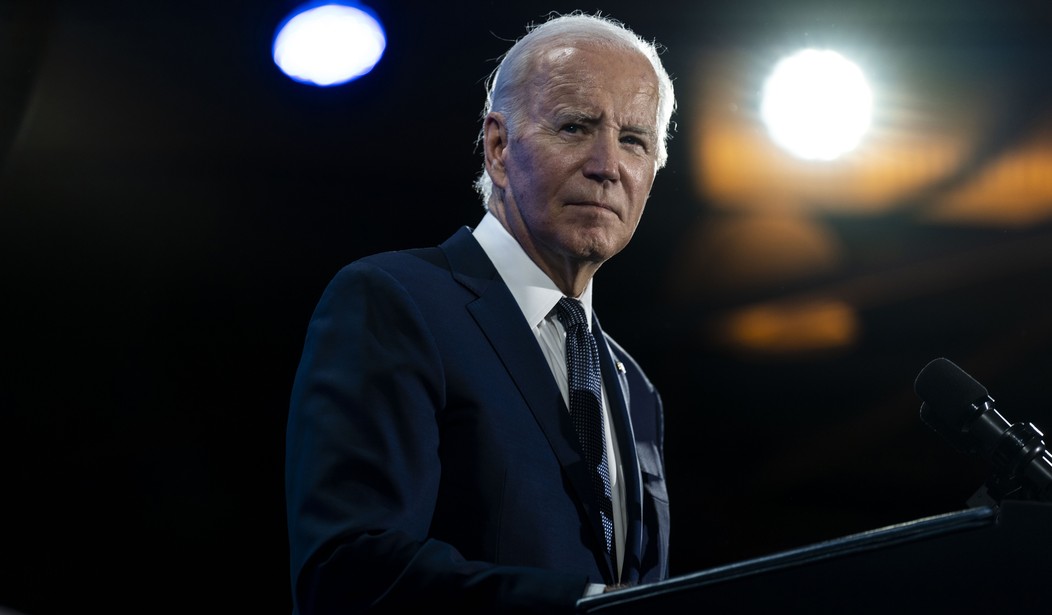
Congress just passed - and President Biden just signed - the latest short-term government funding bill to keep the government running.
The bill, which essentially kicks the can down the road, ensures that taxpayers will continue to pay for a bloated government until January, Senate Appropriations Committee Chair Patty Murray (D-WA) said: "...avoiding a (government) shutdown is so very far from mission accomplished. We have a lot of work to do after the dust settles and before the next shutdown deadline comes up."
In the past, this fake scenario of a government shutdown has meant preserving all current spending while adding new debt. It is doubtful this time around will be much different.
Because this "work" is unlikely to include reforming Social Security and Medicare - the biggest driver of debt - fiscally conservative Republicans should focus on other spending to shame the profligate spenders (which sadly include too many Republicans) and inform voters that their tax dollars and borrowed money are being wasted.
Thomas A. Schatz, president of Citizens Against Government Waste (CAGW.org), has come up with a list of proposed cuts that should serve as a starting point.
How about cutting or eliminating $196 million for the International Fund for Ireland? The money went for projects that include pony trekking centers and golf videos.
Speaking of golf, the Pentagon announced last year it would spend $5.1 million to build a new golf course at Joint Base Andrews when there are already 19 military golf courses in the Washington area.
One unnecessary expense was cut. That was $440,000 for attendants to push buttons on automated elevators in the Capitol Hill complex.
The National Endowment for the Humanities misspent $4.2 million to conduct a "National Conversation on Pluralism and Identity." No one conversed with me on the topic. You?
The Pentagon and CIA hired psychics, hoping they would provide special insights about various foreign threats. I had a premonition about that. Cost: $11 million.
A personal favorite was a study to determine the quality of life in Hawaii. That cost us $187,042.
Then there was the $40 million in phony food stamp claims. Five Floridians stole $20 million from Medicare, part of the estimated $17 billion in annual Medicare fraud. Too many Members of Congress don't seem to care because it's not their money they are spending.
If Republicans would start at these extremes which, taken in total amount to relatively small amounts of money against the debt, they might be better positioned to trim the spending behemoths that are Social Security and Medicare. They might also encourage people to look at the U.S. Debt Clock.
Morgan Stanley, the financial advisory firm, summarized the debt threat we face in a recent posting on its website: " The current federal debt pile is already massive, at more than $33 trillion, a staggering post-WWII high representing 122% of gross domestic product (GDP). A recent Treasury report showed the government spent $659 billion in net interest payments during the fiscal year that ended in September -- about 39% more than the same period in the previous year. The Congressional Budget Office estimates this interest expense could double in the next decade, meaning that the U.S. government might be spending more on interest payments than on other major budget categories such as defense. Growing national debt can not only raise borrowing costs for everyone, it could also crowd out funding for other priorities."
Debt has been a major contributor to the decline and in some cases collapse of nations in the past. What makes our country think we can ignore basic economic rules and not suffer similar consequences?



Join the Conversation
VIP members get the ability to comment on articles.