







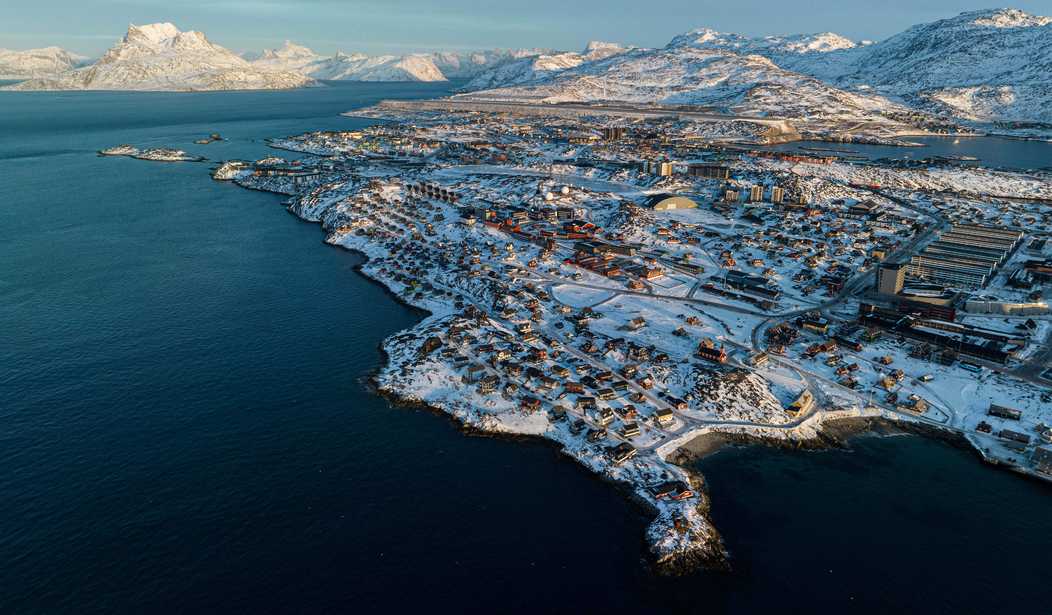
The liberal elite is in a panic—this time over President Trump’s push to secure Greenland. Headlines warn of NATO’s collapse, the end of the “rules-based international order,” and an America behaving like a rogue hegemon indistinguishable from China or Russia. The hysteria is familiar. So is the mistake beneath it.
The establishment is proving, once again, how little it understands MAGA foreign policy.
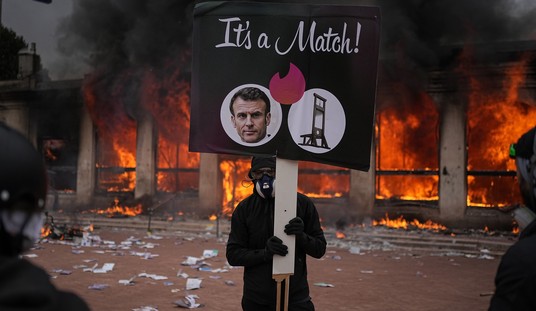
Rather than engage seriously with the strategic realities of the Arctic, critics have reduced President Trump’s initiative to a caricature of neo-imperialist ambition. At Davos, French President Emmanuel Macron warned against America’s “new colonial approach.” Canadian Prime Minister Mark Carney stated that “middle powers must act together–because if you are not at the table, you are on the menu.” These Western leaders mistake moral outrage for moral authority—less interested in whether Greenland is safer under Danish stewardship or NATO’s defense than in signaling disapproval to domestic audiences.
But virtue-signaling is not a security strategy. The Arctic is no longer a distant frontier at the edge of the map. Melting ice is opening new shipping lanes, exposing undersea cables and energy infrastructure, and transforming the region into a central arena of great-power competition. Russia has aggressively militarized its Arctic coast, expanding airfields, radar installations, and missile systems. China now openly describes itself as a “near-Arctic power,” seeking access to critical minerals and strategic routes that would reshape global supply chains. The quickest routes for Chinese and Russian missiles to the U.S. homeland are through the Arctic. Ignoring these realities today invites conflict tomorrow.
Missile defense, early-warning networks, and critical mineral security all converge in Greenland, which is why it is central to President Trump’s Golden Dome missile defense initiative. Greenland’s geography is indispensable for proper missile defense—both for the American homeland and the European continent. While NATO allies publicly rebuke President Trump’s push to secure Greenland, they privately concede that its defensive umbrella will benefit their own defense. It’s not simply American national security at stake here, but international security.
One can reasonably debate the Trump Administration’s tactics. Hard-nosed negotiating gambits can unsettle allies. To be honest, some unsettling is called for to snap the West out of its security lethargy. Fixating on the president’s tone while ignoring the substance underpinning it misses the larger point. Trump’s deal-making toughness is not new, nor is his demonstrated restraint. Five years of presidential record disproves predictions of invasion and Armageddon. President Trump simply refuses to let antiquated diplomatic convention constrain American and allied security.
If the United States must exert pressure on allies to confront shared threats, that says less about Washington than about Western capitals that have grown accustomed to American protection. The problem is their strategic decay, not the pressure to end it.
Some have grasped this reality. NATO Secretary-General Mark Rutte has forged a productive relationship with President Trump by taking his concerns seriously and affirming America’s indispensable security role in Greenland. Rutte said, “Trump is right. We have to do more there. We have to protect the Arctic against Russian and Chinese influence.” Others—among them Canadian Prime Minister Mark Carney and French President Emmanuel Macron—have chosen to grandstand instead, mistaking moral posturing for leverage. Worse, they’ve all but announced they will hedge against the United States by partnering with the Chinese Communist Party.
As Rutte and other clear-eyed Western leaders have acknowledged, the United States remains the world’s ultimate security guarantor. Strip away American power—and American resolve—and the West is left exposed. The push to secure Greenland is not an act of aggression. It is an act of protection—for the United States and for those who benefit from the peace and prosperity that America underwrites.
Critics label President Trump a warmonger for asserting American interests in the Arctic. Conservatives have heard this before. Ronald Reagan faced similar accusations for rebuilding American military strength and countering the Soviet Union with the Strategic Defense Initiative. Western leaders warned it would destabilize the world—only to see it hasten the Cold War’s end. Today’s backlash against the Golden Dome repeats the same blunder.
Reagan helped deliver peace by ignoring those who mistake deterrence for provocation; Trump should do the same.
America’s national security does not stop at its borders—or at the ice’s edge. Preserving peace requires shaping the global environment before crises erupt. Greenland is not a symbolic obsession; it is a strategic hinge in today’s geopolitical competition.
President Trump understands that leadership sometimes means acting early, decisively, and without apology.
Many of the same voices in Europe now demanding that President Trump stand down in the Arctic were among those who insisted, only years ago, that their policies were not laying the groundwork for Vladimir Putin’s invasion of Ukraine. Washington shouldn’t abide lectures on deterrence from governments that all but invited the first major European ground war since World War II.
Cale Brown is a former State Department Deputy Spokesperson and current Chair of Polaris National Security.
Editor’s Note: Thanks to President Trump and his administration’s bold leadership, we are respected on the world stage, and our enemies are being put on notice.
Help us continue to report on the administration’s peace through strength foreign policy and its successes. Join Townhall VIP and use promo code FIGHT to receive 60% off your membership.

Join the Conversation
VIP members get the ability to comment on articles.