





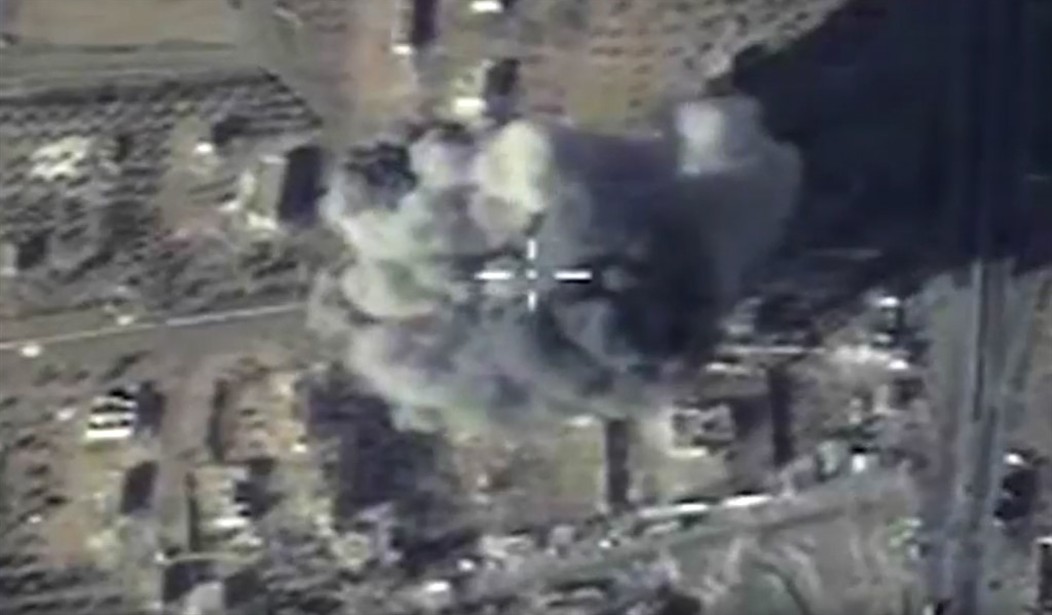
An Iraqi army counteroffensive has retaken the city of Ramadi and dealt the Islamic State group a major defeat. The victory is hard-earned. It also has a back story.
In May of this year, when Islamic State fighters seized Ramadi, its Iraqi defenders fled. Cellphone video recorded caught their flight, and the Islamic State put the imagery of fear and cowardice to immediate use.
But come December, the Iraqi army has returned, and except for holdouts in a suburb, the Islamic State's holy warriors have retreated. Cellphone cameras now record Iraqi soldiers celebrating.
Ramadi has genuine military and political significance. It is the capital of Anbar province. From Ramadi, Islamic State fighters militarily threaten Baghdad. The Islamic State saw the city's large Sunni Arab community as a source of recruits.
However, seizing Ramadi boosted the Islamic State's morale at a critical time. It also furthered two propaganda memes that Islamic State leaders know are their most important strategic political weapons. They are: 1) The Islamic State's fanatical fighters have a superior "will to win," no matter the odds. 2) The Islamic State has the ability to hold and extend its territorial "caliphate" despite international intervention in Syria and Iraq.
The second meme matters a great deal. Controlling a territorial "caliphate" -- real land -- is the ideological stroke Islamic State leaders contend distinguishes them from less bold Islamist rivals, such as al-Qaida. It is certainly a global recruiting pitch the Islamic State employs.
The Islamic State touted its May 2015 Ramadi victory as an example of its fighters' superior battle skills and their overwhelming, divinely inspired will.
Ramadi was a quick, calculated counterattack to restore prestige. In April 2015, the Iraqi army, supplemented by Shiite militias, retook the town of Tikrit (north of Baghdad). The caliphate had lost territory.
Ramadi demonstrated otherwise. See? The Iraqi army remains inept and decadent.
Ramadi also showed that "Kobane tactics" did not signal that coalition airpower was the caliphate's death warrant. In the fall of 2014, the Islamic State suffered a bloody defeat in the Syrian Kurd town of Kobane. Coalition air gave Kobane's hard-pressed defenders a firepower edge and lifted their morale. In tenacious house-to-house combat, the Islamic State suffered several hundred dead and ultimately retreated.
However, Islamic State forces remain near Kobane. In mid-December 2015, Syrian Kurds battled Islamic State fighters in a district south of the town.
Islamic State leaders believe that as long as their fighters have reasonably safe areas to reorganize, the caliphate will endure. Airstrikes that are not backed by effective ground forces will not be fatal.
However, coalition firepower supporting tenacious ground troops? Kobane could be excused. Located on the Syria-Turkey border, tactical air controllers on the Turkish side could direct airstrikes and remain politically correct, as in "no boots on the ground."
Tikrit, however, alarmed Islamic State commanders. Though the Iraqi force moved slowly and tediously, it managed to retake territory. Semi-covert insertion of air control parties with advancing Iraqis improved airstrike accuracy. No, there weren't supposed to be boots on the ground involved in combat, and controlling airstrikes is combat. However, Washington had apparently decided special forces personnel weren't boots. Whatever. A few weeks later, the Islamic State demonstrated it could quickly shatter the motley Iraqi army, Tikrit be damned.
The Iraqi army the Islamic State confronted at Ramadi this month is much more lethal than the Iraqi army was in April. Yes, it is still green, but observers report that Iraqi combat engineers made good tactical use of U.S.-provided land mine-clearing equipment. Mine and lane clearing is very tricky business under enemy fire, and in urban combat, that is usually the case. Friendly infantry and tanks must provide engineers with covering fire. This requires coordination and good leadership.
Coalition special operations troops are no longer so covert. Special-ops.org reported that 80 Australian special forces soldiers embedded in front-line Iraqi units and directed over 1,000 airstrikes. This is precisely what Washington should have done in mid-2014, when the Islamic State first invaded Iraq: provide embedded air control teams and combat advisers.


Join the Conversation
VIP members get the ability to comment on articles.