





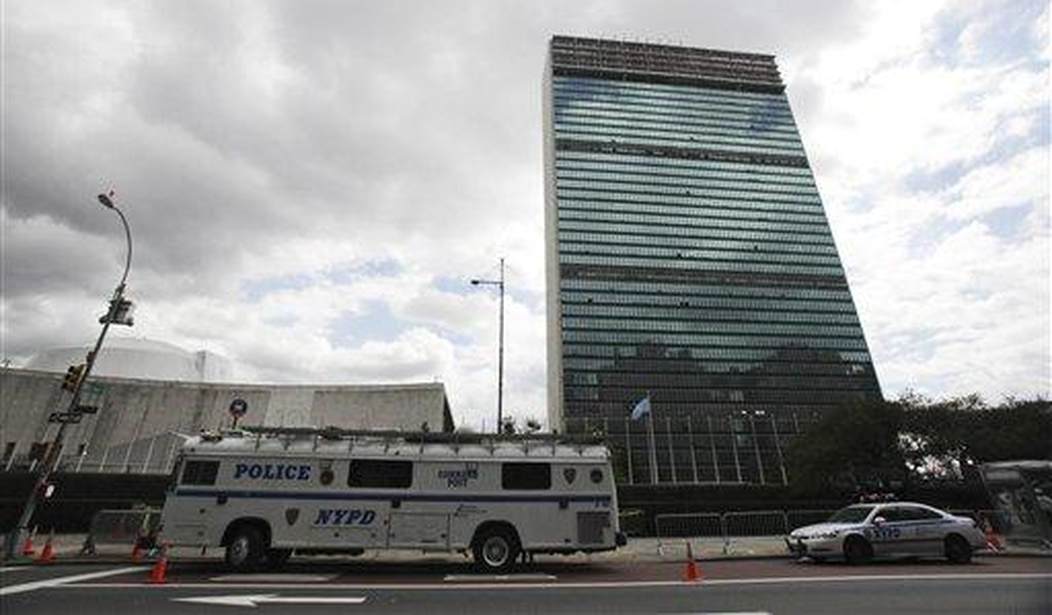
In February 2000, the U.N. authorized the current Congo peacekeeping operation and named it MONUCO: U.N. Organization Mission in the Democratic Republic of Congo.
It's 2015. For over 15 years, the U.N. has sustained a major peacekeeping and nation-building effort in the region. Has the effort been worth the troops and treasure?
My answer requires a short but complex historical review. In January 2001, MONUCO's first contingents deployed. A circle of critics, its center human rights advocates, condemned the slow arrival and token forces. Civilians were being slain en masse. Cellphone video provided undeniable evidence.
2001's peacekeepers confronted a brutal multi-national war, havoc unleashed by 1996's Great Congo War. Hutu tribal radicals, the genocidaires of Rwanda's 1994 genocide, disrupted Eastern Congo when they fled vengeful Tutsis. Dictator Mobutu Sese Seko's regime could not cope. The ill Mobutu went to Europe to die. General Laurent Kabila rebelled and attacked Mobutu's supporters. In May 1997, Kabila, with Rwandan allies, seized power and declared himself president.
Remember that name: Kabila.
Kabila's coalition shattered. Congolese forces allied with or fought with troops from Rwanda, Uganda, Zimbabwe and other nations. Crooked officers from these nations plundered Congolese minerals.
2001's peacekeepers also confronted anarchy. Congolese anarchy featured mass murder, rape and looting (evils documented digitally). Pockets of stability existed, some protected by resident-manned militias -- call them legitimate tribal militias. These people wanted peace and would defend themselves if they had help.
Despite the relentless murder of civilians (who could be protected, with assistance), another circle of critics rejects peacekeeping as a fool's errand. I sympathize, to a point. Galling problems riddle U.N. institutions, to include petty anti-Americanism. But informed critics concede most missions begin as impromptu acts of last resort, operating on a beggar's budget with soldiers of patchwork competence. As a result, they always travel a tough road.
2001's critics were right. Initial forces were totally inadequate for a 2.3 million square kilometer nation (1/4 the size of the U.S.).
In 2004 critics declared MONUC a complete failure, one group blaming U.N. ineptitude, another the paltry effort. However, in 2003 MONUC had begun a military and budget upgrade. Now peacekeepers with weapons reinforced U.N. officials promoting political solutions. By 2007, MONUC had 20,000 troops. The multi-national war faded. In 2010 MONUC became MONUSCO, U.N. Organization Stabilization Mission in DR Congo. Stabilization had been the goal from inception: a Congo that, with help, could protect its own citizens.
In December 2014, the Security Council announced it would withdraw 2,000 soldiers (10 percent reduction).
Stability, however, isn't imminent. Murder continues. In Fall 2014 a Ugandan rebel group murdered 300 people in Eastern Congo. U.N. and Congolese forces continue to conduct anti-militia operations.
Still, the peacekeeping effort has been worth the effort. Incremental successes have finally accumulated. Compared to Congo 2005, Congo 2015 is more stable. Congo has conducted two successful presidential elections. U.N. peacekeeping has also matured. Congo witnessed the deployment of a special Force Intervention Brigade given an offensive mandate to "neutralize" (eliminate) violent armed groups that rejected political engagement. In 2013 the IBDE proved to be quick and lethal. It is preparing to attack a remnant faction of Hutu genocidaires.
Unfortunately, Congo's limited success is at extreme risk. Its current elites appear to care more about their power than their country. Congo's president, Joseph Kabila, Laurent's son, won two elections. The constitution forbids a third term. Kabila recently suggested he may change the law and seek a third term in 2016.
The U.N. and donor nations are pressuring Kabila to forward stability by respecting the law, conducting an honest election and then peacefully transferring power to his successor. If they fail, his power grab would ignite civil war.
Kabila needs to consider his actions very carefully. U.N. peacekeepers and the lethal IBDE would side with Kabila's opponents. He knows it. Kabila demanded the U.N. cut its peacekeeping force in half. The U.N. chided him. Restraining Kabila thus becomes MONUSCO's most pressing 2015 peacekeeping operation.

Join the Conversation
VIP members get the ability to comment on articles.