







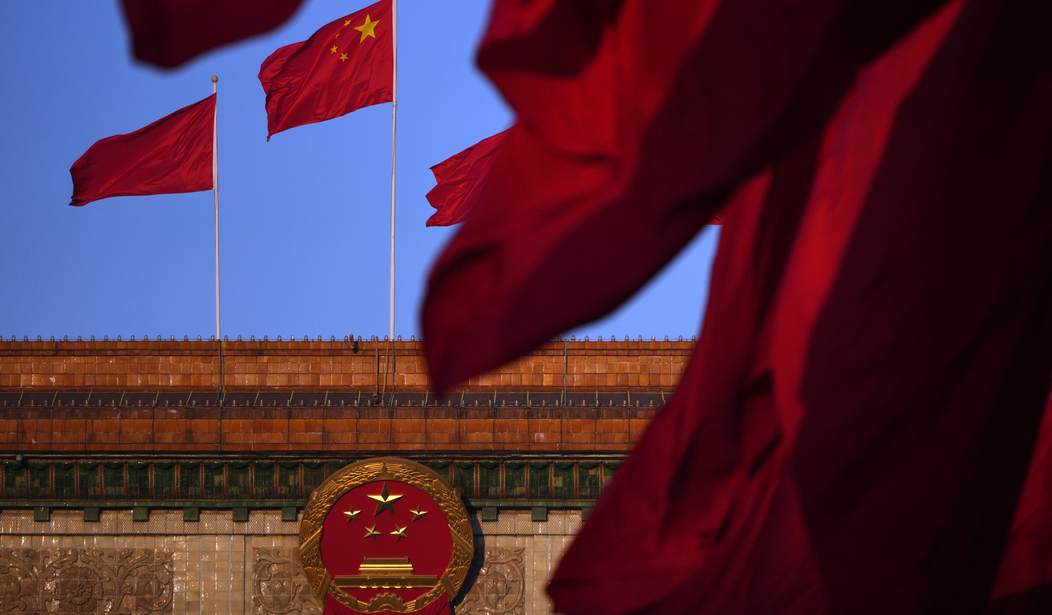
President Donald Trump's visit to China this week arrives at one of the most dangerous and morally complicated moments in modern geopolitical history. The optics will be carefully choreographed: towering skylines, ceremonial handshakes, military precision, economic pledges and polished displays of state power. Beijing understands spectacle. The Chinese Communist Party has mastered the art of projecting stability, strength and inevitability to the world.
But beneath the gleaming architecture and diplomatic theater lies a far darker reality that the world continues to confront only selectively and often cowardly.
This is not merely a strategic rivalry between two superpowers over tariffs, trade imbalances, semiconductors, artificial intelligence or rare earth minerals. It is also a deeper conflict over the meaning of freedom, human dignity, sovereignty and truth itself.
The CCP wants the world to see China as modern, disciplined and indispensable to the global economy. Yet behind that carefully managed image exists one of the most sophisticated authoritarian systems on earth. Political dissidents vanish. Religious believers are monitored. Journalists are silenced. Lawyers disappear. Uyghur Muslims have faced mass detention and surveillance campaigns. Christians worship under constant scrutiny. Falun Gong practitioners have long alleged torture, imprisonment and persecution. Even ordinary citizens who criticize local officials online can suddenly find themselves erased from public life.
China represents what communism can become when fused with advanced technology, centralized state power, economic leverage and absolute intolerance for dissent.
The regime does not merely punish opposition; it seeks to eliminate independent thought itself.
Former prisoners and human rights investigators have described detention systems marked by psychological abuse, coerced confessions, forced indoctrination, isolation, relentless monitoring, beatings and, in some cases, death. Families are separated. Faith is criminalized when it competes with loyalty to the party. Surveillance is not a tool of security alone; it is a mechanism of obedience.
Yet despite these realities, much of the Western world continues to treat the CCP as simply another difficult trading partner rather than an authoritarian power with expanding global ambitions.
Why?
Because money clouds moral clarity.
Corporate America depends heavily on Chinese manufacturing and markets. Universities accept Chinese funding while often remaining silent about repression. Tech companies seek access to Chinese consumers while overlooking censorship demands. Media institutions frequently soften criticism to preserve business relationships or market access. Politicians in both parties speak aggressively about China during campaigns, yet many remain economically intertwined with the very system they condemn.
The result is a dangerous form of selective outrage: loud rhetoric paired with strategic dependency.
That contradiction becomes even more alarming when viewed through the lens of the Middle East and the growing military relationships reshaping the region.
As Trump prepares for high-level meetings in Beijing, reports and intelligence assessments continue to raise concerns about China's indirect support for Iran's military infrastructure through its deepening relationship with Pakistan. Trucks, components, dual-use technologies, drone systems, missile enhancement capabilities and logistical cooperation flowing across the region are no longer viewed as isolated developments. They are part of a larger strategic alignment among powers seeking to weaken American influence in critical global corridors.
Iran's expanding drone and missile capabilities did not emerge in a vacuum.
The Gulf region remains one of the most strategically sensitive areas in the world. American military personnel, naval assets, energy infrastructure, shipping lanes and allied nations remain vulnerable to asymmetric warfare. Drones, missile technology, cyber capabilities and proxy militias now define modern conflict as much as conventional armies do.
If Chinese-backed systems or technologies ultimately strengthen Iranian military capabilities that threaten or kill Americans in the Gulf region, then the stakes of this week's diplomatic engagement become infinitely more complex than trade negotiations or photo-ops.
This is the uncomfortable reality confronting Washington: America is economically intertwined with a nation that increasingly supports or enables forces working against American strategic interests abroad.
That does not mean diplomacy should end. Serious nations engage adversaries and competitors alike. Dialogue between nuclear powers remains essential. Economic decoupling at the scale some advocate could destabilize the global economy overnight. Trump's visit may very well reduce tensions in certain areas while opening channels for negotiation that prevent larger conflicts later.
But Americans should not confuse engagement with trust.
Nor should they allow economic interests to blind them to the ideological nature of the challenge posed by the CCP.
China's leadership is playing a long game measured not in election cycles but in generations. It seeks influence across Africa, Latin America, the Middle East, universities, tech infrastructure, ports, media platforms, supply chains and international institutions. Beijing understands that global power is no longer achieved solely through military conquest. It is secured through dependency, leverage, data, debt, energy, technology and strategic patience.
The greatest danger may not be China's visible strength but the West's willingness to ignore uncomfortable truths for the sake of convenience and profit.
The world should look beyond the skyscrapers this week. Beyond the ceremonial banquets. Beyond the staged applause and polished propaganda.
Because history repeatedly teaches that authoritarian systems often appear strongest shortly before the world fully understands the cost of empowering them.
Armstrong Williams is the manager/sole owner of Howard Stirk Holdings I & II Broadcast Television Stations and the 2016 Multicultural Media Broadcast owner of the year.
Editor’s Note: Do you enjoy Townhall’s conservative reporting that takes on the radical Left and woke media? Support our work so that we can continue to bring you the truth.
Join Townhall VIP and use promo code FIGHT to receive 60% off your membership.
Join the Conversation
VIP members get the ability to comment on articles.