



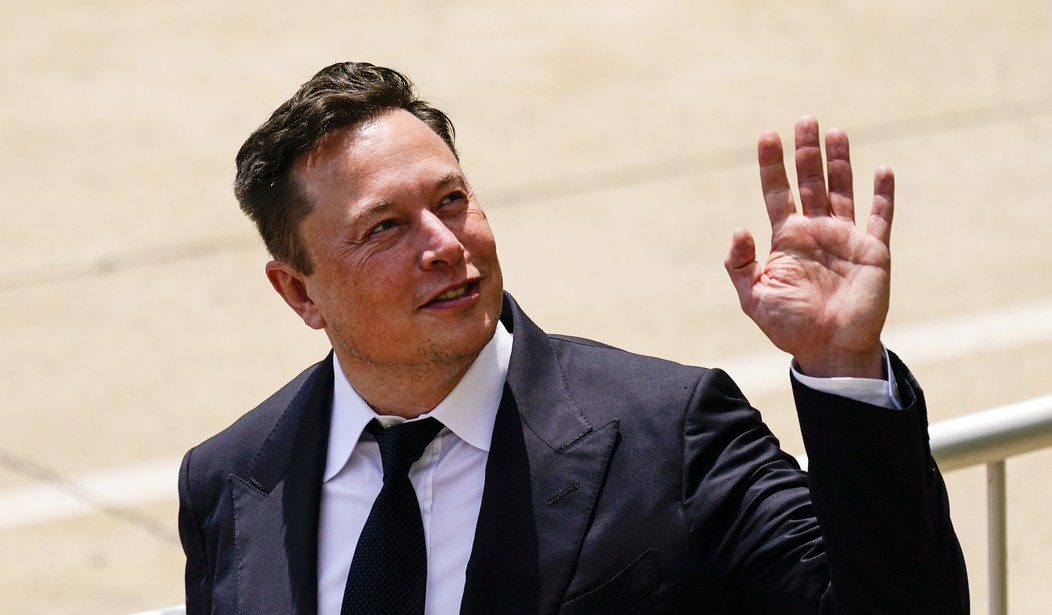
The New York Times was blasted Thursday for a hit piece on billionaire Elon Musk, detailing his upbringing in apartheid South Africa. While the Times so desperately wanted to paint him as a racist, its own reporting discredits that notion.
“Elon Musk grew up in elite white communities in South Africa, detached from apartheid’s atrocities and surrounded by anti-Black propaganda,” reads a tweet promoting the article. “He sees his takeover of Twitter as a free speech win but in hi his youth did not suffer the effects of misinformation.”
After interviewing 13 acquaintances or family members for the piece, the Times learned...
He had black friends:
Classmates at two high schools he attended described him as a loner with no close friends. None offered recollections of things he said or did that revealed his views on the politics of the time. But Black schoolmates recall that he spent time with Black friends.
Despite growing up in a community allegedly "detached from the atrocities that white political leaders inflicted on the Black majority," he was not ignorant about what was going on in South Africa:
Mr. Musk’s father, Errol Musk, said in an interview with The New York Times that Elon, his brother and sister were aware from a young age that there was something wrong with the apartheid system. […] “As far as being sheltered from it, that’s nonsense. They were confronted by it every day,” recalled Errol, who said he belonged to the anti-apartheid Progressive Party. He added, “They didn’t like it.”
He left the country so he didn't have to serve in the military of the pro-apartheid regime:
According to a biography of Mr. Musk, written by Ashlee Vance, Mr. Musk said he did not want to partake in South Africa’s mandatory military service because it would have forced him to participate in the apartheid regime — and that may have contributed to his decision to leave South Africa shortly after high school graduation.

He got bullied for standing up to racist kids:
Mr. Musk became friends with a cousin of Mr. Netshituka’s, Asher Mashudu, according to Mr. Mashudu’s brother, Nyadzani Ranwashe. One time at lunch, a white student used an anti-Black slur, and Mr. Musk chided the student, but then got bullied for doing so, Mr. Ranwashe said.
Mr. Mashudu was killed in a car accident in 1987, and Mr. Ranwashe said he remembered Mr. Musk being one of only a handful of white people who attended the funeral in the family’s rural village.
“It was unheard of during that time,” he said.
Critics blasted the paper and said it was a low for The New York Times' standards. Even Elon's mother, Maye Musk, called them out.
In South Africa, if you publicly opposed apartheid, you went to jail. In Russia, if you publicly oppose the war, you go to jail. @nytimes are you going to blame children for decisions made by governments? #StopTheWar ???? https://t.co/4wJt1ui0st
— Maye Musk (@mayemusk) May 5, 2022
This is the most despicable shit I've seen all day - a low even for @nytimes
— Charles V Payne (@cvpayne) May 5, 2022
Time to stop this race-bating crap - its the antithesis of judging one for the "content of character." https://t.co/K8TIivic3v
In this article NYT itself reports @elonmusk:
— Saagar Enjeti (@esaagar) May 5, 2022
1. Had non-white friends growing up in apartheid SA
2. His own father was an ANTI-APARTHEID politician
3. He literally left so he didn't have to serve in apartheid military
They still insinuate he is a racist https://t.co/Oc6IANX4wv
This is one of the most unethically cringe & toxically stupid smears the @nytimes has ever published.
— Geoffrey Miller (@primalpoly) May 5, 2022
Shame on you, you sociopathic ghouls.
The New York Times: "Elon Musk didn't end apartheid in South Africa as a child, therefore he is evil now."
— Tim Young (@TimRunsHisMouth) May 5, 2022
This is your brain on CRT: Blaming a child for his skin color and for the discriminatory policies historically enacted by adults in his home country. NYTimes has gone full Maoist.
— Christina Pushaw ?? ???? (@ChristinaPushaw) May 5, 2022
OK I am one of Elon's big critics when it comes to Tesla
— Josh Wolfe (@wolfejosh) May 5, 2022
This piece makes me think MORE highly of him
LESS highly of NYT. It reads:
Area man born in very BAD setup
does very GOOD things https://t.co/z7ndAXyPS4
This is not a news organization, but angry left-wing activisits masquerading as journalists https://t.co/Uhrg6nF3yV
— Tom Elliott (@tomselliott) May 5, 2022
Umm. How did he grow up surrounded by “anti black propaganda” and yet “did not suffer the consequences of misinformation”. How can both be true? Bunch of jokers https://t.co/0FEghGDPJa
— Nupur J Sharma (@UnSubtleDesi) May 5, 2022







Join the conversation as a VIP Member