


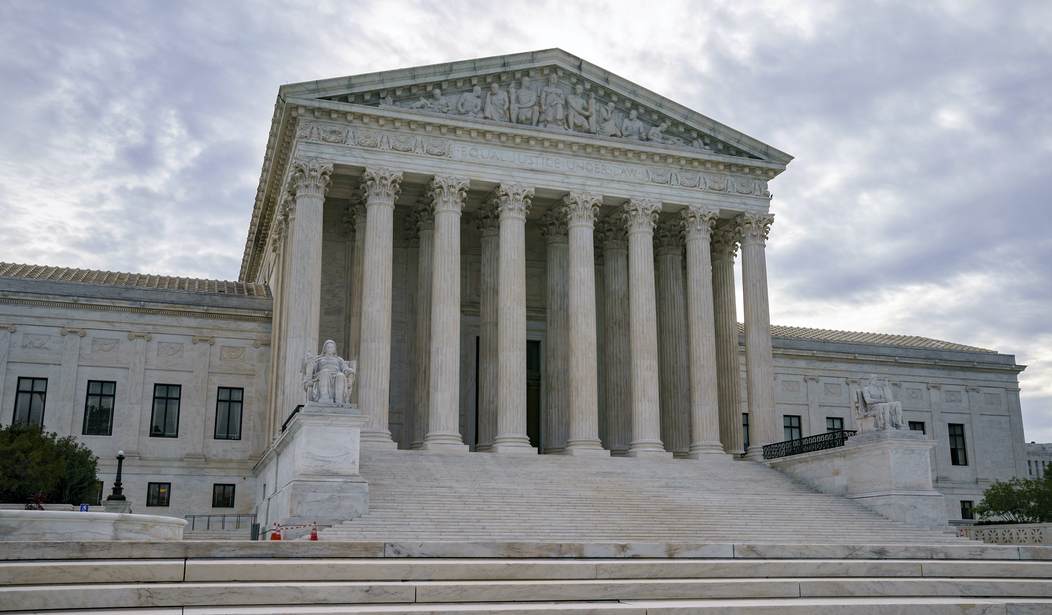
The Presidential Commission on the Supreme Court unanimously approved its nearly 300-page report on court reform Tuesday.
Established in April by executive order, the commission was tasked with producing a report that examined the contemporary debate over court reform, historical cases of when there were calls for court reform, and an analysis of the main arguments for and against certain proposals to reform the court, such as expansion, term limits, ethics reform, and more.
No specific recommendations were given in the report, and on the issue of court packing, the commission noted that the "profound disagreement among Commissioners" mirrors "the broader public debate."
"Supporters contend that Court expansion is necessary to address serious violations of norms governing the confirmation process and troubling developments in the Supreme Court's jurisprudence that they see as undermining the democratic system. Opponents contend that expanding—or 'packing'—the Court would significantly diminish its independence and legitimacy and establish a dangerous precedent that could be used by any future political force as a means of pressuring or intimidating the Court. The Commission takes no position on the validity or strength of these claims," the report states. "We present the arguments in order to fulfill our charge to provide a complete account of the contemporary Court reform debate."
The panel also addressed the question of term limits and weighed the pros and cons of establishing them through a change in statute or a constitutional amendment.
"At a minimum, the contestability of statutory approaches counsels in favor of serious deliberation by Congress if it chooses to consider this route," the report says. "In these deliberations, we hope that Congress would keep in mind the central structural values of our Constitution, particularly the principle of judicial independence, and consider what future Congresses, armed with the same constitutional powers, might someday attempt. Indeed, in recent years, we have seen democratic governments 'regress' or 'backslide' with respect to judicial independence. This has come about through electoral majorities using their power to restructure previously independent institutions, including courts, to favor the political agendas of those governments."
Recommended

The commission, comprised of 34 members and which held six public meetings, will now send the report to President Biden.













Join the conversation as a VIP Member