






Most of our nation's problems are a direct result of our being immune, hostile or indifferent to several moral questions. Let's start out with the simple and move to the more complex. Or, stated another way, let's begin with questions that generate the least hostility, moving to those that generate the greatest.
If a person benefits from a hamburger, a suit of clothing, an apartment or an education, who should be forced to pay for it? I believe the question has only one moral answer, namely the person who benefits from a good or service should be forced to pay for it, that's if we wish to distinguish ourselves from thieves who only care about enjoying something and who pays is irrelevant.
Aside from the moral question is the economic efficiency question. If the user of something isn't paying, it's a good chance that he'll overuse and waste it. Our country's problem is that too many Americans want to benefit from things for which they expect other Americans to be taxed.
A related moral question is: Does one American have a moral right to live at the expense of another American? To be more explicit, should Congress, through its taxing authority, give the Bank of America, Citibank, Archer Daniels Midland, farmers, dairymen, college students and poor people the right to live off of the earnings of another American? I'm guessing that only a few Americans would agree with my answer: No one should be forcibly used to serve the purposes of another American.
You might say, "Williams, if Congress makes it a law, then you should submit to being used to serve the purposes of others."
Recommended
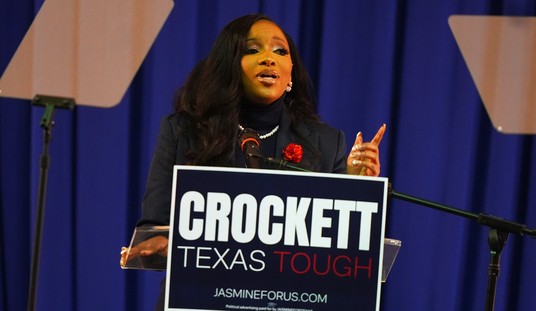
Such a vision introduces the next moral question, namely under what conditions is it moral to initiate force and threats of force against a person who himself has not initiated force or threats against another? Before that question can be answered, you might ask for a bit more specificity that has an important bearing on the answer, namely are we talking about a free or a non-free society?
In a free society, there's no moral case that can be made for the initiation of force against one who hasn't himself initiated force against another. But that's a societal ideal that might be beyond our reach here on Earth. After all, we have delegated certain rights to government to provide certain services, as enumerated in the U.S. Constitution, particularly as specified in Article I, Section 8 of the document. Each American is duty-bound to pay his share.
So a case can be made for the initiation of force against one who refuses to pay his share of those expenses. If an American says that he'll pay his share of those constitutionally mandated functions of the federal government but refuses to give up his earnings to be used for handouts to the Bank of America, Citibank, Archer Daniels Midland, farmers, dairymen, college students and poor people, should some kind of force be initiated against him?
I am all too afraid that most of my fellow Americans would answer, "Yes, some kind of force, fines or imprisonment should be initiated against a person who refuses to give up his earnings for the use of another." Their only source of disagreement would be just who had the rights to another's earnings.
Some would argue that farmers and dairymen don't have a right to another's earnings, but students and poor people do. Others would argue the opposite.
French economist Frederic Bastiat (1801-1850) said, "Government is the great fiction through which everybody endeavors to live at the expense of everybody else." That endeavor has plagued mankind throughout his history and has now reached a crisis stage in Western Europe and the United States, and the prospects for reversing it don't appear to be promising.









Join the conversation as a VIP Member