


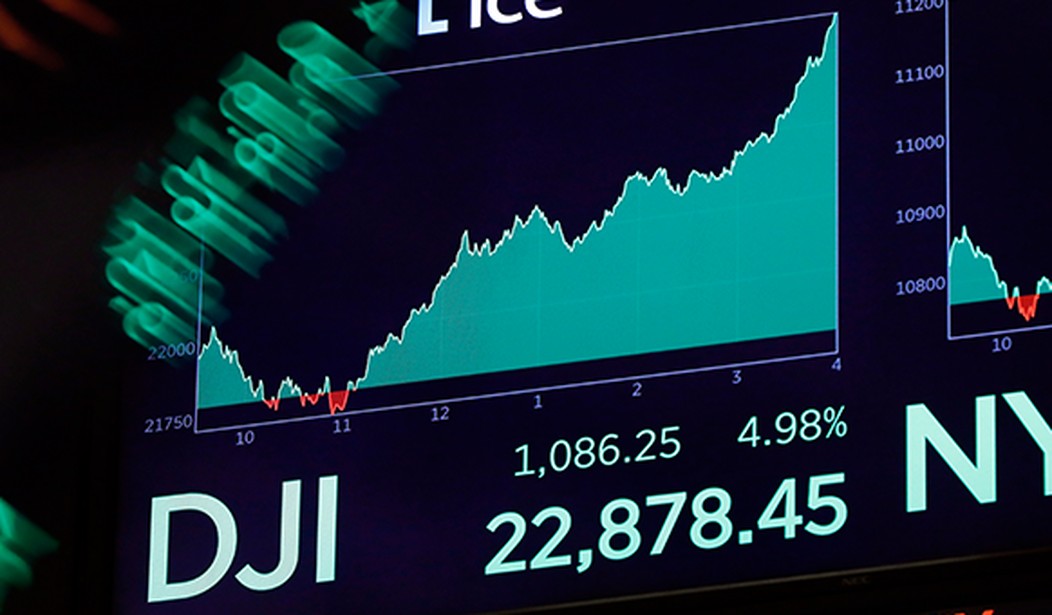
While our nation fights the novel coronavirus for our health and physical well-being many Americans are also waging a daily battle in the financial markets as we see historic and unprecedented volatility. Many investors can only be left in a constantly shifting cycle of awe, confusion, and grief as one day the Dow Jones Industrial Average drops 1,000-2,000 points, jumps up similarly or the same, and so on and so forth. Monday saw perhaps the worst of that as the 10% rally from the Friday prior faded as the day closed the day down almost 3,000 points.
In some ways it seems the stock market is the last community space left open in the United States as of the moment for interaction and exchange as we see municipalities and states increasingly implement quarantines, large gathering bans, restaurant and business closures, curfews, and now even entire full lockdowns. Amid all this there has been increasing talk of adding in the stock market to that list of shuttered shops in the belief that it may be formulating the next crisis after coronavirus - the economic devastation to workers and businesses from the ripple effects of all this economic chaos.
Shutting down the stock market is an easy solution to a complex problem and is less a fix than a new, and perhaps more troublesome, set of problems. There is U.S. historical precedent for a stock market exchange shutdown for extreme market conditions, primarily as a means to restore confidence and cool panic selling, but those were largely in eras before modern financial markets were as technologically supported, finessed, and sophisticated as they are nowadays. Even during the Great Depression and the 2008 financial crisis the exchanges did not close despite the turbulent and violent volatility.
While many of those nearing retirement and retirees who rely on their individual retirement accounts or 401(k) accounts, and the financial securities in those accounts that seem to be experiencing an unexpected and unending wave of battering, to restrict the ability of those most reliant on the stock market to liquidate assets or pick up assets, for those who luckily prepared cash, would cause them more financial strain than if the markets were open but turbulent. Essentially it would be a freezing of assets for those most needing the income and also would leave them in the dark about the exact level of assets they really have and thus put a wrench in financial planning and security.
Recommended
This lack of market information from shutting down the exchanges would extend to businesses too. The stock market is essentially a real-time, all-inclusive price discovery tool now made increasingly fast by the power of modern communications and algorithmic technology. While there may be some risks, such as accelerated news and panic based buying/selling, from everyone having a smartphone connected to their brokerage account and the proliferation of high-frequency traders nonetheless this still is the market readjusting itself constantly to price assets, companies, and economies.
A shutdown would also seriously disrupt the primary, but often forgotten, actual function of the stock market which is to raise equity capital for companies. Even amid turbulent market conditions that have caused many companies to cancel share buybacks to preserve liquidity and shelve IPOs due to indiscriminate selloffs when the market finally returns to a sense of calm, and perhaps sooner, companies may well need the ability to raise money through public markets rather than often erratic and uncertain private placements.
The New York Stock Exchange (NYSE), through its President Stacy Cunningham, rightly said on Monday amid another selloff day that “[c]losing the markets would not change the underlying causes of the market decline, would remove transparency into investor sentiment, and reduce investors’ access to their money…[t]his would only further compound the current market anxiety.”
Cunningham is precisely right in that even as unpleasant as the current stock market moves may be for consumers, companies, and investors that it remaining open is still more beneficial than it being closed. The stock market’s volatility is the pricing system of the market in action and now in full bloom and testing it limits as each day new and significant news concerning everything from company revenues to economic growth gets priced in.








Join the conversation as a VIP Member