


We hear a lot about “populism” these days. Conservatives often praise it, while liberals call it a threat to democracy.
This debate presupposes a common definition, but is there one? In fact, throughout our history, populism has surfaced in two very different forms.
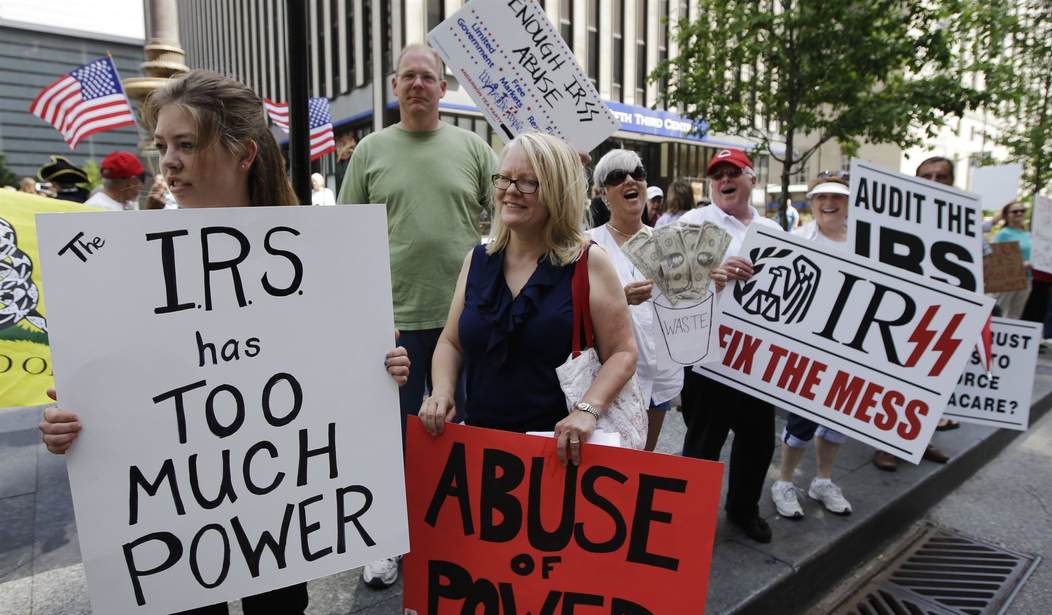
Today, there is the populism of the Tea Party Movement -- generally right and center-right, supporting Donald Trump. It is a populism that rebels against big government. “Leave us alone so that we can succeed (or fail) on our own” is its rallying cry.
The second form of contemporary populism is the populism of the Occupy Wall Street movement and Bernie Sanders voters. It stresses the equality of outcomes, rather than equality of opportunity. It is a populism that looks for handouts, whether it is forgiveness for college loans or reverse discrimination in the form of quotas and set-asides.
Neither of these strains are new, of course. Professor Victor David Hanson of Stanford traces both forms back to ancient Greece, then down through the American Revolution (Tea Party) and the French Revolution (Occupy). The question is, why has their age-old clash been sharpened so much of late?
Largely, I believe, because of the vacuum created by the crumbing of the “Liberal International Order.”
And what is the “Liberal International Order”? It was a governing philosophy defined largely by the United States with a broad bipartisan consensus in the years following World War II. It helped guide the U.S. use of power in the broad service of freedom for Americans and for our allies. We shared a common adversary with our allies, a fact that held us together and even enabled others to jointly claim the patrimony of the Liberal International Order.
Recommended

By 1989, however, with the fall of the Berlin Wall and the end of the Cold War, the old world came apart. The binding of Allies by the shared enemies of the Cold War disappeared. It was the “end of history.” Within a decade, we could “make the world safe for democracy.”
Alas, it did not turn out that way, at least not all the time: Rwanda (1994) still haunts those who clamor for interventions despite our inability and our unwillingness to intervene in all of them. And when we refused to intervene in any one of them, we were seen as disappointing and disrupting our shared commitment to the Liberal International Order.
Few bothered to examine the real effect of this new version of the Order on the safety and prosperity of America, our allies, and those who wanted to be our allies. At the same time, we were encouraged to “engage” with our adversaries, as if bringing them to the table would automatically cause them to adopt our system and beliefs.
Today, we are seeing the limits of the Liberal International Order which the world has outgrown. Not every nation nor every political entity is ready for admission to this club.
Should we talk with a resurgent Russia? Yes, but we should also realize the role of Russia in territorial expansion beyond its borders (Ukraine), and in areas outside its traditional interests (Syria). And we should recognize what Russia truly is: an economy the size of Spain based on an increasingly competitive international market for energy supplies, with a declining population, a powerful military and a large stockpile of nuclear weapons.
Must we deal with China, an emerging power that is certainly a disrupter to the old Order? Yes, even as we eye warily its ‘belt and road” efforts to achieve world-wide strategic expansion in economic terms, and as we denounce its bullying claims to the South China Sea as territorial waters in violation of international treaties and obligations of prudent, serious members of the international community, and as we and our ally in Taiwan confront a resurgent PLA Navy in the Taiwan Straits.
In short, the Liberal International Order has outlived its purpose. The world is thrashing around to figure out what will replace it. Small wonder, then, that we find big-thinking, disruptive, unconventional President Trump at the center of these debates.
The question is, whose form of populism will prevail? Judging by the alarm bells being sounded on the Left, my bet is on the Tea Party.





Join the conversation as a VIP Member