





Arguments about tariffs are as old as the Republic itself. The British government’s imposition of import duties on a range of goods led to the Boston Massacre and the famous Boston Tea Party. Despite the fact that tariffs were a spark that helped set off the American Revolution, American presidents have historically not been hesitant to impose some themselves. For example, in 1828, President John Quincy Adams signed off on a series of massive tariffs designed to benefit the Northern industry.
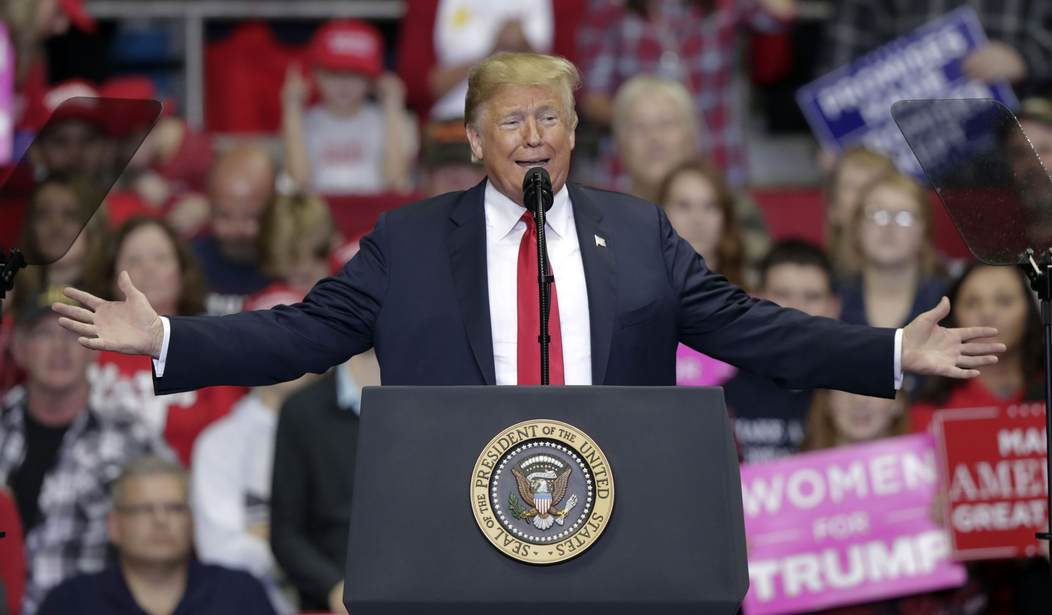
President Donald Trump, however, has embraced tariffs less as a protectionist scheme, like many of his predecessors have, but more as leverage to make other countries move from managed to free trade. On more than one occasion during his presidency, he has stated explicitly that his goal has been to create “tariff free” trading. During a recent summit with the G-7 nations, President Trump said there should be "no tariffs, no barriers, that's the way it should be — and no subsidies.”
The president’s strategy is paying dividends both for American workers and the economy as a whole. Like his predecessors, Mr. Trump promised to renegotiate the North American Free Trade Agreement (NAFTA) to get more favorable terms to American businesses and agriculture. Unlike his predecessors, he accomplished his goal. The new United States-Mexico-Canada Agreement (USMCA) is another achievement the president can brag about on the campaign trail in 2020.
While the president held our trading partner’s feet to the fire to achieve a better agreement and achieve a freer trade landscape, there remains unfinished business the president should attend to.
As leverage for the negotiations, the president imposed barriers on Canadian and Mexican steel imports. Now that the two countries agreed and signed onto the deal, which lifted many of their harmful tariffs on American industry, we should remove our retaliatory pressure tools as a sign of goodwill. Not only will this show uncooperative nations like China the benefits of coming to the U.S.’s negotiating table, but it will also turbocharge the American economy.
Recommended
Further, lifting the tariffs would benefit American national security as each plane, tank, and ship produced by American workers relies on steel and aluminum. Allowing access to more competitive pricing benefits the American taxpayer as well, all while showing our trading partners and allies that our true end-goal is to create a freer and fairer trade system for not only the American people but the rest of the world as well. They will begin to recognize that if they sit down and negotiate with the White House, they will be rewarded with lower duties. That's the way it should be.
The USMCA marks a critical milestone in American trade policy but also a test for President Trump. If he truly wants more free trade, he should start by lifting these costly and now unnecessary barriers to prosperity.







Join the conversation as a VIP Member