




Want to know who the next president will be?
Don't trust polls or pundits. Betting odds at ElectionBettingOdds.com are the best predictor of who will win any election.
Pundits have a terrible track record. Last election, Newt Gingrich and Dick Morris forecast a Romney "landslide." Rush Limbaugh said, "All my thinking says Romney big. ... It's not even close."
Polls are better, but not much. That's because you are not normal. Since you read this column, you are different from most voters. You think a lot about politics. Most Americans don't.
People think about food, sex, money, friends, jobs, success, family, health, religion, sports, fashion, video games, money, sex, food (I know I repeated those last three, but that's where most people's heads are). Presidential nominees are not yet taking up space in most people's minds.
When a polling company reaches the rare person willing to talk to a stranger on the phone, chances are that person is not well-informed about politics. "Who do I support for the nomination? Uh, who's running? I'm embarrassed! Oh, yes, Donald Trump!"
Polls reveal only a snapshot of current opinion. In 2011, Rick Perry led the polls for the GOP nomination with Trump-like 31 percent support. By October, Herman Cain was ahead. By December, Newt Gingrich.
But people who bet knew better. They picked Romney. Likewise, bettors anticipated the Obama victory that many polls and pundits missed.
Despite bettors' good track record, few people know about the odds or how they're created. Here's how: computers average bets made on "prediction markets," where traders buy and sell shares -- like stocks -- on each candidate. As I write, a share of Donald Trump winning the GOP nomination effectively costs 23 cents. If Trump wins, everyone who owns that share gets $1. That implies Trump has a 23 percent chance of winning the nomination.
Recommended
Unfortunately, American politicians banned political prediction markets, with a few exceptions, like PredictIt.com. But candidates' odds are somewhat off on that site because bettors may not trade more than $850 per candidate.
The odds on the big unrestricted market in England, Betfair.com, are much more informative. Betfair posts those odds in arcane gambling formulas, so producer Maxim Lott and I created the website ElectionBettingOdds.com. It shows the odds more clearly and will automatically update them every five minutes.
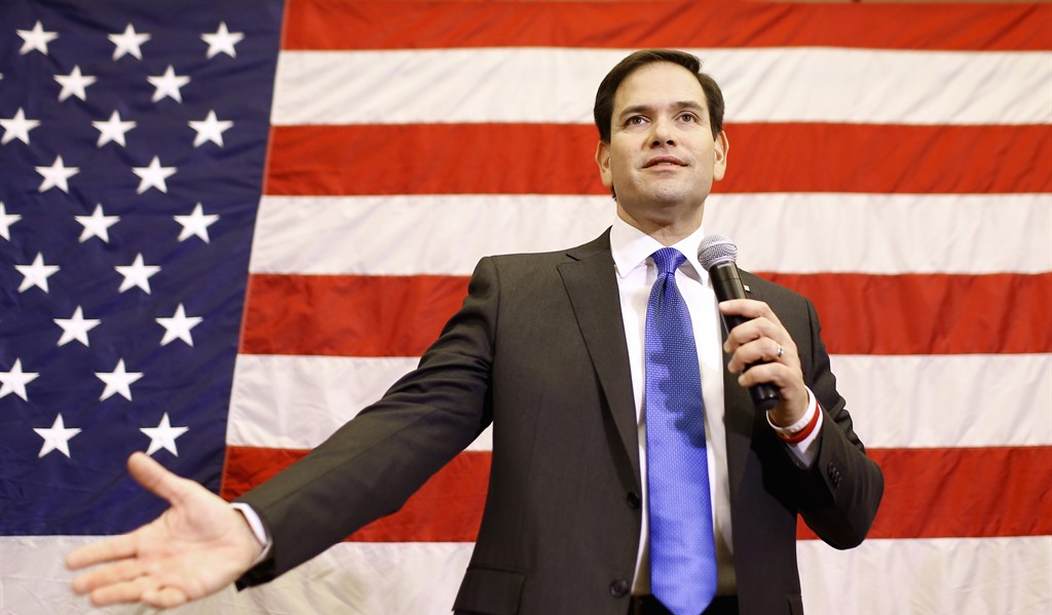
Right now, bettors know that Trump, even though he is ahead in polls, is unlikely to be the nominee. Marco Rubio is the favorite. Ted Cruz comes in second. Trump and Jeb Bush are third and fourth.
Sadly, Hillary Clinton is a 95 percent favorite to win the Democratic nomination and has a 55 percent chance of becoming our next president. Yikes!
Think the odds are wrong? Put your money where your mouth is! You could win money.
Prediction markets have a long track record. University of North Carolina researchers found that from 1868 to 1940, prediction markets "did a remarkable job forecasting elections." More than $100 million was bet, sometimes exceeding the value of shares changing hands on Wall Street. Newspapers ran headlines like "Betting Odds on Roosevelt Rise to 7 to 1."
But the markets disappeared because America's elites don't like the idea of ordinary folks betting on important events.
Economist Robin Hanson says, "All our familiar financial institutions were once banned as illegal gambling. Stock markets, commodity markets, insurance was banned."
That's dumb, because nothing is better at predicting the future. European prediction markets are good at predicting Oscar winners, weather disasters, even "American Idol" winners. They're not perfect, of course, but they're better than everything else.
That's why the Department of Defense once asked Hanson to create a market to predict things like wars and terrorism. But when it was publicized, outraged Sens. Ron Wyden and Byron Dorgan held a news conference to say "encouraging people to bet on and make money from atrocities ... needs to be stopped immediately."
It was.
A few years later, politicians killed a prediction market that would merely have let people bet on the success of Hollywood films. Sens. Patrick Leahy and Orrin Hatch complained the Hollywood stock exchange would lead to "speculation that is even more risky than the typical financial product."
It might. But so what? In a free country, adults ought to be allowed to speculate.
Fortunately, American politicians don't control the entire world, so I offer you the most accurate presidential race odds: ElectionBettingOdds.com.




Join the conversation as a VIP Member