



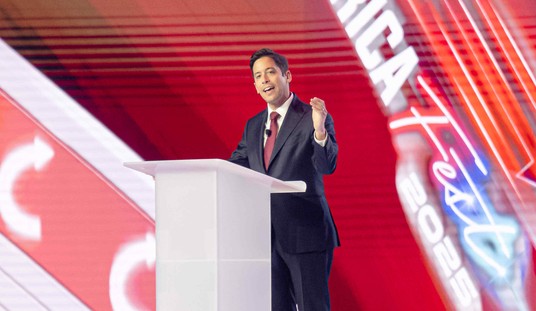
Ideas embody the conservative movement at its very best, Sen. Mike Lee (R-Utah) stated Monday at Heritage Action’s Conservative Policy Summit. Lee’s Higher Education Reform and Opportunity Act acknowledges the need to train a nimble and diverse workforce while also combating the rising cost of higher learning.
“Imagine computer courses accredited by Apple or Google. DOW could accredit a chemistry program. Boeing could could craft its own aerospace engineering major. Or Hilton could accredit a hospitality training program specifically designed to meet current market needs,” Lee envisioned before the crowd of listeners.
These types of specialized programs are currently barred from accreditation and are ineligible for federal student aid under the 1965 Higher Education Act.
“Under the law, only degree issuing academic institutions are allowed to be accredited. And only the U.S. Department of Education can authorize accreditors under this system. Furthermore, as you might remember, Congress effectively killed the private student loan industry in 2009. Taken together, these restrictive policies artificially narrow America’s path into the middle class and into economic opportunity,” Lee claimed. “In effect, the federal government today, fights a kind of Higher Education cartel. Federally approved creditors, operate as a gatekeeper to keep unwanted providers out of the market.”
Lee’s bill would amend eligibility requirements, allowing state based accreditation to expand beyond 'brick and mortar' institutions. Financial aid services would be made available to students seeking anything from professional certifications to competency tests and apprenticeships.
Recommended
“Businesses, labor unions, trade associations, non-profit groups, and any other applicant that met the states requirements could be empowered to accredit these programs,” Lee said.
Standing higher education models are failing to produce the type of worker needed in today’s technology-charged economy. Graduates weighed down by thousands in student loans have no desired skill set. Glenn Harlan Reynolds explained the problem in his book “The New School.”
If higher education is going to justify cost, there needs to be a much bigger return on investment, which means much more actual learning, which means more rigorous course content and less fluff.
Student loan debts have reached “dizzying new heights,” constituting 6 percent of the national debt, Forbes reported:
It’s a negative sum game for both student-borrowers and the economy. According to the Consumer Financial Protection Bureau, student loan debt has reached a new milestone, crossing the $1.2 trillion mark — $1 trillion of that in federal student loan debt.
And can you guess who is the primary holder of all student loan debt? The government (a.k.a the "higher education cartel").
Translation: the creditor in this scenario is the U.S. tax payer, who if students default on these loans will be subject to carry the burden of these loans.
The bachelor’s degree continues to depreciate in quality and explode in cost, Lee said, the market is shifting, and federal policy must catch up with the marketplace.










Join the conversation as a VIP Member