







It wasn’t the biggest news over the Independence Day holiday since we got the reconciliation package through Congress. President Trump signed his signature domestic achievement on the Fourth of July, which cut taxes, booted illegal aliens off welfare programs, and fully funded our immigration enforcement measures, specifically giving a windfall to Immigration and Customs Enforcement.
SUPREME COURT CLEARS TRUMP TO SEND MIGRANTS TO SOUTH SUDAN
— NewsWire (@NewsWire_US) July 3, 2025
🚨
— 🇺🇸 Mike Davis 🇺🇸 (@mrddmia) July 4, 2025
Another Trump legal victory:
Illegal aliens are avoiding deportation by pretending they're persecuted back home.
So the Trump administration sends them to third countries.
A Boston Democrat judge unlawfully blocked this.
More than two months later, the Supreme Court… pic.twitter.com/fiZ4cRkiIK
Big news! 🇺🇸🇺🇸🇺🇸
— Gene Hamilton (@GeneHamiltonUSA) July 3, 2025
The legal equivalent of “did I stutter?” from the Supreme Court.
Good to see lawlessness put to end… https://t.co/2sBrRXoKbQ pic.twitter.com/S2B4lz72ZX
Judge Brian Murphy in the District Court for Massachusetts is having a stellar holiday! pic.twitter.com/13mVlQXlUo
— Leslie McAdoo Gordon 🇺🇸 (@McAdooGordon) July 4, 2025
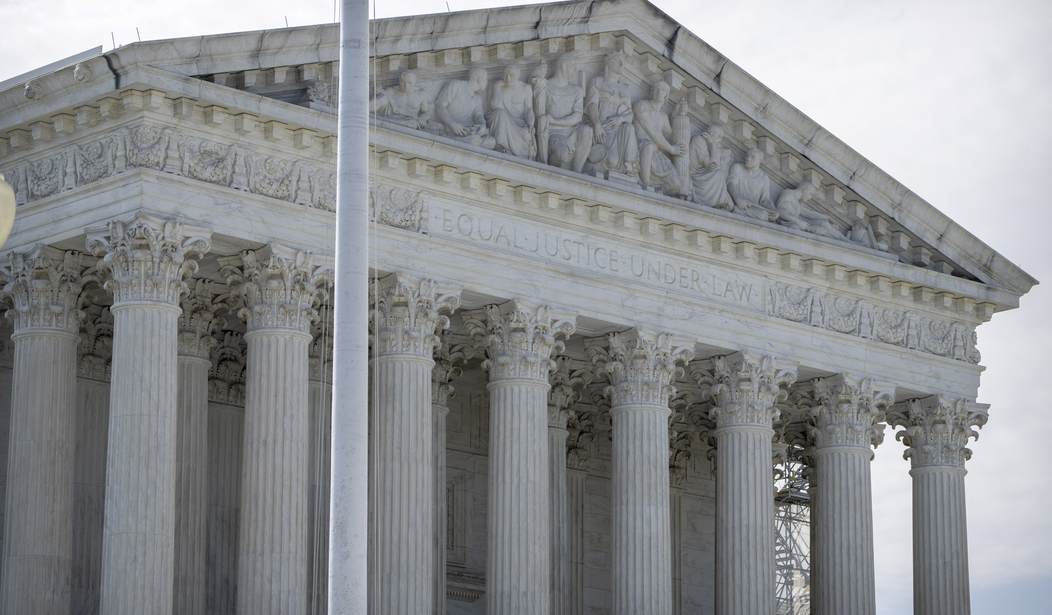
Yet, there was another significant win: the Supreme Court rebuked a lower court judge who thought he was the federal government and the ultimate authority on immigration policy. Judge Brian Murphy’s attempts to stop the deportation of illegals to Sudan failed, as the Court stepped in to slap him down (via SCOTUSBlog):
The Supreme Court on Thursday afternoon cleared the way for the Trump administration to send a group of immigrants currently being held on a U.S. military base in the east African country of Djibouti to South Sudan. In a brief opinion, the justices made clear that their June 23 order, which paused an order by a federal judge in Massachusetts limiting the government’s ability to deport immigrants to countries that are not specifically identified in their removal orders, applies fully to the eight immigrants in U.S. custody in Djibouti.
Justice Sonia Sotomayor dissented, in an opinion that was joined by Justice Ketanji Brown Jackson. She argued that Thursday’s order “clarifies only one thing: Other litigants must follow the rules, but the administration has the Supreme Court on speed dial.”
The order came less than two weeks after the Supreme Court put on hold, at least for now, an April 18 order by U.S. District Judge Brian Murphy that prohibited the federal government from sending immigrants to “third countries” – that is, countries not explicitly listed in their removal orders – without first following a series of steps to help ensure that the immigrant would not be tortured if deported to those countries.
The dispute at the center of Thursday’s opinion by the justices stems from an order that Murphy issued on May 21, when he concluded that the federal government had violated his April 18 order when it tried to deport eight men to South Sudan – a country from which the U.S. government has evacuated all non-emergency personnel, and for which the State Department has issued an advisory recommending against travel to the country because of “crime, kidnapping, and armed conflict.”
The plane carrying the immigrants that was headed to South Sudan landed instead in nearby Djibouti, where the men have been held at a U.S. military base.
The Trump administration went to the Supreme Court on May 27, asking the justices to pause Murphy’s April 18 order and allow it to carry out “third country” removals while litigation over the practice continues. U.S. Solicitor General D. John Sauer contended that Murphy’s “judicially created procedures are currently wreaking havoc on the third-country removal process” and “disrupt[ing] sensitive diplomatic, foreign-policy, and national-security efforts.”
But there’s another issue, and yes, it relates to another lower court judge. Mr. Rudolph decided to intervene in the Trump administration’s revisions to asylum laws. He issued the order on July 2 (via NYT):
The Supreme Court was crystal clear.
— 🇺🇸 Mike Davis 🇺🇸 (@mrddmia) July 4, 2025
Twice.
The government can deport illegals to third countries.
District judges work for the Supreme Court; not the other way around.
DC Obama Judge Randolph Moss is a lawless and dangerous clown.
Ignore him.
Defund him.
Impeach him. https://t.co/CA6a6HBD2Z pic.twitter.com/llRjVZsQhs
A federal judge in Washington ruled on Wednesday that the Trump administration cannot categorically deny asylum claims from people crossing the southern border, striking down a change made on President Trump’s first day in office.
The ruling rejected the idea, repeatedly put forth by the president, that such extraordinary powers were justified to curtail what Mr. Trump has called an invasion of the United States by immigrants crossing the southern border.
In a hefty 128-page opinion, Judge Randolph D. Moss of the Federal District Court for the District of Columbia wrote that the Constitution and federal immigration law did not afford Mr. Trump the expansive authorities he claimed.
“The court recognizes that the executive branch faces enormous challenges in preventing and deterring unlawful entry into the United States and in adjudicating the overwhelming backlog of asylum claims of those who have entered the country,” he wrote.
The lawfare never ends.


Join the Conversation
VIP members get the ability to comment on articles.