





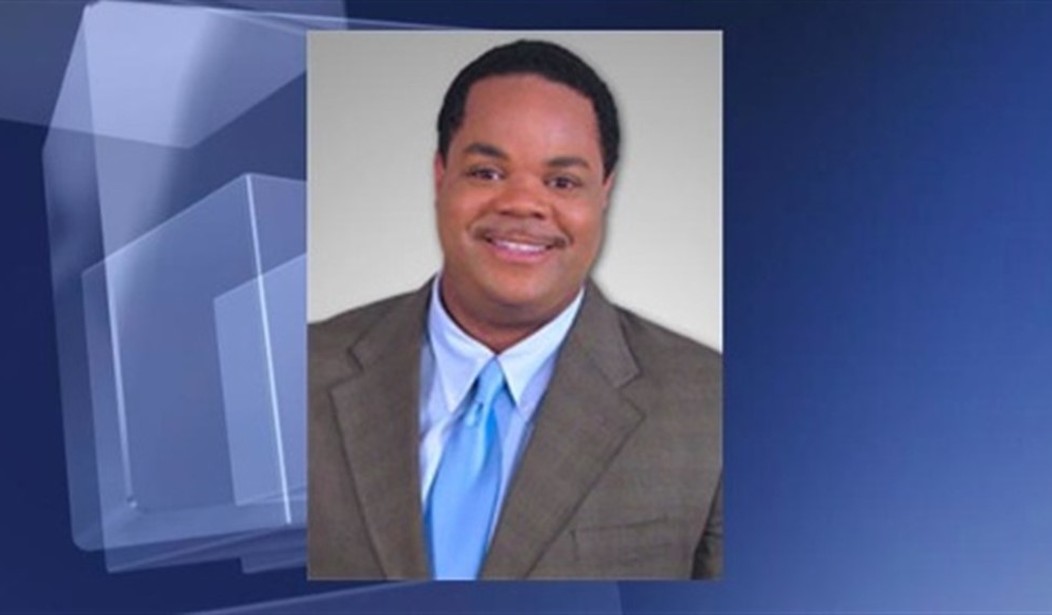
Vester Lee Flanagan (aka Bryce Williams) had contacted ABC News over the past few weeks about a story, but never gave any details. On August 26, the day he ambushed and murdered WDBJ7’s Alison Parker and Alex Ward, he faxed what appears to be a manifesto/suicide note to the organization, citing, among other things, that the Charleston church shooting sent him “over the top.” It’s the ramblings of an unhinged person. Flanagan’s work history has mostly been dotted with him filing complaints about discrimination at work, of which there is no evidence, and a reputation of being difficult among his co-workers.
As The New York Times reported, these written letters documented “the homicidal rage that had apparently been building for years.” After being fired from a previous station, Mr. Flanagan reportedly killed his cats in anger. The article noted that there appears to be a brief period of calm between 1996-98, where he worked for WTOC-TV in Savannah, Georgia. There, he met a co-worker named “Kenny,” who he apparently fell in love with during his time there:
He moved from Georgia to Florida, where a job at WTWC in Tallahassee became what Mr. Flanagan called “a disgusting, vile and wretched situation.” In a 2000 lawsuit, he alleged that he was the victim of racial slurs and bullying, a complaint that he would repeatedly make during the rest of his life.The station fired him, citing “misbehavior with regards to co-workers,” but the discrimination case he brought was settled out of court.
[…]
Mr. Flanagan continued to pursue work in television after the “fiasco” in Tallahassee. He notes that a job in Greenville, N.C., was “amazing.” In a 2011 email seeking a job at WAFF, a station in Huntsville, Ala., Mr. Flanagan sounded enthusiastic and upbeat. He wrote proudly of his ability to multitask, cultivate sources and work with “little or no supervision...being a self-starter.”
The Alabama station declined to hire Mr. Flanagan. Adam Henning, the news director there, said references had told of finding Mr. Flanagan “exceedingly difficult to work with.”
That proved to be the case in Roanoke as well. By the summer of 2012, managers at the station had begun to document problems in his employment file, accusing Mr. Flanagan of “misinterpreting” the actions and words of his co-workers…
[…]
After he was fired from the Roanoke station in February 2013, Mr. Flanagan seethed again. He filed another harassment lawsuit, and served as his own lawyer. So angry one day after what he called “an awful chain of events,” he writes that he killed his two cats and drove to a forest, where he dug a grave and covered the bodies with leaves and a flower.
Besides his apparent erratic workplace demeanor, Flanagan seemed to have this mindset that he was besieged with racism at the workplace. Before his termination at WDBJ, co-workers said he thought the words “field” and “swinging” were racist. According to the Daily Mail, this is what prompted him to file a complaint in 2012 against then-intern Alison Parker, who he would eventually murder, for saying stuff like “'swinging’ by an address,” or “going out into the ‘field.’” To no one’s surprise, Flanagan was described as “management’s worst nightmare.”
[Alison] Parker, who was referred to by her middle name as Bailey in the documents, was never disciplined for the remarks.But they appear to be the 'racist' comments Flanagan was referring to when he Tweeted in the aftermath of the deadly shooting.
Ryan Fuqua, a video editor at WDBJ, told The Post: 'That's how that guy's mind worked. Just crazy, left-field assumptions like that.'
'He was unstable. One time, after one of our live shots failed, he threw all his stuff down and ran into the woods for like 20 minutes.'
Trevor Fair, a 33-year-old cameraman at WDBJ, told the newspaper the words Parker used are commonplace but that they would routinely anger Flanagan.
We would say stuff like, "The reporter's out in the field." And he would look at us and say, "What are you saying, cotton fields? That's racist".'
'We'd be like, "What?' We all know what that means, but he took it as cotton fields, and therefore we're all racists.'
The article then went on to delve into other aspects of Flanagan’s work performance at the station, which was abysmal. He also exhibited a poor work ethic as well.
There are many Americans who get down on their luck. They may lose their jobs, face discrimination at work, and have legitimate anger as a result. Yet, they do not engage in cold-blooded murder. Only the mentally unstable engage in such behavior.
Join the Conversation
VIP members get the ability to comment on articles.