





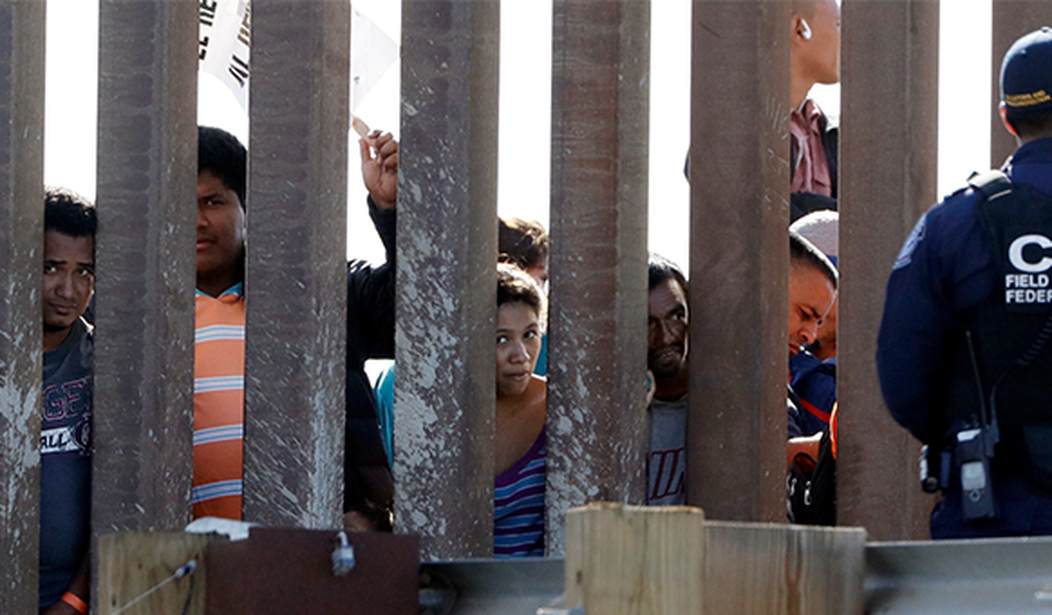
After officially signing the order to extend the deployment of active-duty troops on the U.S.-Mexico border, Secretary of Defense James Mattis explained what they will be doing to the end of January.
“So we get missions in and I accept certain missions because they're appropriate for us,” Mattis told reporters while on a trip to Canada. “The — in Texas, basically the engineering tasks are complete. In Arizona, they're pretty much complete. I'll probably leave a few engineers in each place who would actually move — if we ever had to close the ports of entry; the commissioner of border patrol says close this as you saw it done once for six hours in California.”
Mattis said that if the troops’ tasks are complete then they will be sent home.
“So that will leave a modicum of engineers out there. You don't need many to move the last Jersey barriers or barbed wire barricades into position,” he said. “There are some MPs who are still there. Those MPs, generally in Texas, Arizona, those places, are there as oversight of the U.S. army engineers or of the — where the helicopters are stationed just — they're basically guards, that sort of thing. Side arms they don't —they only carry rifles.”
Mattis pointed out those that will be sent home are not the National Guardsmen who were sent to the border beforehand since they are under different orders:
Now, in California we probably will not reduce as much as we will in the other places. Remember there are still 2,100 National Guard under — under governors’ control, those I'm not referring to. They probably will stay. I did not see a lessening of readiness with that group because, in fact, they're doing — they're very close to many of the things they would do in the regular jobs, what the Guard does all the time. On the federal troops, you will see a reduction in the number of federal troops, the reason I just mentioned. And their MPs preparing for missions that I would call non-traditional in location but they're not non-traditional security jobs in -- if they were to deploy somewhere else.
Current deployment numbers are around 5,800 active-duty military and Mattis revealed he did not yet know how many were going to be set home, although noted the number has gone down slightly already since their missions were completed.

Join the Conversation
VIP members get the ability to comment on articles.