





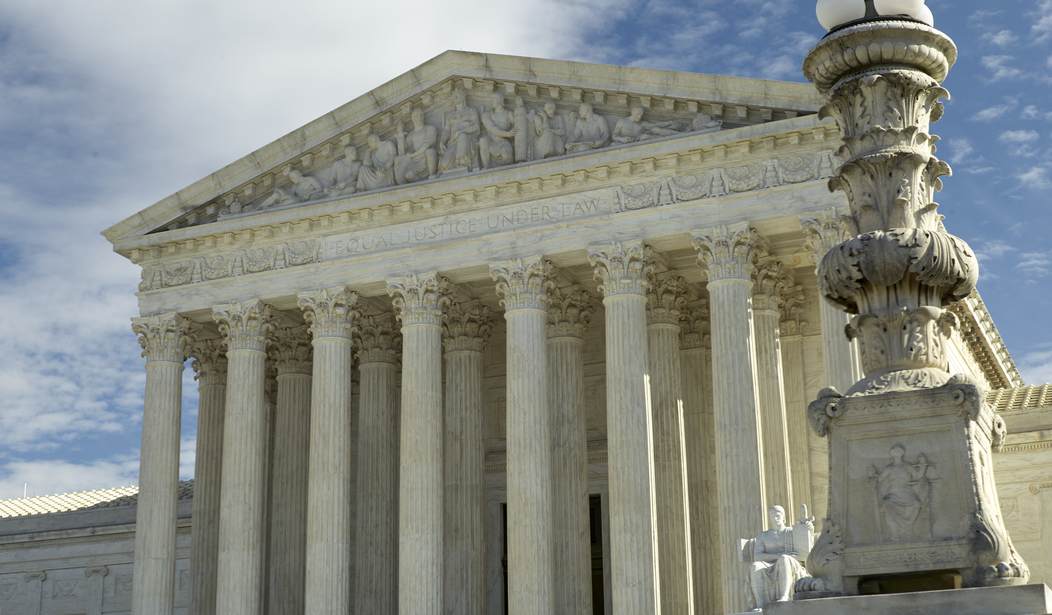
The Supreme Court appears to be leaning toward ruling against President Donald Trump’s tariffs after hearing arguments in the case on Tuesday.
The case centers on whether Trump has the authority to impose sweeping global tariffs without congressional approval against various nations under the International Emergency Economic Powers Act (IEEPA) of 1977.
The administration invoked the act in February to levy tariffs on goods coming from China, Canada, and Mexico. The president argued that these countries had failed to take sufficient measures to stop the flow of fentanyl into the United States. He declared narcotics trafficking a national emergency under the IEEPA.
In April, the administration imposed a second set of “reciprocal tariffs” to gain more leverage in trade deals with other nations. The president pointed to trade deficits, characterizing them as an “unusual and extraodrinary threat to the national security and economy of the United States.”
The administration claims the tariffs have generated about $90 billion in revenue through September.
An analysis from the Congressional Budget Office predicts that the tariffs will reduce the national deficit by $4 trillion over the next ten years if they remain in place.
A coalition of small businesses filed a lawsuit against the White House arguing that President Trump exceeded his constitutional authority by levying tariffs that are essentially extra taxes. They argue that Congress alone has the authority to make htese moves.
Attorney Neal Katyal argued that “Tariffs are taxes” because “they take dollars from Americans’ pockets and deposit them in the U.S. Treasury.”
He added: “Our founders gave that taxing power to Congress alone.”
On the other side of the argument, Solicitor General D. John Sauer defended Trump’s tariffs by stating that they are “regulatory tariffs” and not revenue-raising measures. “The fact that they raise revenue is only incidental,” he argued.
Sauer noted that the phrase “regulate importation” in the IEEPA “plainly embraces tariffs, which are among the most traditional and direct methods of regulating importation.”
The solicitor general further stated that these tariffs fall under the president’s ability to regulate foreign commerce and that stopping the administration from using this method would expose the United States to “ruthless trade retaliation” which would bring about “devastating economic and national security repercussions.”
The court appeared skeptical of the White House’s arguments regarding the president’s tariff authority. Justice Neil Gorsuch challenged Sauer directly, asking, “What would stop Congress from relinquishing all responsbility for regulating foreign commerce—indeed, declaring war—to the president?
Gorsuch pointed out that “Congress, as a practical matter, can’t get this power back once it’s handed it over to the president. It’s a one-way ratchet…the gradual and continual accumulation of power in the executive branch, away from the elected representatives of the people.”
Chief Justice John Roberts affirmed that “the imposition of taxes on Americans, which has always been a fundamental power of Congress” and pointed out that the IEEPA “does not mention the word ‘tariff’” and that the measure “had never before been used to justify tariffs.”
Justice Amy Coney Barrett asked Sauer if there were any other instances in which the phrase “regulate importation” had been “used to confer tariff-imposing authority.”
Justice Sonia Sotomayor was even more forceful. “You say tariffs are not taxes, but that’s exactly what they are,” she said. “They’re generating money from American citizens, revenue.”
The court will hand down its ruling by late June, when the current term ends.
Editor’s Note: The Schumer Shutdown is here. Rather than put the American people first, Chuck Schumer and the radical Democrats forced a government shutdown for healthcare for illegals. They own this.
Help us continue to report the truth about the Schumer Shutdown. Use promo code POTUS47 to get 74% off your VIP membership.


Join the Conversation
VIP members get the ability to comment on articles.