





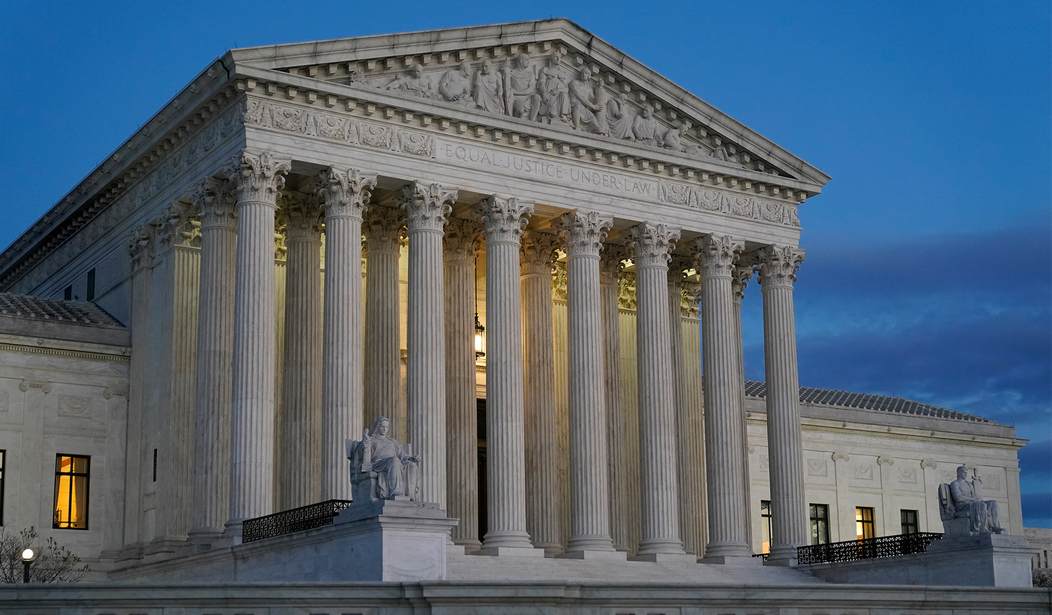
The Supreme Court appears poised to rule against Louisiana’s second majority-Black district that was created in 2022 to comply with the Voting Rights Act (VRA).
This ruling could drastically revamp how the VRA is applied when it comes to drawing congressional districts.
The case centers on Section 2 of the VRA, which prohibits states from drawing districts in a way that results in racial minorities having less opportunity than others to elect their preferred candidates. It is aimed at preventing states from diluting the voting power of racial groups.
The case, Louisiana v. Callais, involves a lawsuit challenging the state’s creation of a second majority-Black House district to comply with Section 2 of the Voting Rights Act. The plaintiffs argue that the creation of the district violates the Equal Protection Clause of the 15th Amendment.
The Supreme Court allowed the district to stand for the 2024 election but planned to take up the matter during this term. The question is whether the state had enough evidence that the VRA required this district to be created.
A federal court previously ruled that the 2022 congressional map violated Section 2 by diluting the strength of Black voters. This prompted the state legislature to redraw the maps to create the second majority-Black district. However, a group of non-Black voters filed a legal challenge against the new map, claiming it was a racial gerrymander.
Justice Brett Kavanaugh questioned whether it is time to end race-based districts under the Voting Rights Act instead of “allowing it to extend forever.”
"This court's cases, in a variety of contexts, have said that race-based remedies are permissible for a period of time, sometimes for a long period of time - decades, in some cases - but that they should not be indefinite and should have an end point," he told Janai Nelson, president of the NAACP Legal Defense Fund, who was arguing in favor of the second district.
Nelson contended that Section 2 is still necessary to combat discrimination in elections. She stated that weakening the provision would give the state’s White voters “entrenched control.”
Alito asked about the extent to which state lawmakers are enabled to draw congressional maps in a way that favors their political party. “Isn’t seeking partisan advantage also an objective that a legislature may legitimately seek?” he asked.
The left-leaning justices focused primarily on the history of the VRA and the potential impact of gutting Section 2. Justice Elena Kagan asked Nelson what would happen if this occurred. “I think the results would be pretty catastrophic,” the attorney replied. She argued that the US has more diversity in political leadership “because of litigation that forced the creation” of majority-Black districts.
In a testy exchange, Justice Ketanji Brown-Jackson pushed back against Louisiana Solicitor General Benjamin Aguinaga, who was arguing against the second district. She rejected his argument that having this district is not a compelling state interest. “ I don’t understand why your answer to Justice Kagan’s question — about whether this is a compelling state interest — is “no.” The answer is obviously “yes,” that you have an interest in remedying the effects of racial discrimination that we identify using this tool. Whether you go too far in your remedy is another issue,” she said.
🚨 JUST IN: DEI Supreme Court Justice Ketanji Jackson is LOSING IT because she knows the race-based VRA Congressional districts are about to be abolished pic.twitter.com/y9ooR0OBcp
— Eric Daugherty (@EricLDaugh) October 15, 2025
She is YELLING at the counsel and is clueless as to how the VRA processed even worked in Louisiana.…
The outcome of this case could reimagine the balance between the VRA and the Equal Protection Clause on a national scale. It could impact how states consider race when drawing district maps. It could potentially allow Republicans to eventually add 19 more seats in the House.
Editor’s Note: The Schumer Shutdown is here. Rather than put the American people first, Chuck Schumer and the radical Democrats forced a government shutdown for healthcare for illegals. They own this.
Help us continue to report the truth about the Schumer Shutdown. Use promo code POTUS47 to get 74% off your VIP membership.



Join the Conversation
VIP members get the ability to comment on articles.