







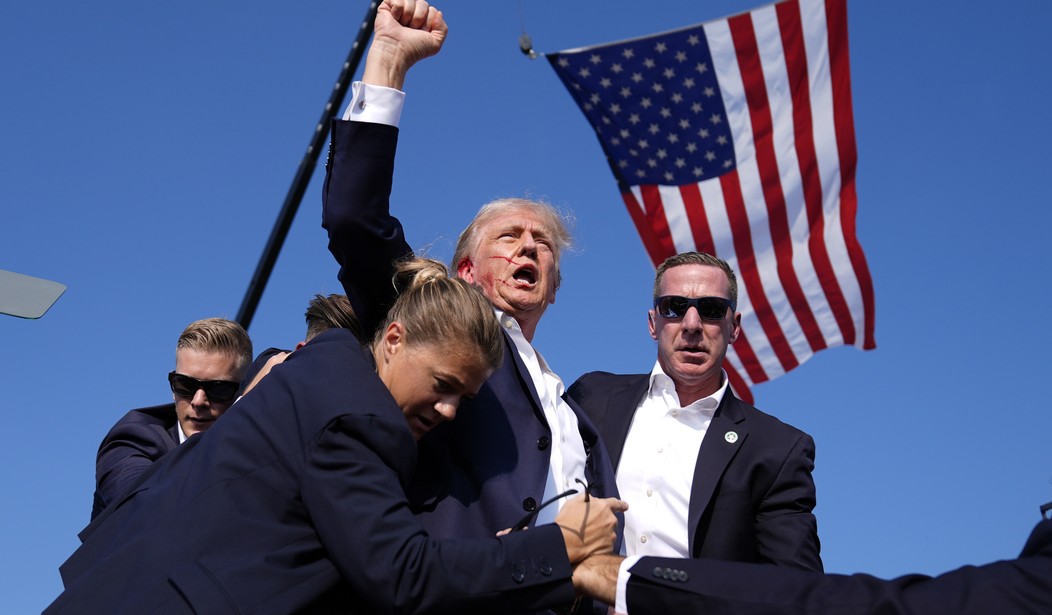
The Secret Service had threat intelligence ten days before the assassination attempt on President Donald Trump at a rally in Butler, Pennsylvania last year, according to a Senate Homeland Security Committee report.
The report details multiple layers of mishaps and miscommunications in the lead-up to the assassination attempt and highlights several areas where the Secret Service should improve. The mistakes that allowed Thomas Matthew Crooks to get close enough to take several shots at Trump while killing a rallygoer raise disturbing questions about the agency’s ability to prevent this type of attack.
Before the Butler rally, Secret Service agents repeatedly requested more resources to ensure security at the event. This included counter-sniper teams, CAT units, and enhanced drone-jamming gear. “USSS Headquarters denied or left unfulfilled at least 10 requests b y the Donald Trump Division (DTD) for additional resources during the 2024 campaign including enhanced counter-unmanned aerial system (C-UAS) assets, counter assault team (CAT) personnel, and counter sniper personnel,” the report reads.
🚨🇺🇸 ASSASSINATION ATTEMPT BUTLER: SECRET SERVICE KNEW... AND SAID NOTHING
— Mario Nawfal (@MarioNawfal) July 13, 2025
A year after the assassination attempt on Trump, a new GAO report confirms what many suspected:
The Secret Service had classified threat intel 10 days before the Butler rally.
They never told the agents… https://t.co/M6SXnoFaUh pic.twitter.com/XibTKXxJf7
The lack of these resources pushed agents into a position of having to improvise while figuring out how to fill in the gaps. In fact, several agents told investigators they stopped filing paperwork because headquarters would not respond to their requests. This meant that on the day of the rally, Trump walked onto an outdoor stage without the protective measures his team requested.
Even further, the committee found that the Secret Service and other federal agencies possessed credible intelligence indicating a long-range assassination threat against the president. While this intelligence did not highlight Crooks, it did reveal that the Iranian regime sought to target Trump and other politicians.
Just one day before the Butler rally, the FBI arrested Asif Raza Merchant, a Pakistani national with ties to the Iranian Revolutionary Guard Corps (IRGC), who was allegedly “recruiting an individual to assassinate U.S. political officials.” He allegedly paid $5,000 to FBI agents posing as would-be assassins to do the deed.
A senior supervisor texted his colleagues, telling them that he had received information about “a credible, long-range threat to [President Trump] and it’s by the typical actors.”
Unfortunately, nobody passed this information to those on the front line at the Butler rally, meaning they had no idea there was a credible threat to Trump’s life.
25 minutes before the rally started, a Pennsylvania State Police officer reported that they saw Crooks lurking on the roof of a nearby building with a rangefinder. Yet, the Secret Service did not seem concerned. “I got a distinct impression that there’s, like, a lack of urgency,” he told investigators. The report notes that “the message did not go out to USSS post standers, counter snipers, and DTD shift detail.”
One of the counter snipers told investigators, “I’m not the only one that’s observing that area. Someone else could’ve also put out the radio call. I’m not just going to go ahead and, you know, just put it on, just myself.”
Another agent admitted that if the information about the man on the roof had been shared, he “could have potentially prevented the President from taking the stage.”
They could have also saved the life of Corey Comperatore, a firefighter who was killed while attending the rally. His widow recently spoke out after the Secret Service suspended six officials over the botched handling of the Butler rally. "Suspending them when my husband was killed? You know, that’s not punishment,” Helen Comperatore said.
Yet, it doesn’t seem that there will be any real accountability. “No USSS personnel were fired for their role in the planning or execution of the Butler rally,” the report notes. Along with the suspensions, one agent received “forty-two days without pay.”
The details of this report and others raise serious questions about the Secret Service’s ability to protect the president and other high-profile government officials. Why didn’t the team have the resources they needed to do their jobs despite filing numerous requests? What caused the breakdown in communication during the rally? Why was there no sense of urgency when police brought Crooks’ presence to the agency’s attention?
Most important: What’s with the lack of consequences for those who clearly failed to do their jobs? If these questions aren’t answered, there is no reason to believe the Secret Service is equipped to do their jobs.
Join the Conversation
VIP members get the ability to comment on articles.