





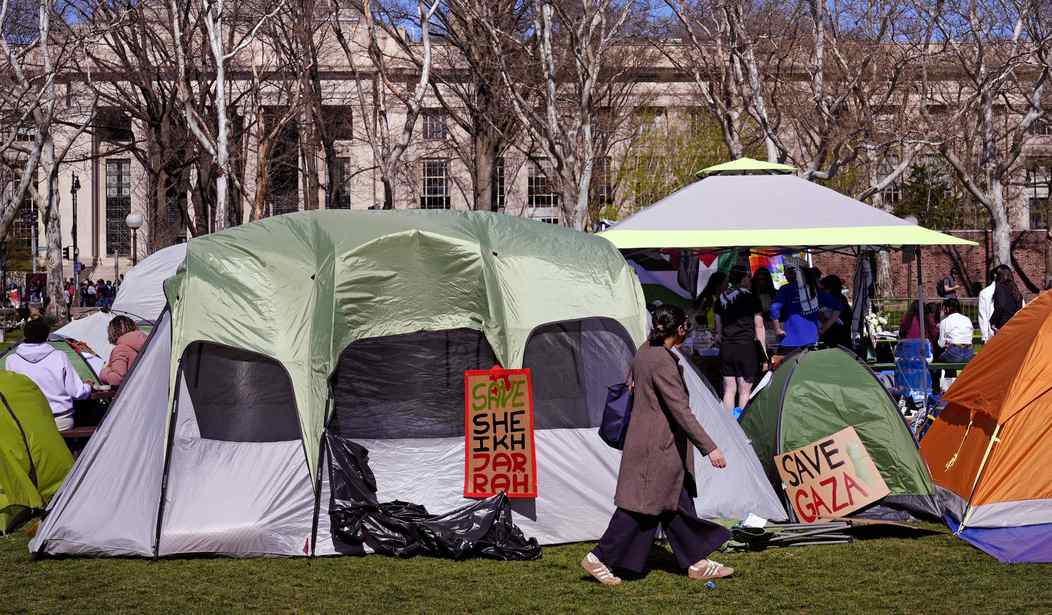
A federal trial related to the Trump administration’s actions against foreign students who participated in protests on college campuses began on Monday.
US District Judge William Young, a Reagan appointee, is presiding over the proceedings. The American Association of University Professors (AAUP) chapters at Harvard, Rutgers, and New York University filed the original lawsuit challenging the administration’s policy of detaining and attempting to deport students who protested against Israel amid the war in Gaza.
The plaintiffs argue that the White House’s crackdown on foreign student protesters is a violation of free speech rights and the Administrative Procedure Act. Conversely, the government contends that while the students may not have committed crimes, they pose a threat to national security and US foreign policy.
During the first day of the trial on Monday, several witnesses testified about the chilling effect of the Trump administration’s actions. Professors detailed how they have self-censored even though they are American citizens.
This is one of several lawsuits that groups have filed against the administration challenging the policy. However, this one is unique in that Judge Young decided to order a trial, saying it was the “best way to get at truth,” according to Reuters. In the other lawsuits, the judges issued rulings without calling witnesses to testify.
Ramya Krishnan, a senior staff attorney at the Knight First Amendment Institute, told the court, “Not since the McCarthy era have immigrants been the target of such intense repression for lawful political speech,” according to The Associated Press. “The policy creates a cloud of fear over university communities, and it is at war with the First Amendment. The First Amendment forecloses viewpoint discrimination; it forecloses retaliation; and it forecloses government threats meant to coerce silence.”
Nadje Al-Ali, a German anthropologist, recounted how she had been writing an academic article making a “feminist critique of Hamas,” but halted the project after the arrest of Columbia University student Mahmoud Khalil, who was the first foreign student to be detained by the authorities for his participation in anti-Israel protests. Al-Ali said she stopped writing the article because “expressing any nuanced view related to Israel and Palestine feels too dangerous to her,” The Guardian reported.
Attorneys representing the government insist that there is no policy specifically targeting people for their speech. They stated that these actions are meant to protect national security. Attorney Victoria Santora told the court, “There is no court policy to revoke visas on the basis of protected speech” and that the state’s evidence “will show that plaintiffs are challenging nothing more than government enforcement of immigration laws.”
Debate over the administration’s actions arose after Khalil’s arrest and the arrest of Rumesya Ozturk, a Turkish national who co-authored an op-ed criticizing the Israeli government’s military invasion of the Gaza Strip. At the center of the issue are the pro-Hamas protests that began after the terrorist group murdered over one thousand Israelis during a surprise attack on October 7, 2023.
Since the war started, activists who support the Palestinians have been staging demonstrations on college campuses. But folks in the pro-Hamas wing of the movement resorted to using violence against Jewish students and others who support Israel.
Critics of the administration’s policies argue that the government should not be targeting foreign students purely for expressing their opinions on the war. However, Secretary of State Marco Rubio justified the agency’s actions, arguing that those being targeted were providing support to Hamas.
So far, the administration has revoked about 300 student visas for participation in protests.

Join the Conversation
VIP members get the ability to comment on articles.