





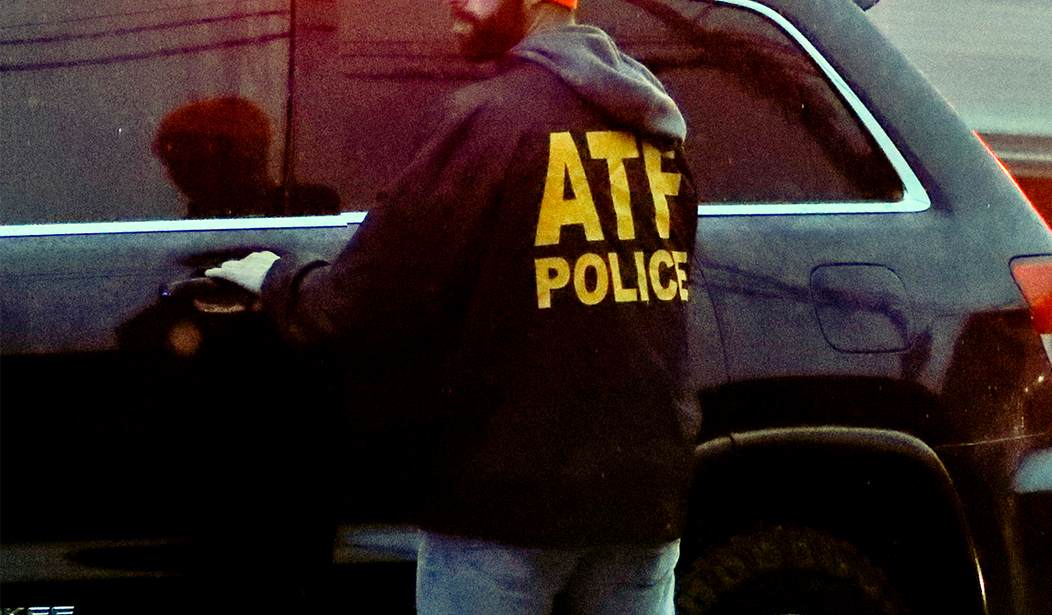
Gun rights organizations have filed a legal complaint against the Department of Justice (DOJ) demanding that the agency lift a protective order preventing them from reporting on abuses of the Second Amendment.
Gun Owners of America (GOA) and the Gun Owners Foundation (GOF) argue that the Bureau of Alcohol, Tobacco, Firearms, and Explosives (ATF) improperly tried to “claw back” records that it mistakenly disclosed to these organizations after they filed a Freedom of Information Act (FOIA) request about four years ago. The groups assert that disallowing them to report on these documents is a violation of the First Amendment.
The information that was disclosed includes unredacted records related to a surveillance program that monitors lawful firearm purchases. The court issued a gag order on the organization preventing them from reporting on this information.
🚨UPDATE🚨
— Gun Owners Foundation (@GunFoundation) March 12, 2025
GOA & GOF have been GAGGED from printing the news (uncovered in a FOIA) for 18 months.
Despite a recent ruling by the D.C. Circuit prohibiting such gag orders, Biden holdovers in @TheJusticeDept are asking the court to extend this First Amendment violation. pic.twitter.com/sp2FrKNmQo
The plaintiffs argue that the ATF’s error does not justify the court’s ongoing gag order. They explain that it impedes their ability to report on matters of public interest, according to the legal filing.
Thus, for the past 17 months, Plaintiffs - members of the press - have been prohibited from printing the news, while Plaintiffs’ lawyers have been prohibited from communicating with their clients, advocating for their clients’ interests, or even accessing portions of their own attorney work product.
The organizations further noted that the court “has denied Plaintiffs’ repeated requests … to consider the basis of its order, declining to hold a closed hearing or to consider the document production in camera.”
A D.C. Circuit ruling in January in Human Rights Defense Center v. U.S. Park Police rejected the idea that courts have the authority to issue clawback orders for materials that were accidentally disclosed, according to the filing. This suggests that the court overstepped its boundaries in issuing the gag order.
The ATF has tried to keep the gag order in place, arguing that the ruling allows exceptions when the matter concerns statutorily exempted information such as classified data. However, the plaintiffs countered by pointing out that there were no national security claims in this situation. They note that “classified information is nothing like information which a statute provides merely may be withheld.”
The chilling effect on press freedom is at issue in the legal filing. The plaintiffs assert that “the protective order Defendant seeks is a presumptively unconstitutional prior restraint on quintessential speech and press activity protected under the First Amendment.”
The organizations further argue that the ATF “would be hard-pressed to identify any historical examples of a court preventing the media from reporting the news.”
Indeed, because its inherent-authority analysis 'was dispositive,' the D.C. Circuit did not analyze whether 'the First Amendment prevents the district court from barring the use or dissemination of FOIA-exempt material a FOIA requester lawfully obtained due to the government’s mistake.' But had it done so, all authorities would have pointed to a finding of unconstitutionality.
The immediate question is: What is the ATF trying to hide? The agency does monitor lawful gun purchases, which is already bad enough. But if there is other information that could shed more light on this surveillance program, then the government has a duty to be transparent.
It is also worth mentioning that this type of program is similar to how the ATF brought about the arrest and conviction of Dexter Taylor, a Brooklyn native who is currently serving ten years in prison for building his own firearms using parts he purchased legally.
The ATF found Taylor’s purchases and since he lives in a state that prohibits the building of firearms, they colluded with the NYPD to target him.
This practice occurred under the Biden administration. But with President Donald Trump in office, it should be curtailed immediately. The president recently issued an executive order instructing Attorney General Pam Bondi to investigate federal agencies to ascertain whether they have imposed rules or regulations that violate the Second Amendment. It appears that in this case, they have a smoking gun (pun intended.)



Join the Conversation
VIP members get the ability to comment on articles.