





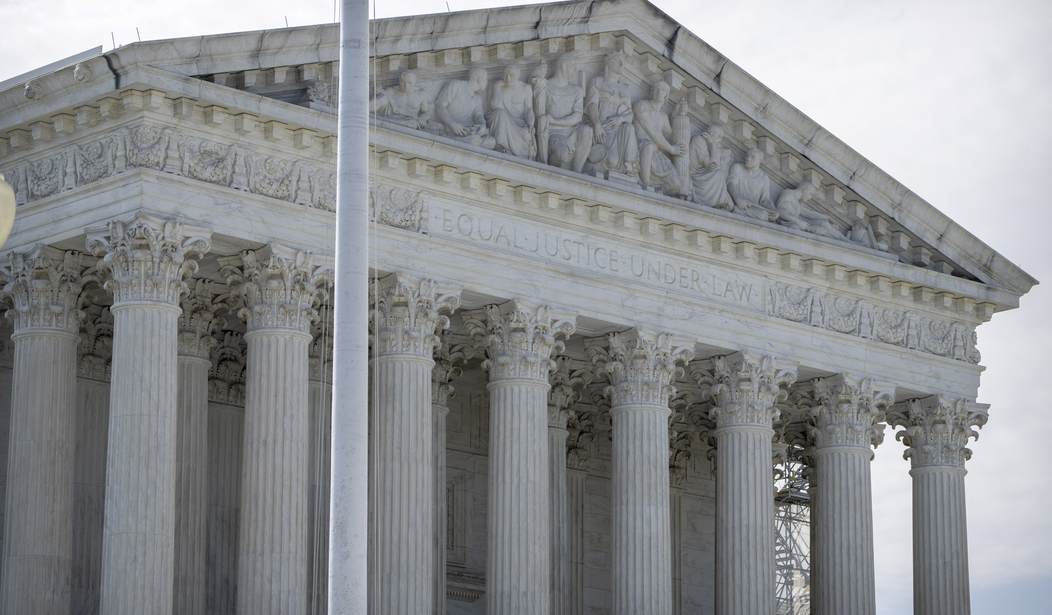
The Supreme Court on Monday decided to hear an election case from Illinois, which promises to clarify the legal standards federal election candidates must meet to challenge state election laws in federal court, according to Judicial Watch.
The case is known as Bost v. Illinois State Board of Elections, where Representative Mike Bost (R-IL) and two other Republican presidential elector nominees filed a lawsuit against the Illinois State Board of Elections. The suit challenged a state law authorizing the acceptance of mail-in ballots up to two weeks after election day. A district court dismissed the case due to a lack of standing, and the ruling was upheld by the 7th Circuit Court of Appeals.
Standing has been a contentious issue since 2020. The plaintiff must meet three requirements to have standing in a federal lawsuit as established by the Supreme Court case Lujan v. Defenders of Wildlife (1992). They must show a concrete, particularized, and actual or imminent injury, there has to be a causal connection between the injury and the issue brought before the court, and it must be likely that the court's ruling will redress the injury. The lower courts argued that because Rep. Bost had won the election, he failed to show a personal injury caused by the state election law.
Furthermore, the courts invoked the 11th Amendment, which states that:
The Judicial power of the United States shall not be construed to extend to any suit in law or equity, commenced or prosecuted against one of the United States by Citizens of another State, or by Citizens or Subjects of any Foreign State.
This Amendment is frequently used to say that states cannot be sued by private individuals in federal court, unless the state consents, or Congress overrides that immunity.
With the case now headed to the Supreme Court, the opportunity exists to clarify under which circumstances federal candidates have the right to challenge state election laws in federal court. In a political environment ripe with concern over election integrity, the highest Court will set a clear precedent for election litigation moving forward. They can ensure that legitimate election concerns can be heard in court, reinforcing both integrity and public trust in a fundamental democratic institution.

Join the Conversation
VIP members get the ability to comment on articles.