





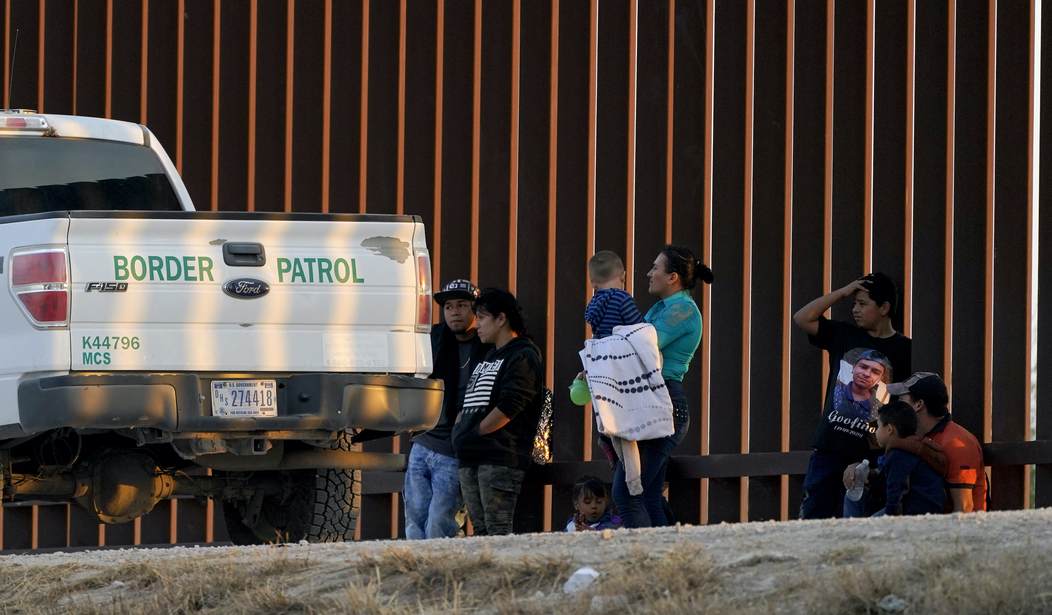
The Associated Press, arguably the largest publisher in the world, has instructed its reporters not to refer to the border crisis as... a "crisis." Instead, reporters covering the immigration "event" taking place at the southern border have been told to be avoid words that are often associated with "war" or a "natural disaster."
The revelation came about when Julio Varela, the editorial director of Futuro Media and publisher of Latino Rebels, alerted the AP he would no longer publish their stories with "dehumanizing language." During Varela's conversation with John Daniszewski, vice president and editor at large for standards at the AP, Daniszweski said AP reporters should be using different words to describe the situation at the border.
According to Varela, Daniszweski shared an internal memo about the guidance reporters were given on immigration coverage (emphasis is from the memo):
Here are some tips to language to use and not use:
"Crisis" The current events in the news -- a sharp increase in the arrival of unaccompanied minors -- is a problem for border officials, a political challenge for Biden and a dire situation for many migrants who make a journey, but it does not fit the classic dictionary definition of a crisis, which is: "A turning point in the course of anything; decisive or crucial time, stage, or event," OR "a time of, or a state of affairs, involving great danger or trouble often one which threatens to result in unpleasant consequences [an economic crisis] – SYN. Emergency." Therefore, we should avoid, or at the least, be highly cautious, about referring to the present situation as a crisis on our own, although we may quote others using that language.
If using the word "crisis," we need to ask of what and to whom. There could be a humanitarian crisis if the numbers grow so large that officials cannot house the migrants safely or in sanitary conditions. Migrants may face humanitarian crises in their home countries. In theory, there could be a security or a border crisis if officials lose control of the border, allowing people to enter unencumbered in large numbers. But, in general, avoid hyperbole in calling anything a crisis or an emergency.
Journalists at the outlet were also told to "avoid imagery conjuring war or natural disaster," especially "emotive words like onslaught, tidal wave, flood, inundation, surge, invasion, army, march, sneak and stealth." It is, however, okay for them to use "words like rise, increase, upturn, uptick, fall, decrease or downturn" when describing the number of illegal aliens crossing the border.
The goal, according to the memo, is to "be as neutral as possible while backing up our characterizations with numbers and facts."
Interestingly enough, however, reporters are told to think about the "broader picture" when covering stories.
Also keep in mind the broader picture. The new U.S. policy under Biden has been to not deport back minor children because of unsafe conditions for them in Mexico. Some of these asylum seekers face danger of gangs and violence in their home countries, which is why they are trying to get to the United States to seek a new life. In addition to violence and lack of economic opportunity, devastation from last year's hurricane season, other natural disasters and the effects of climate change are also among reasons why some are immigrating.
Reporters are supposed to keep a "neutral" point of view on this subject, yet all of the requirements for labeling this a "crisis" have been met. Border Patrol is overwhelmed with the number of unaccompanied minors flocking to the United States. Their holding facilities for unaccompanied minors had to roll back COVID restrictions because of the unprecedented number of people heading to the southern border. The facilities went from 50 percent capacity to 100 percent capacity overnight. Fast forward a week later and those same facilities’ capacity soared to more than 700 percent. The Department of Homeland Security is asking non-law enforcement employees throughout the agency to “volunteer” so agents can be freed up for actual border protection duties. FEMA is at the border to render aid over the next 90 days. ICE just approved an almost $90 million contract for housing roughly 1,200 illegal aliens in hotels.
How much worse does this situation need to be? How many more government agencies and resources need to be deployed before the media can call this what it is? It. Is. A. Crisis. It's a crisis the Biden administration continues to brush under the rug, especially with their media blackout. They can take into account the reasons people want to come to the United States but they also need to be realistic about the toll this is taking on Americans, on our Border Patrol agents, and on the national budget.
Nuance matters. And it's severely lacking here.
Editor's note: A previous version of this article named Julio Varela the founder of Futuro Media. He is their editorial director.


Join the Conversation
VIP members get the ability to comment on articles.